
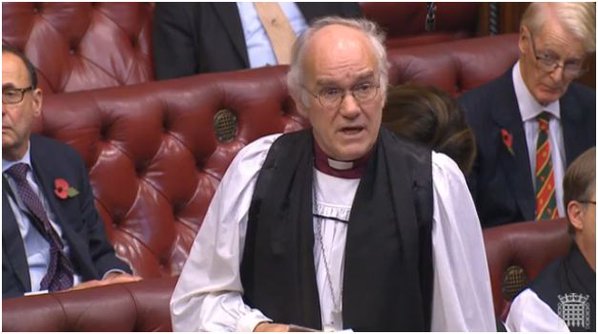
EU (Notification of Withdrawal) Bill: Bishop of Chester on difficulties of amendment on parliamentary approval of Brexit deal

On Tuesday 7th March 2017, the House of Lords considered the Government’s EU (Notification of Withdrawal) Bill at Report Stage and Third Reading. A cross-party amendment led by Lord Pannick sought to ensure that Parliament had final approval of any Brexit deal negotiated with the EU by the Prime Minister. The Bishop of Chester, the Rt Revd Peter Forster, spoke in the debate on the amendment.

The Lord Bishop of Chester My Lords, whether Article 50 notification is revocable or irrevocable is a matter of policy or law. I believe that we could interrupt the process of leaving the EU only by another referendum. I think this is the point that the noble Lord, Lord Lawson, touched upon. In fact, the noble Baroness, Lady Altmann, made the same point at the beginning of her speech. If in two years’ time Parliament were seen to be blocking the departure of the United Kingdom from the European Union without another referendum, there would be a serious political situation in our country. Continue reading “EU (Notification of Withdrawal) Bill: Bishop of Chester on difficulties of amendment on parliamentary approval of Brexit deal”

EU (Notification of Withdrawal) Bill: Archbishop of York on difficulties of amendment giving parliament the final say on Brexit deal

york-170117On Tuesday 7th March 2017, the House of Lords considered the Government’s EU (Notification of Withdrawal) Bill at Report Stage and Third Reading. A cross-party amendment led by Lord Pannick sought to ensure that Parliament had final approval of any Brexit deal negotiated with the EU by the Prime Minister. The Archbishop of York, Most Revd and Rt Hon John Sentamu, spoke in the debate on the amendment.

The Archbishop of York My Lords, I hope you will permit me to think aloud; these are not yet crystallised thoughts. I heard the exchanges between the noble Lords, Lord Pannick, Lord Hannay and Lord Forsyth, and I still want to work out some of the complications. For me, Amendment 3 provides for the intrusion of Parliament into the negotiation processes—which I do not think should happen—in such a way that it could prevent any deal ever being reached, because we would be involving ourselves in the processes. Continue reading “EU (Notification of Withdrawal) Bill: Archbishop of York on difficulties of amendment giving parliament the final say on Brexit deal”

EU (Notification of Withdrawal) Bill: Archbishop of Canterbury – second referendum would ‘add to divisions’ in society

abcvalues5On Tuesday 7th March 2017, the Lords considered the Government’s EU (Notification of Withdrawal) Bill at Report stage and Third Reading. Liberal Democrat Peer, Lord Newby, tabled an amendment seeking a national referendum on the final Brexit deal. The Archbishop of Canterbury, Most Revd & Rt Hon Justin Welby, spoke against the amendment. 

The Archbishop of Canterbury My Lords, I apologise to the House for not having been present at earlier stages of the Bill, for medical reasons beyond my control. The benefit for your Lordships is that I will not be on my feet for long.

I was disappointed to miss the excellent debates at early stages. What unites us in this House, across all Benches, is how seriously we take our role as scrutineers. On our best days, we approach each question not on the basis of tribe or loyalty, but on the strength of the argument and how it might work for the common good of the whole country. On these Benches, we are not a party, nor do we follow a Whip. Today will see a significant number of Bishops appearing, not because we hold ourselves out as constitutional experts but because we are deeply embedded in every local community in England. We may dress the same, but we have independent minds, as anyone observing church politics recently will be well aware. So I speak today not in a corporate but in a personal capacity. Continue reading “EU (Notification of Withdrawal) Bill: Archbishop of Canterbury – second referendum would ‘add to divisions’ in society”

EU (Notification of Withdrawal) Bill: Archbishop of York supports protecting rights of EU nationals, opposes amendment as vehicle to deliver

On 1st March 2017 the House of Lords considered the Government’s EU (Notification of Withdrawal) Bill in its second day of committee. An amendment was tabled by Labour Peer Baroness Hayter, requiring Ministers to bring forward proposals for guaranteeing continued rights for EU nationals residing in the UK, no more than three months after the formal negotiations to exit the EU had begun. The Archbishop of York, Most Revd and Rt Hon John Sentamu, argued against the amendment on the grounds that this was the wrong vehicle to address such serious and important matters. They would, he said, be better and more speedily dealt with if they were not enshrined in legislation that had the single purpose of giving Government authority to begin the Article 50 negotiation process. Peers voted t back the amendment in the subsequent vote.The Archbishop’s speech is in full below, followed by excerpts from some of the speeches that referred to his remarks:

 aby-010317The Archbishop of York: My Lords, Uganda was referred to by the noble Viscount, Lord Hailsham. It was regrettable that Idi Amin kicked out two types of Asians—British citizens and Ugandan citizens. My opposition to him was over the Ugandan citizens, who were the largest number. He kicked them out and my coming here in 1974 was as a result of my opposition to such behaviour. So I know how minorities can feel in a place. I know that we need to reassure our European friends who are resident here and want to remain here.

However, I have one great difficulty. Your Lordships’ House can scrutinise and revise legislation, but this simple Bill is simply to confer power on the Prime Minister to notify under Article 50 of the Treaty on the Functioning of the European Union that there is an intention to withdraw. It is giving her the power which I believe only Parliament—not the royal prerogative—can give her. Continue reading “EU (Notification of Withdrawal) Bill: Archbishop of York supports protecting rights of EU nationals, opposes amendment as vehicle to deliver”

EU (Notification of Withdrawal) Bill: Bishop of Newcastle highlights contribution of Newcastle University to North East economy

Newcastle 8On 27th February 2017, Labour Peer Baroness Quin moved an amendment to the Government’s EU (Notification of Withdrawl) Bill, requiring Government to undertake an impact assessment of the impact of Brexit on the North-East of England. The Bishop of Newcastle, the Rt Revd Christine Hardman, spoke to the amendment to highlight the contribution of Newcastle University to the North-East economy. The amendment was later withdrawn after debate.
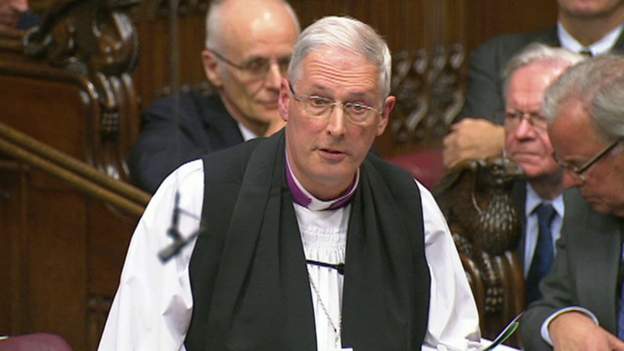

Bishop of Newcastle: My Lords, I declare an interest as a member of the court of Newcastle University. The amendment tabled by the noble Baroness, Lady Quin, and the noble Lord, Lord Shipley, asks for an impact assessment of the effect of Brexit on the economy of the north-east. When we think about that economy, perhaps our thoughts turn first to the EU funding that the economy receives and then to the manufacturing sector. But the city of Newcastle is deeply enriched by the presence of two first-class universities, and there are 50,000 students in Newcastle. Tomorrow a report will be released to the media which details the extraordinary contribution of Newcastle University to the economy of the north-east. Continue reading “EU (Notification of Withdrawal) Bill: Bishop of Newcastle highlights contribution of Newcastle University to North East economy”

EU (Notification of Withdrawal) Bill – speech by Bishop of Southwark

On 20th February 2017 the House of Lords held the first in a two-day debate on the Government’s EU (Notification of Withdrawal) Bill. The Bill would give the Government authority to begin the process of withdrawal from the European Union. The Bishop of Southwark, Rt Revd Christopher Chessun, spoke in the debate:

southwark-20feb17

The Lord Bishop of Southwark:As many in your Lordships’ House are aware, my diocese covers most of south London and east Surrey. The voters there opted to remain in the European Union on 23 June 2016 by some margin; in the borough of Lambeth, where I live, nearly 80% of those voting opted to remain. Only in Sutton and in Surrey did votes tip the other way. What I have occasionally heard articulated, but have yet to see in action, is how the aspirations of those people—and indeed, if one thinks more widely, Londoners in general, or Scots, or the people of Northern Ireland or simply people under the age of 45—are to be taken into account. The majority of all these groups voted to remain. If we adopt a model for leaving the EU that ignores them, we risk a regional divide, generational resentment and a threat to the union.

Continue reading “EU (Notification of Withdrawal) Bill – speech by Bishop of Southwark”

Bishop of Chester asks Government not to lose sight of cultural and scientific links to Europe in Brexit negiotations

14.03 Bishop of ChesterOn the 1st December 2016 Lord Liddle held a debate on ‘the best options for the United Kingdom’s future relationship with the European Union following the referendum vote to leave’. The Bishop of Chester, the Rt Revd Peter Forster, spoke about the foundations of the idea of ‘Europe’ not just as an economic construct but as a civilisation. 
 

The Lord Bishop of Chester: My Lords, the Motion before us is not limited to economic issues, although the debate so far has understandably concentrated on them. I would like to take a slightly broader look at our future relationship with the EU. Of course, the social and economic issues associated with the four freedoms will inevitably take centre stage over the next few years, and it will be an anxious time for many. I hope it will also be a time of opportunity for at least some, perhaps many; we will see. Continue reading “Bishop of Chester asks Government not to lose sight of cultural and scientific links to Europe in Brexit negiotations”

Bishop of Bristol asks about the expertise required for exiting the EU

Bristol160226 cOn Monday 24th October 2016, Baroness Evans of Bowes Park, the Lord Privy Seal, repeated a statement on the European Council. The Bishop of Bristol, Rt Rev Mike Hill, asked a follow up question.
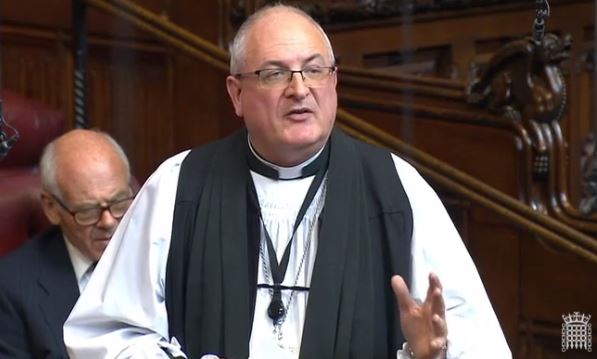

The Lord Bishop of Bristol: My Lords, I am very grateful to the noble Baroness for repeating the Prime Minister’s Statement. She has emphasised something that all noble Lords will recognise: this is a matter of huge complexity. To articulate one anxiety, the noble Baroness said that we are the first country to leave the EU—I do not know whether she regards that as a notable first—but, if it is as complex to leave the EU as your Lordships’ House believes, can she assure us that somewhere there is the expertise necessary to enter into negotiations of complexity in such a way that will really benefit the people of the United Kingdom? Continue reading “Bishop of Bristol asks about the expertise required for exiting the EU”

Bishop of Ely on the challenges for the UK following the EU referendum

On 5th July 2016 the House of Lords debated a motion to take note of the result of the referendum on the UK’s membership of the European Union. The Bishop of Ely, Rt Revd Stephen Conway, spoke in the debate, focusing on leadership, common values, education and the rural workforce.  

Ely 2The Lord Bishop of Ely: My Lords, I cannot match that passion, but I join other noble Lords in saying how much I appreciated the speech earlier of our boss—I mean of my friend, the most reverend Primate the Archbishop of Canterbury. He and I have both worked in the north-east and been welcomed by the people of that area, many of whom voted to leave, just as people in fenland in my current diocese and people in east Kent, beloved of the most reverend Primate, did. These people were not, it seems to me, voting against the European Union but were making a great cry—a lament—about not having been heard for several generations by us, the political class. This was their opportunity to make us listen, after feeling excluded for so long. Continue reading “Bishop of Ely on the challenges for the UK following the EU referendum”

Bishop of Ely urges Government to speak out against attacks on EU citizens living in UK

On 4th July 2016 Lord Soley asked Her Majesty’s Government “what role they see for the United Kingdom in relation to the European Union”. The Bishop of Ely, Rt Revd Stephen Conway, asked a follow up question.

ElyThe Lord Bishop of Ely: Whatever happens in the long term, in the meantime will the Government speak up trenchantly against the ugly and unseemly behaviour of some of our fellow citizens in the way they speak to and are violent towards citizens from the EU who are resident here, and who are productive citizens in our midst?

Baroness Anelay of St Johns: The right reverend Prelate is of course not only right but clearly has the complete agreement of this House. This country has proved throughout its history that it not only tolerates but welcomes those who come here to contribute to our society. I deplore attacks upon them.

(via Parliament.uk)