Bishop of St Albans asks if Brexit will lead to cheap and low quality food imports

St Albans 2On Wednesday 14th September 2016, Lord Taverne asked the Government “whether, in their negotiations to leave the European Union, they will seek to preserve the United Kingdom’s membership of the single market.” The Lord Bishop of St Albans, the Rt Revd Alan Smith, asked a supplementary question.

Bishop of St Albans: My Lords, many parts of our country are deeply concerned about the negotiations, not least the farming community, as evidenced by the Back British Farming demonstration going on outside. We produce food of the highest quality, by environmental and welfare concerns, of almost anywhere in the world. For the sake of our health, our livestock and the environment, can the noble Lord assure the House that Her Majesty’s Government will be very careful to ensure we will not be flooded with cheap imports of food produced to much lower standards than that which our excellent farming industry produces? Continue reading “Bishop of St Albans asks if Brexit will lead to cheap and low quality food imports”

Bishop of St Albans asks Government about state pensions for British citizens overseas

Bishop St Albans June 2015On the 9th September 2016 the Bishop of St Albans, the Rt Revd Alan Smith, received an answer to three written questions about state pensions of British citizens overseas.


The Lord Bishop of St Albans: To ask Her Majesty’s Government whether they have any plans to review their policy of freezing state pensions of British citizens residing in overseas countries, where there is no existing reciprocal social security arrangement in place. Continue reading “Bishop of St Albans asks Government about state pensions for British citizens overseas”

Bishop of St Albans says uncertainty and insecurity faces British farming as a result of Brexit

St Albans 2On the 21st July 2016 Baroness McIntosh of Pickering held a debate about “the impact on British farmers of the decision to leave the European Union.” Rt Revd Dr Alan Smith, Bishop of St Albans asked the Government to help to cultivate a culture of appreciation among the British public towards British farming. Lord Gardiner of Kimble responded for the Government and his comments can be found below.

The Lord Bishop of St Albans: My Lords, I too thank the noble Baroness, Lady McIntosh, for this debate. I share the delight of other Members of this House that in the recent reshuffle it was neither an exit nor a Brexit but a clear remain vote for the Minister, and not only that but a promotion, so we are delighted and thank him.

Whatever our opinions on Brexit, it is undeniable that British farming faces a period of uncertainty and insecurity. While it is true that the decision to leave the EU will bring some new opportunities for British agriculture in the long term, it is clear that there are substantial challenges ahead. Agriculture is more intimately connected to the European Union than any other UK sector, and the process of unpicking that relationship must be done with utmost care. Continue reading “Bishop of St Albans says uncertainty and insecurity faces British farming as a result of Brexit”

Bishop of Ely on the challenges for the UK following the EU referendum

On 5th July 2016 the House of Lords debated a motion to take note of the result of the referendum on the UK’s membership of the European Union. The Bishop of Ely, Rt Revd Stephen Conway, spoke in the debate, focusing on leadership, common values, education and the rural workforce.  

Ely 2The Lord Bishop of Ely: My Lords, I cannot match that passion, but I join other noble Lords in saying how much I appreciated the speech earlier of our boss—I mean of my friend, the most reverend Primate the Archbishop of Canterbury. He and I have both worked in the north-east and been welcomed by the people of that area, many of whom voted to leave, just as people in fenland in my current diocese and people in east Kent, beloved of the most reverend Primate, did. These people were not, it seems to me, voting against the European Union but were making a great cry—a lament—about not having been heard for several generations by us, the political class. This was their opportunity to make us listen, after feeling excluded for so long. Continue reading “Bishop of Ely on the challenges for the UK following the EU referendum”

Archbishop of Canterbury on the future for the United Kingdom after the EU Referendum

On 5th July 2016 the House of Lords debated a motion “That this House takes note of the outcome of the European Union referendum.” The Archbishop of Canterbury, Most Revd & Rt Hon Justin Welby, spoke in the debate. His speech is below in full, followed by extracts from the speeches of other Peers. 
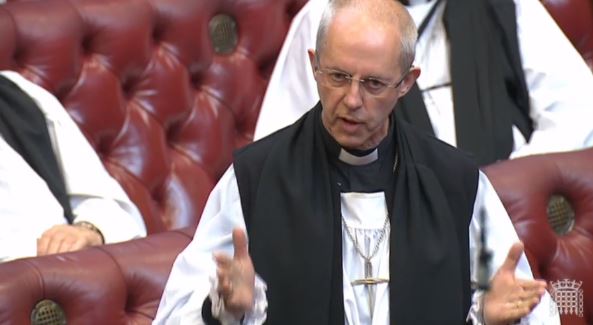
2ABCEUdebateThe Archbishop of Canterbury:  My Lords, the events of the past two weeks have led to some of the most traumatic and dynamic changes that we have known. The course of the campaign was robust—as it properly should be on such great issues—but at times veered over the line on both sides: it was not merely robust but unacceptable. Through such comments were created cracks in the thin crust of the politeness and tolerance of our society, through which, since the referendum, we have seen an outwelling of poison and hatred that I cannot remember in this country for very many years. It is essential, not only for this House but for the leaders of both sides and throughout our society, to challenge the attacks, xenophobia and racism that seem to have been felt acceptable, at least for a while.

Just over a week ago, at Lambeth Palace, at the breaking of the fast of Ramadan, I shared an iftar with the new Mayor of London, Sadiq Khan, and the Chief Rabbi. There were more than 100 young people of every faith and of no faith there. That sense of hope and energy for the future carried us through the rest of the week. It is there and we can reach for it. If, however, we are to thicken the crust through which the cracks have come, if we are to move to a place where we are not yet speaking of reconciliation but beginning to get on a path where in future healing and reconciliation will begin to happen, we need to beware. St Paul, in his letter to the Galatians, says to them at one point:

“Love one another, cease to tear at one another, lest at the end you consume one another”.

We are in danger of doing that in the way that our politics is developing at the moment. If we are to tackle that, we have to put in place some fundamental issues to be capable of creating the agile, flexible, creative, entrepreneurial and exciting society—full of the common good and of solidarity and love for one another—which is the only way that this country will flourish and prosper for all its citizens in the world outside the European Union of the future. Continue reading “Archbishop of Canterbury on the future for the United Kingdom after the EU Referendum”

Bishop of Ely urges Government to speak out against attacks on EU citizens living in UK

On 4th July 2016 Lord Soley asked Her Majesty’s Government “what role they see for the United Kingdom in relation to the European Union”. The Bishop of Ely, Rt Revd Stephen Conway, asked a follow up question.

ElyThe Lord Bishop of Ely: Whatever happens in the long term, in the meantime will the Government speak up trenchantly against the ugly and unseemly behaviour of some of our fellow citizens in the way they speak to and are violent towards citizens from the EU who are resident here, and who are productive citizens in our midst?

Baroness Anelay of St Johns: The right reverend Prelate is of course not only right but clearly has the complete agreement of this House. This country has proved throughout its history that it not only tolerates but welcomes those who come here to contribute to our society. I deplore attacks upon them.

(via Parliament.uk)

Bishop of Chelmsford calls for action to counter fear and race hatred after EU referendum

Chelmsford 251115On 27th June 2016, Baroness Stowell of Beeston repeated a statement on the result of the EU Referendum, made by the Prime Minister in the House of Commons. The Bishop of Chelmsford, Rt Revd Stephen Cottrell, asked a follow up question:

Lord Bishop of Chelmsford: My Lords, some commentators have said that the result of the referendum was a resounding victory for Brexit. I am not sure that I see it that way: 52 to 48 is, to my mind, a rather narrow victory. Where there is no overwhelming consensus, there is an overwhelming need to take account of the views of others. Nobody likes a bad winner. There has been too much hyperbole and spite in this debate. Yes, one side did win, the result is clear and we have to act on it. Those who advocated leave obviously need to take the lead in the negotiations that will take place. But we urgently need the sort of wise leadership that can build consensus. We need some sort of national Government—a coalition of good will where we can work together.

I serve the diocese of Chelmsford, which is, “east London in and Essex out”. Yesterday I spoke to a head teacher who said that the children were frightened when they went to school on Friday and that she had seen an increase in race hatred and intolerance. What plans are there to address the lack of unity in our nation and to counter the fear and race hatred that is on the rise? Can we ensure that those who lost this vote, as well as those who won, can be part of the planning going forward? Continue reading “Bishop of Chelmsford calls for action to counter fear and race hatred after EU referendum”

Bishop of Sheffield speaks on Church response to the migrant crisis

On Wednesday 15th June 2016 the House of Lords debated the Report from the European Union Committee The EU Action Plan against migrant smuggling (4th Report, Session 2015–16, HL Paper 46). The Bishop of Sheffield, Rt Revd Steven Croft, spoke in the debate:

14.03.27 Bishop of SheffieldThe Lord Bishop of Sheffield: My Lords, I welcome the two reports before us in all their complexity and I thank the members of the European Union Committee for their expertise, which is already evident in this debate. I particularly welcome the committee’s recommendation in paragraph 8 that the mandate of Operation Sophia is reviewed and renewed, along with the EU’s subsequent decisions. Clearly, this operation alone cannot be the complete answer to the challenges that we face. However, the European Union must not return to the position that it held before the Lampedusa tragedy of apparent indifference to those who seek to cross the Mediterranean in danger of their lives. Nor can we neglect the spread of people-smuggling on and across our borders. Continue reading “Bishop of Sheffield speaks on Church response to the migrant crisis”

Bishop of Leeds asks about effect of UK leaving the EU on UK nationals living abroad

BpLeeds2On the 4th, 9th & 14th March 2016 the Bishop of Leeds received written answers to questions about the implications for UK citizens overseas if the UK should decide to leave the EU.

The Lord Bishop of Leeds: To ask Her Majesty’s Government what assessment they have made of the implications of a decision by the UK to leave the EU for those UK nationals resident in other EU member states. [HL6398]

Continue reading “Bishop of Leeds asks about effect of UK leaving the EU on UK nationals living abroad”

Church Commissioner answer: contingency in event of a vote to leave EU

On 15th January 2016 the Second Church Estates Commissioner answered a written question from Tim Loughton MP on contingency plans in the event of a vote to leave the EU:

Tim Loughton (East Worthing and Shoreham): To ask the right hon. Member for Meriden, representing the Church Commissioners, what contingency arrangements the Church Commissioners have made for the eventuality of a majority leave vote in the upcoming EU referendum.

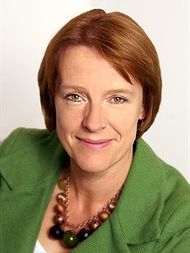
Caroline SpelmanMrs Caroline Spelman: The Church Commissioners and the Church of England Pensions Board manage their investment portfolios using high quality well diversified and long term strategies. The Church Commissioners and Pensions Board believe that they are well positioned for any market re-pricing or uncertainty that may prevail prior to or after the referendum.

(Via Parliament.UK)