Archbishop of Canterbury asks about climate change

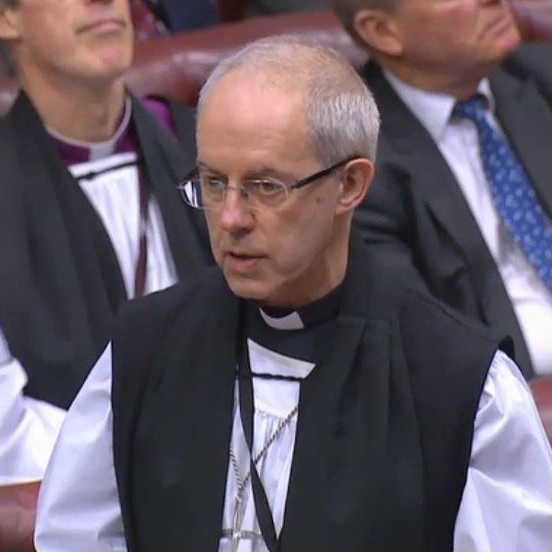
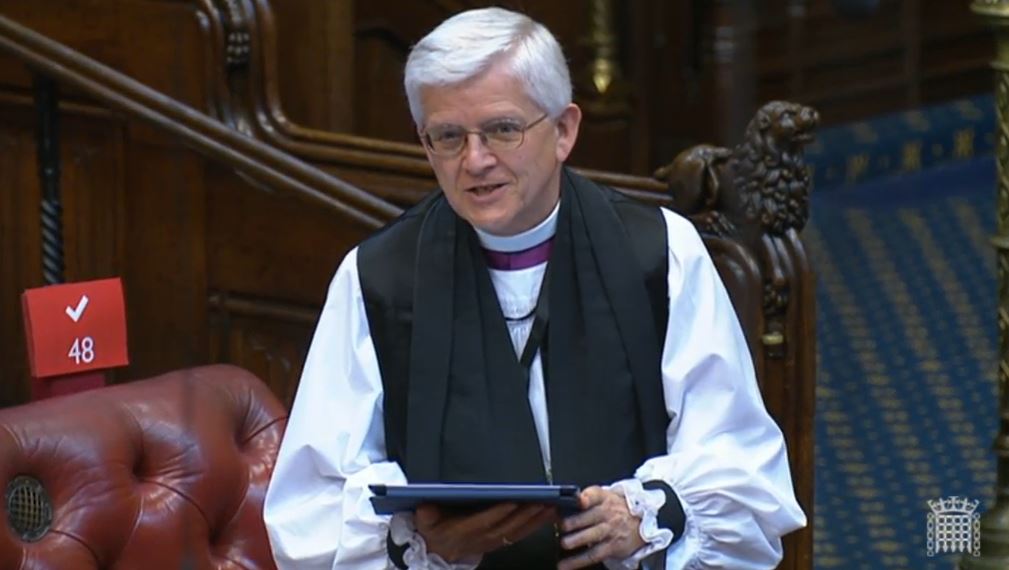
The Archbishop of Canterbury asked a question during a debate on behaviour change for net-zero on 31st March 2022:

The Lord Archbishop of Canterbury: My Lords, like the Government, the Church of England has targets for reaching net-zero carbon, in our case by 2030. Churches across the Anglican Communion are deeply affected by climate change. For example, Madagascar recently had four cyclones in two months. We are working right across the communion on this question. This week, we have had a gathering of archbishops from across the communion representing more than 100 countries. Will the Minister set out the plans that the Government have to work further with faith communities, which have unique distribution and contacts, from the grass roots to the highest level, both nationally and internationally, and will he commend the work that they are already doing?

Continue reading “Archbishop of Canterbury asks about climate change”

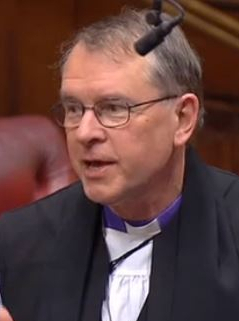
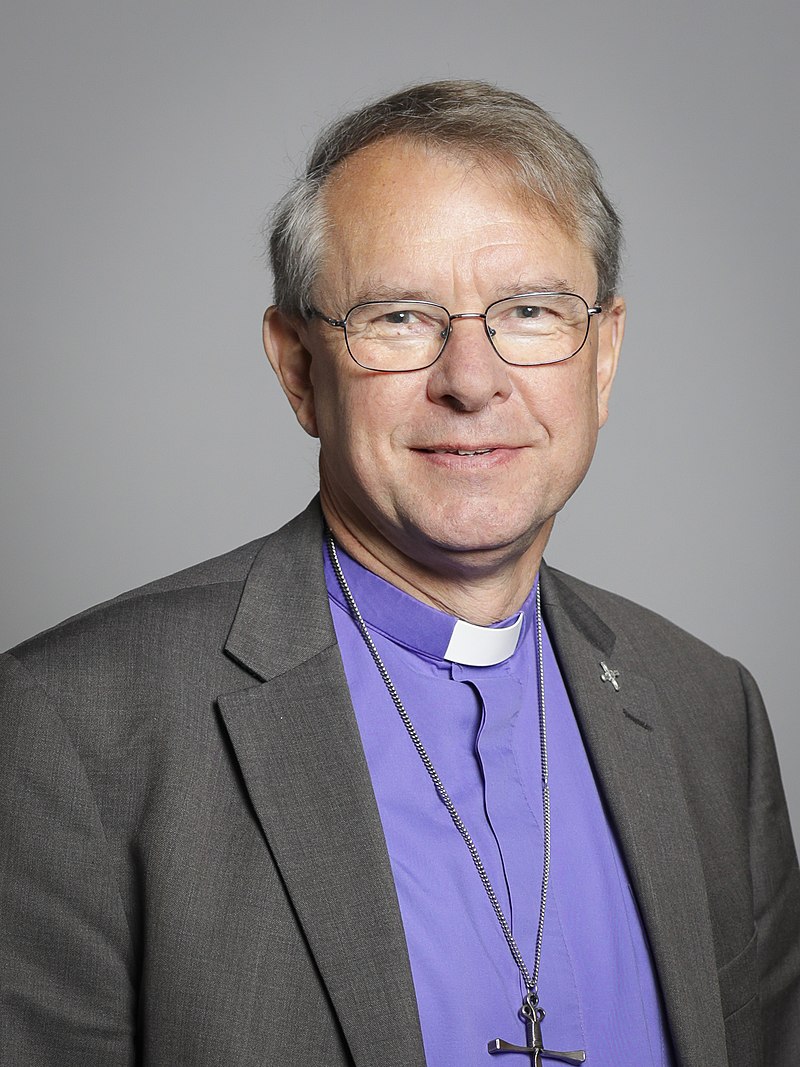
Bishop of St Albans speaks in debate on vaccination requirements, highlighting issues regarding vaccination and people of faith

On 14th December 2021, the House of Lords debated a motion to approve the Health and Social Care Act 2008 (Regulated Activities) (Amendment) (Coronavirus) (No. 2) Regulations 2021, which would extend vaccination requirements in health and social care settings. The Bishop of St Albans gave a speech on the issue of vaccine hesitancy, highlighting concerns people of faith might have regarding vaccination:

The Lord Bishop of St Albans: My Lords, I think many of us are grateful for the comments from the noble Baroness, Lady Noakes, about process and impact assessments, and I echo those.

I shall make one or two comments about the substantive issues. Incidentally, we have been thanking the Government and medics for the rollout, but I want to pay tribute to the people who are going to be sitting up half the night: the managers of GP practices—they are the ones who get people there to get the vaccine. Very often they are forgotten, so I want to make that point.

Continue reading “Bishop of St Albans speaks in debate on vaccination requirements, highlighting issues regarding vaccination and people of faith”

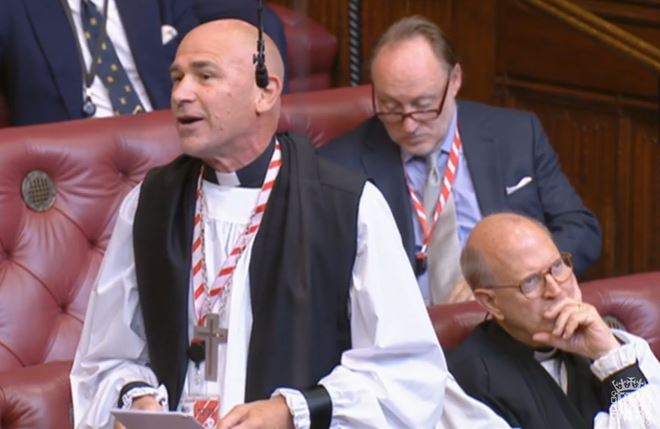
Police, Crime, Sentencing and Courts Bill: Bishop of Blackburn calls for greater recognition of faith communities

The Bishop of Blackburn spoke in a debate on the second reading of the Police, Crime, Sentencing and Courts Bill, noting the lack of reference to faith communities and calling for more recognition for those communities in the bill:

The Lord Bishop of Blackburn: My Lords, I offer to the noble Lord, Lord Sandhurst, my congratulations on his maiden speech. We are glad to welcome him to this House.

With so many words in this wedge of a Bill, it is easy to forget that we are talking about people—as someone said earlier, real people—and the potential consequences for real lives. There is a huge responsibility, therefore, to get these details right, for both the police and the public. The noble Baroness, Lady Chakrabarti, is right, that deep scrutiny is needed here in this House. An example of the wide range of the Bill and the important but almost impossible nature of covering all of its detail is that, although my friend the right reverend Prelate the Bishop of St Albans is unable to attend today’s proceedings, he has asked me to relay his intention to amend the Bill in Committee, to strengthen the ability of the police to deal with the issue of hare coursing. That is something to look forward to.

Continue reading “Police, Crime, Sentencing and Courts Bill: Bishop of Blackburn calls for greater recognition of faith communities”

Bishop of Rochester asks about possibility of further engagement from religious groups in the case of Nazanin Zaghari-Ratcliffe

On 28th April 2021, Bishop of Rochester asked a question on how beneficial it would be for faith groups to engage in efforts to end the continued captivity of Nazanin Zaghari-Ratcliffe in Iran:

The Lord Bishop of Rochester: My Lords, the ordeals of Nazanin Zaghari-Ratcliffe go from bad to worse. These Benches assure her and her family of our continued prayers. As many have made clear, including in the other place powerfully yesterday, she is caught up in political machinations not of her own making. As well as urging Her Majesty’s Government to do everything possible to deal with outstanding issues which may be being used to justify her continued punishment, does the Minister think that the engagement of religious groups here—Muslim and Christian—might offer any way forward, or would that be counterproductive?

Continue reading “Bishop of Rochester asks about possibility of further engagement from religious groups in the case of Nazanin Zaghari-Ratcliffe”

Bishop of Gloucester speaks in debate on building an inclusive society

The Bishop of Gloucester took part in a debate on building an inclusive society in a post-pandemic world on 14th April 2021, speaking on the topics of children, faith communities, and the marginalised:

The Lord Bishop of Gloucester: I am grateful to the noble Baroness, Lady Lister, for moving this Motion. I want briefly to touch on three areas: children and young people; churches and faith communities; and those living in the shadows.

First, I turn to children and young people. Last month, I hosted an online youth forum in the diocese of Gloucester, bringing together more than 100 people so that adults in different spheres of influence, including our MPs, had the opportunity to listen to young people. Prior to that event, I spent many hours listening to young people speak about the impact of Covid-19 on their lives and I will share a few quotes. “Lockdown’s been so isolating.” “I feel like there should be more knowledge about mental health, not just depression and anxiety, and we should be taught how to deal with them.” “There’s been no direction. We don’t know what’s going to happen next. It’s hard for us to try and adapt to all these different situations.” “We haven’t had the chance to say how we feel about things.” “I really hope that sometimes we can be taken more seriously, and that our views can be put across.” “I just want people with influence to understand that there’s a wider range of issues than just the small subsection that they look at.”

Continue reading “Bishop of Gloucester speaks in debate on building an inclusive society”

Bishop of Gloucester asks about role of churches and faith communities in rebuilding social capital post-pandemic

On 25th January 2021, the Bishop of Gloucester asked a question on the role of faith communities and churches in helping to rebuild social and spiritual capital in the aftermath of the COVID-19 pandemic:

The Lord Bishop of Gloucester: Churches and other faith communities bring together a diversity of people across all ages and backgrounds, and thus are often a strong source of social capital, as well as spiritual capital, as we have seen during the pandemic. Will the Minister say what Her Majesty’s Government are doing, both financially and in other ways, to enable local and faith communities to invest in and rebuild their social capital, as we emerge from this pandemic?

Continue reading “Bishop of Gloucester asks about role of churches and faith communities in rebuilding social capital post-pandemic”

Bishop of Bristol asks about faith literacy when tackling domestic abuse

The Bishop of Bristol asked a question on equipping those tackling domestic abuse to understand faith contexts on 19th January 2021, following a government statement on Domestic Abuse and Hidden Harms during Lockdown:

The Lord Bishop of Bristol [V]: My Lords, I, too, express my thanks to the Government for their work on domestic abuse issues, particularly following the announcement of “Ask for Ani”. However, as the Minister will know, there are certain issues that particularly impact minority ethnic groups and people of faith. Will the Government look to take on the recommendations of the Keeping the Faith report and seek to increase faith literacy within secular bodies so that they are equipped to respond to particular harms found within a faith context?

Continue reading “Bishop of Bristol asks about faith literacy when tackling domestic abuse”

Bishop of Rochester asks about engagement by faith communities in COVID-19 Pandemic response

The Bishop of Rochester asked a question on how faith communities might continue to address the needs of communities in the wake of the COVID-19 Pandemic on 7th January 2021, and spoke in a debate on the Health Protection (Coronavirus, Restrictions) (Self-Isolation and Linked Households) (England) Regulations 2020:

The Lord Bishop of Rochester: My Lords, if any may have doubted the seriousness of the current situation, they had only to watch last night’s BBC report from University College Hospital, or to note that we are once again seeing multiple deaths in care home settings. Along with the Prime Minister’s Statement, it was announced that places of worship in England may remain open. I know that that has been welcomed by some faith communities, although others have already gone largely online. However, all such communities continue to engage with energy in acts of pastoral and community service. In the light of this, would the Leader of the House care to suggest what she and her colleagues would most wish to ask of our faith communities? What further might we offer? I believe that the noble Lord, Lord Boateng, may already have provided part of an answer.

Continue reading “Bishop of Rochester asks about engagement by faith communities in COVID-19 Pandemic response”

Bishop of Rochester asks about support for charities working in local communities

The Bishop of Rochester asked a question on support for smaller charities on 6th January 2021, during a discussion on financial support for religious groups during the COVID-19 pandemic:

The Lord Bishop of Rochester: I am grateful to the noble Lord, Lord McCrea, as his Question enables me to acknowledge with thanks to the support which has been received by religious groups and charities, not least through the furlough arrangements, which have been a considerable help for many of them. However, in looking to the future, I join others in urging Her Majesty’s Government to keep particularly in mind the needs of smaller charities, which are often religious, community and locally based in character, whose work with young people, the homeless, those in debt, the elderly and other groups has been growing in this time, while their voluntary income has often been diminishing. Perhaps I can tempt the Minister by suggesting that Her Majesty’s Government might consider using their new-found freedoms to exchange the current scheme, whereby VAT is reimbursed on works relating to listed places of worship, for one where it is not charged in the first place.

Continue reading “Bishop of Rochester asks about support for charities working in local communities”

MPs debate contribution of faith organisations to voluntary sector in local communities – transcript

Voluntary Sector: Faith Organisations

05 May 2016 11.08 am

BruceFiona Bruce (Congleton) (Con)

I beg to move,

That this House has considered the contribution of faith organisations to the voluntary sector in local communities.

Christians possess a rich heritage of social reform and charitable care which is alive today. In the 19th century, William Wilberforce and Lord Shaftesbury led campaigns for the abolition of slavery and child labour. Others, such as Barnardo and William and Catherine Booth, were involved in founding charitable organisations, covering every conceivable form of human need, as an expression of Christian love. The Christian principles that drove Wilberforce and Shaftesbury are still very much alive in Britain today and are as relevant as ever. Continue reading “MPs debate contribution of faith organisations to voluntary sector in local communities – transcript”