On 13th June 2023, the House of Lords debated the Financial Services & Markets Bill in its third day of the report stage. Votes were held on two amendments to the bill, in which the Archbishop of Canterbury took part.

On 13th June 2023, the House of Lords debated the Financial Services & Markets Bill in its third day of the report stage. Votes were held on two amendments to the bill, in which the Archbishop of Canterbury took part.
The Bishop of St Albans received the following written answers on 5th June 2023:
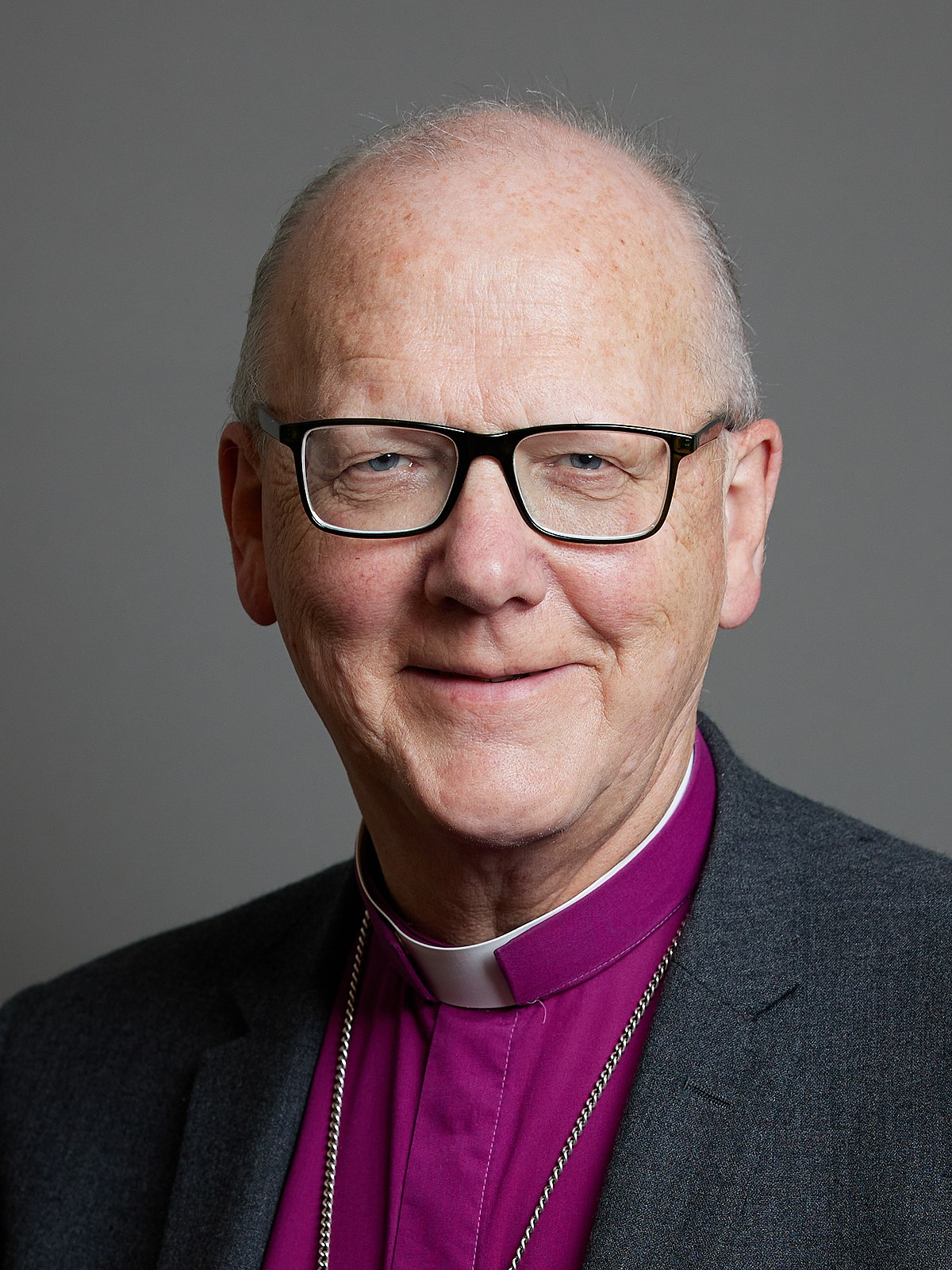
The Lord Bishop of St Albans asked His Majesty’s Government how many cases of whistleblowing were (1) reported, and (2) investigated, by the Financial Conduct Authority in (a) 2020 (b) 2021, (c) 2022, and (d) 2023.
Baroness Penn (Con): The FCA has reported and investigated the following number of whistleblowing cases for each year given:
Continue reading “Bishop of St Albans asks about cases of whistleblowing in financial institutions and services”The Bishop of St Albans received the following written answer on 29th March 2023:
The Lord Bishop of St Albans asked His Majesty’s Government, further to the remarks by Baroness Penn on 14 March (HL Deb col 1282), what exemptions to the Banking Act 2009 they granted to HSBC as part of its purchase of Silicon Valley Bank.
Continue reading “Bishop of St Albans asks about HSBC’s purchase of Silicon Valley Bank”On 21st March 2023, the House of Lords debated the Financial Services and Markets Bill in committee. The Archbishop of Canterbury spoke in support of amendments tabled by Baroness Kramer which stressed the importance of the lessons learned from the 2008 financial crash:
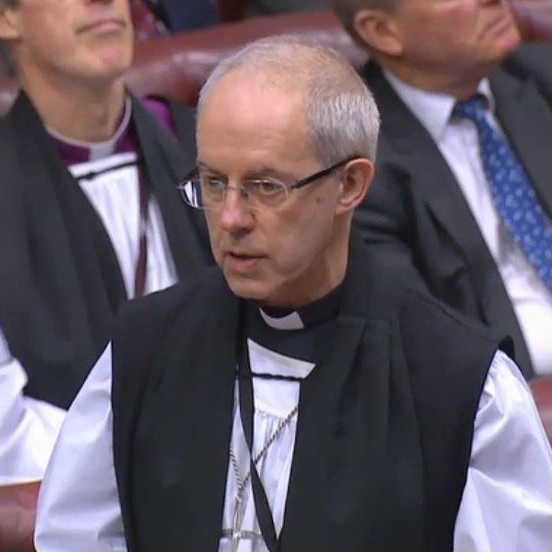
The Lord Archbishop of Canterbury: My Lords, I have added my name to Amendments 241C and 241D tabled by the noble Baroness, Lady Kramer, and wish to speak briefly in support of them here. I am particularly grateful to the noble Baroness, Lady Noakes, who made some very helpful and powerful points.
As the noble Baroness, Lady Kramer, said, this marks 10 years since the publication of the Changing Banking for Good report from the parliamentary commission, on which I sat with her. The two amendments to which I have added my name are probing amendments to stress the importance of not forgetting the lessons of 2008-09, because people and sectors entirely can have very short memories.
As the noble Baroness has explained, the amendments seek to prevent alteration to two elements of the banking reform Act 2013 by statutory instrument without proper debate in Parliament, and to prevent changes which go against the recommendations of the parliamentary commission. Our memories have certainly been refreshed this week. If the debate on this group had been held when it was first scheduled two or three weeks ago, I think we would have had a very different reception. If one is grateful for anything in the present crisis, it is that we have been so warmly reminded of why we need a clear memory.
Continue reading “Financial Services and Markets Bill: Archbishop of Canterbury supports amendments on financial safety”The Bishop of St Albans received the following written answer on Monday 20th February 2023:
The Lord Bishop of St Albans asked His Majesty’s Government what steps they are taking to support financial inclusion for blind and partially-sighted people.
Baroness Penn (Con): The Government works closely with regulators, industry, and consumer groups to promote financial inclusion. The Economic Secretary recently invited the Royal Institute of Blind People (RNIB) to attend the latest Financial Inclusion Policy Forum for a discussion of accessibility issues and consideration of what further action can be taken.
Continue reading “Bishop of St Albans asks about financial services for blind and partially sighted people”The Bishop of St Albans received the following written answer on 23rd January 2023:
The Lord Bishop of St Albans asked His Majesty’s Government:
The House of Lords debated the Financial Services and Markets Bill in its second reading on 10th January 2022. The Bishop of St Albans spoke in the debate concerning issues of access and regulation:
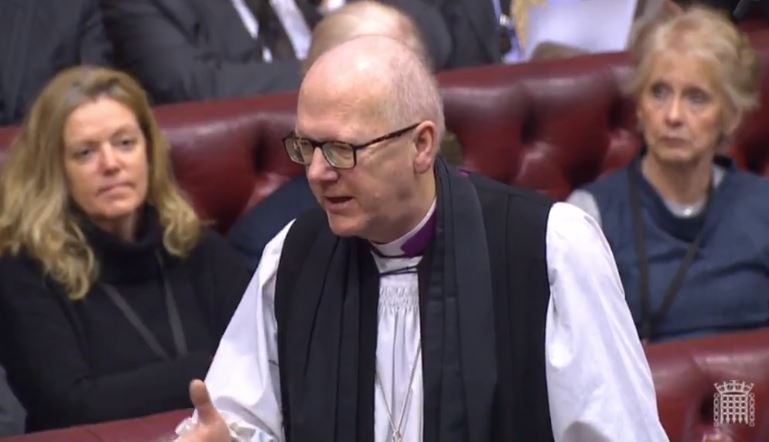
The Lord Bishop of St Albans: My Lords, theologians sometimes discuss the personal and social ethics in the teaching of Christ under the three headings of money, sex and power, those three areas which can be the most extraordinary gift and blessing when used rightly and for the common good but which, when they are an end in themselves, can become extraordinarily disruptive. Of these three areas, Christ had most to say about money, as its use reveals our values as individuals and as a society, often in a very stark way. A close reading of this Bill reveals a set of cultural assumptions and values about what is considered important and valuable. There are four areas that I want to highlight and which we need to consider if a growing and vibrant financial sector will work for the common good.
First, on crypto asset regulation, as others have said, we need to act fast both to protect our citizens and so that we do not fall behind the rest of the world. The problem at the moment is that the almost complete lack of regulation means that, for many people, crypto- currencies are just another form of gambling. The recent collapse of FTX has demonstrated the volatility of this market and its vulnerability to fraud. Some have made a fortune, while others have lost their life savings and will now be looking to the state to provide for them. Just as we need a sensible and balanced approach to the regulation of online gambling, so we need sensible, balanced regulation of crypto- currencies. The provision in this Bill to ensure that crypto is treated as a regulated activity and giving the FCA and the PSR the power and, as others have noted, the resources to do their work and to protect customers, is welcome.
Continue reading “Financial Services and Markets Bill: Bishop of St Albans speaks on cryptocurrency, access to cash, credit unions, and net zero”On 10th January 2023, the House of Lords debated the Financial Services and Markets Bill in it’s second reading. The Archbishop of Canterbury spoke in the debate, highlighting the need for good practice and quality of service in the finance industry:
The Lord Archbishop of Canterbury: My Lords, this year marks the 10th anniversary of the final report of the Parliamentary Commission on Banking Standards, Changing Banking for Good. I declare my interest having served on that commission, and I welcome the presence in this debate of the noble Baroness, Lady Kramer, who also served, as did the current Lord Speaker. I also welcome the maiden speeches of three noble Lords today: the noble Lords, Lord Ashcombe and Lord Remnant, and the noble Baroness, Lady Lawlor.
We need to remember that the extraordinary crisis in 2008—which led to the various commissions, reports and changes in regulations, including the financial services Act 2013, in which the Parliamentary Commission on Banking Standards played a part—caused huge and ongoing crises. While welcoming the Bill very strongly, I join some of the hesitations mentioned by the noble Lords, Lord Hunt, Lord Sharkey and Lord Vaux. It has been estimated that the financial services industry, and particularly the major banks, have an effective subsidy as a result of the implicit government guarantee that they receive, which is worth approximately £30 billion a year. If there is £30 billion a year going spare, many other industries and not a few churches would welcome that very warmly. However, that subsidy, which is at the risk of the taxpayer, as we saw in 2008 and 2009, is what gives the result of the banks having heavy social obligations; we must look carefully at that when the Bill reaches Committee, as has already been said. The issues of inclusion, stability and access at all levels, especially for micro-businesses, are very important, not least for levelling up.
Continue reading “Financial Services and Markets Bill: Archbishop of Canterbury stresses importance of serving the common good”
The Bishop of St Albans received the following written answers on 9th November 2022:
The Lord Bishop of St Albans asked His Majesty’s Government:
On 19th April 2021, during a debate on the Financial Services Bill, the Bishop of St Albans spoke in support of two amendments tabled by Lord Sikka, outlining the need for greater transparency around ministerial interventions in cases of financial misconduct, and supporting the establishment of a supervisory board to strengthen the accountability of financial watchdogs:
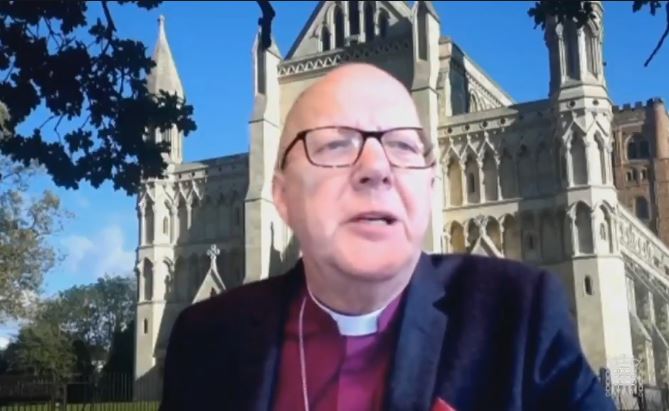
The Lord Bishop of St Albans [V]: My Lords, I will be brief in my support for this amendment. I am very grateful to the noble Lord, Lord Sikka, and the noble Baroness, Lady Bennett of Manor Castle, for speaking at great length. I therefore do not need to add a huge amount more, not least as I intend to go into a bit more detail on my concerns about transparency when speaking in support of Amendment 34, which touches on similar issues of accountability.
I am a little puzzled why the noble Baroness, Lady Neville-Rolfe, thinks that this is a case of bad cases making bad laws. It seems to me that there have been very considerable concerns in the past. Surely those ought to be investigated.
Continue reading “Financial Services Bill: Bishop of St Albans supports amendments on transparency and statutory governance”

You must be logged in to post a comment.