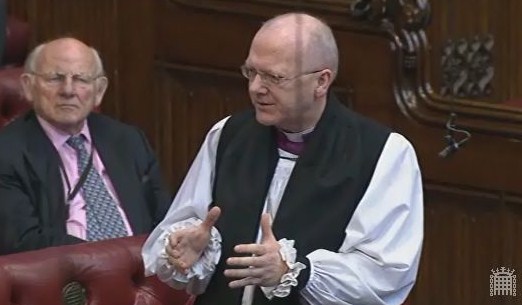
Bishop of St Albans speech marking International Roma Day

On 2nd April 2014 Baroness Whitaker tabled a question for short debate: ‘ to ask Her Majesty’s Government what plans they have to mark International Roma Day.’

The Bishop of St Albans gave a speech highlighting the work being undertaken in Luton in support of the Roma community in the diocese of St Albans, He also focused on the need to improve educational opportunities for Roma children.

14.03 Bishop of St Albans

The Lord Bishop of St Albans: My Lords, I thank the noble Baroness, Lady Whitaker, for securing this debate, Continue reading “Bishop of St Albans speech marking International Roma Day”

Moldova: EU and UK Relations

MoldovaOn 2nd April 2014 the Bishop of Wakefield, Rt Revd Stephen Platten, received answers to written questions on EU and UK relationships with the Republic of Moldova, which borders Ukraine. The questions focused on:

  • the EU’s Association Agreement
  • election monitoring
  • political and military assurances about territorial independence and sovereignty
  • Ministerial contact
  • EU visa waiver programme
  • Tensions between Moldova and the autonomous regions of Transnistria and Gagauzia. 

Continue reading “Moldova: EU and UK Relations”

Ukrainians in Crimea

14.03 Bishop of St AlbansOn 25th March 2014 Lord Trimble asked Her Majesty’s Government ‘what steps they are taking to support the Government of Ukraine’. The Bishop of St Albans asked a supplementary question:

The Lord Bishop of St Albans: My Lords, can the Minister tell us what representations are being made on behalf of Ukrainians who are still living in Crimea and find themselves living there now under the Russian state? How are their interests going to be protected?

Baroness Warsi: My Lords, that is the most difficult community for us to access. The right reverend Prelate asks an important question about a community which is probably most at risk. Unfortunately, we understand that OSCE monitors will not be allowed into Crimea at this stage, but I will write to the right reverend Prelate if I have any further details.


Bishop of Truro receives answers to written questions on settlements in East Jerusalem

Written Questions, answered on 24th and 25th March, 2014:

The Lord Bishop of TBishop of Truro 20.6.13ruro: To ask Her Majesty’s Government what representations they have made to the government of Israel regarding the recent announcement by the Jerusalem municipal authorities of their approval of building permits for 558 new units in East Jerusalem, in Har Homa, Neve Yaakov and Pisgat Zeev.

Continue reading “Bishop of Truro receives answers to written questions on settlements in East Jerusalem”

Somalia: Religious Freedom

Written Question, answered on 25th March, 2014:

13.10 Bishop of CoventryThe Lord Bishop of Coventry: To ask Her Majesty’s Government what is their assessment of freedom of religion and belief in Somalia.

The Senior Minister of State, Department for Communities and Local Government & Foreign and Commonwealth Office (Baroness Warsi): The vast majority of people in Somalia are Muslim (around 99.8%) and Islam is recognised as the official state religion in Somalia’s provisional constitution. The majority of reports of restriction of religious freedom relate to human rights abuses by Al Shabaab.

(via Parliament.uk)

Iran: Human Rights

Written Question, answered on  20th March, 2014:

14.03 Bishop of St Albans

The Lord Bishop of St Albans:

To ask Her Majesty’s Government what representations they have made to the government of Iran regarding that country’s human rights record.[HL6021]

The Senior Minister of State, Department for Communities and Local Government & Foreign and Commonwealth Office (Baroness Warsi) (Con): The UK’s non-resident Chargé d’Affaires discussed human rights with a range of Iranian government officials during his most recent visit to Iran on 12 March 2014. He raised the use of the death penalty, freedom of religion and the workings of the criminal justice system. Prior to that, the Secretary of State for Foreign and Commonwealth Affairs, my Rt. Hon. Friend the Member for Richmond (Yorks) (Mr Hague), raised Iran’s human rights records with Iranian foreign minister Zarif at the UN General Assembly on 23 September 2013.

(via Parliament.uk)

Somalia: Written Question from Bishop of Coventry

On March 19th 2014 the Bishop of Coventry, Rt Rev Christopher Cocksworth, received an answer to a written question about the promotion of stability in Somalia.

13.10 Bishop of CoventryThe Lord Bishop of Coventry: To ask Her Majesty’s Government what assistance they are providing to the Federal Government of Somalia to make progress on delivering security, stability and services to all its people.

Baroness Northover: The UK Government is committed to promoting security, stability and service delivery in Somalia. Funding is not provided directly to the Federal Government of Somalia. UK assistance is mainly delivered through international partners such as the UN, NGOs and private sector providers. DFID support includes work to deliver more legitimate governance structures and promote conflict resolution, supporting increased access to justice and security; and the provision of basic services through health and education programmes.

In addition, DFID, the Foreign and Commonwealth Office and the Ministry of Defence co-finance the Conflict Pool, which provides support to promote security in Somalia.

(Via Parliament.uk)

Iran: Written Question from Bishop of St Albans

On March 19th 2014 the Bishop of St Albans, Rt Rev Dr Alan Smith, received an answer to a written question about human rights abuses in Iran.

14.03 Bishop of St AlbansThe Lord Bishop of St Albans: To ask Her Majesty’s Government what is their assessment of the human rights situation in Iran following the election of President Rouhani.

The Senior Minister of State, Department for Communities and Local Government & Foreign and Commonwealth Office (Baroness Warsi): The human rights situation in Iran remains dire. We are particularly concerned by reports that the rate of executions has increased in 2014. We urge Iran to take concrete action to improve its human rights record. However, President Rouhani’s government has taken some positive steps on human rights, including the release of a number of political prisoners in September 2013.

(Via Parliament.uk)

Egypt: Written Questions from Bishop of Coventry

On March 19th 2014 the Bishop of Coventry, Rt Rev Christopher Cocksworth, received answers to two written questions about Egypt: on political and religious freedom in the country.
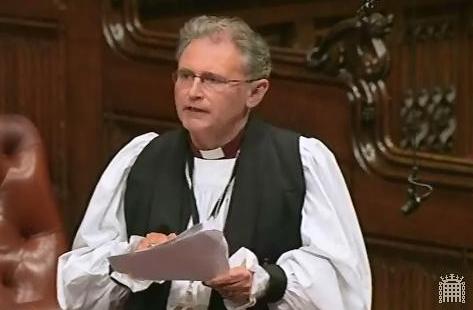
13.10 Bishop of CoventryThe Lord Bishop of Coventry: To ask Her Majesty’s Government what is their assessment of the current state of political freedom in Egypt and of the prospects for free and fair Presidential elections later this year.

The Senior Minister of State, Department for Communities and Local Government & Foreign and Commonwealth Office (Baroness Warsi): The January 2014 constitutional referendum was an important moment for millions of Egyptians who expressed their opinion through the ballot box. We welcome the fact that the new constitution includes better provisions for the protection of the rights of minorities, including Christians, and women. However, we are concerned by restrictions on freedom of expression for opposition groups and the press, both in the run-up to the referendum and since. We encourage Egypt’s interim authorities to ensure that Egypt’s democratic transition leads to free and fair presidential elections in a genuinely inclusive process. We are pleased to hear that the EU European External Action Service is discussing with Egyptian authorities its intention to send an Electoral Observation Mission to Egypt for the presidential elections.

The Lord Bishop of Coventry: To ask Her Majesty’s Government what is their assessment of the state of freedom of religion and belief in Egypt following the removal of President Morsi from office in July 2013.

Baroness Warsi: Sectarian violence increased under President Morsi and has continued since. Amnesty report that 200 Christian-owned properties have been attacked and 43 churches burned down or damaged since July 2013. In September, the Secretary of State for Foreign and Commonwealth Affairs, my Rt. Hon. Friend the Member for Richmond (Yorks) (Mr Hague), made a statement in Parliament condemning the violence against Christian churches. Article 64 of the 2014 constitution states that freedom of belief is absolute. The key test will be how the constitution is implemented, as many articles require additional legislation. We have continued to raise the importance of respect for different religions and beliefs and the protection of religious minorities with the Egyptian authorities. The Minister for the Middle East and North Africa, my Rt. Hon. Friend the Member for Faversham and Mid Kent (Mr Robertson), discussed the situation faced by Coptic Christians and implications of the new constitution in a meeting with Bishop Yulios during his visit to Cairo in December 2013. The Bishop was optimistic about the new Constitution provisions for religious minorities.

(Via parliament.uk)

Sikhs and Golden Temple: Written Question from Bishop of Coventry

On 19th March 2014 the Bishop of Coventry, Rt Rev Christopher Cocksworth, received an answer to a written question about the Indian operation at the Golden Temple, Amritsar.

13.10 Bishop of CoventryThe Lord Bishop of Coventry: To ask Her Majesty’s Government, further to the Written Answer by Baroness Warsi on 3 March (WA 287), whether they intend to hold further meetings with the representatives of Sikh organisations in the United Kingdom to address concerns arising from the publication of the Cabinet Secretary’s report on the Indian operation at Sri Harmandir Sahib.

The Senior Minister of State, Department for Communities and Local Government & Foreign and Commonwealth Office (Baroness Warsi): Ministers held two recent round-table meetings with the Sikh community and the Government is keen to ensure that constructive dialogue is maintained.

(Via parliament.uk)