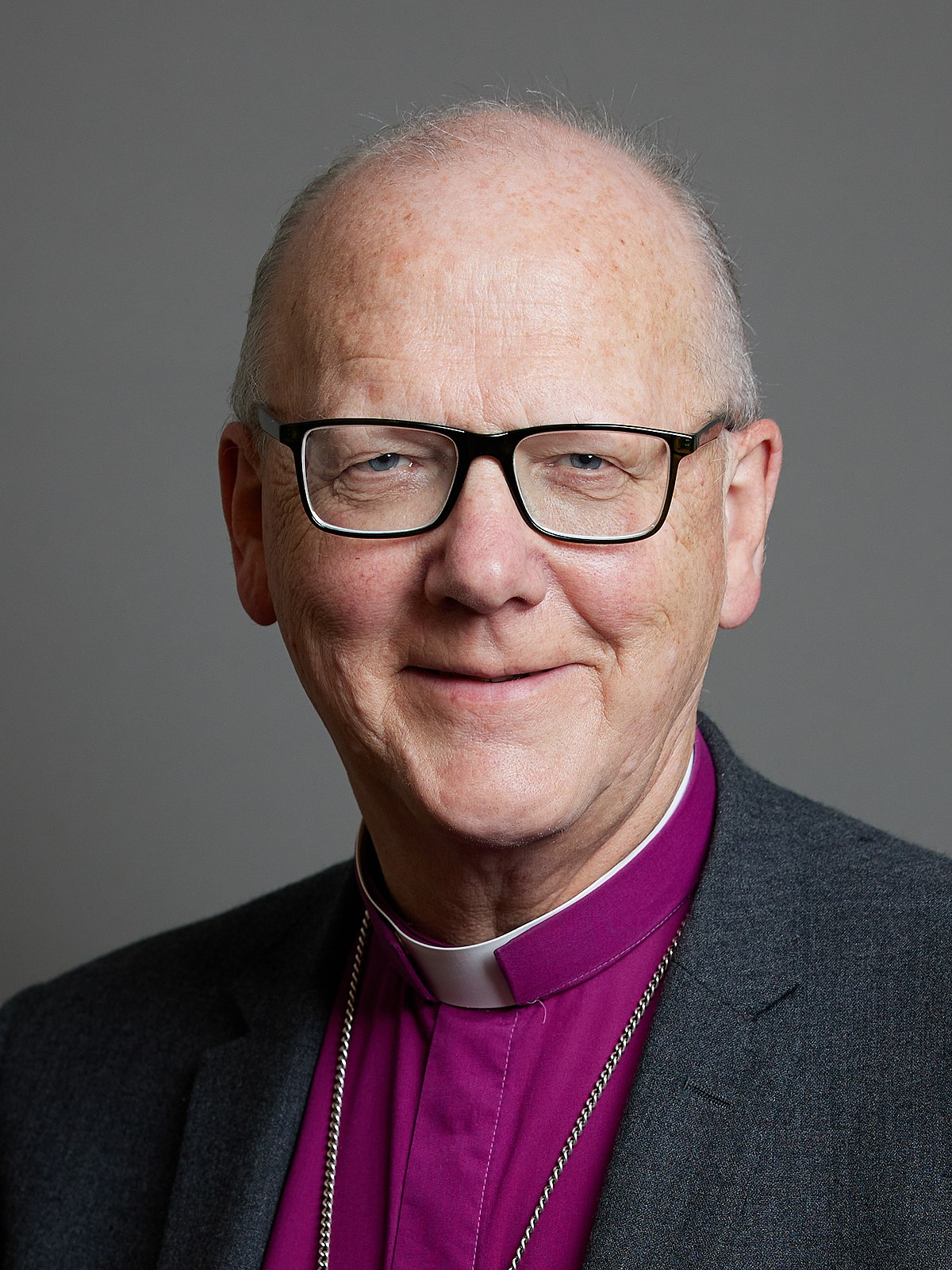
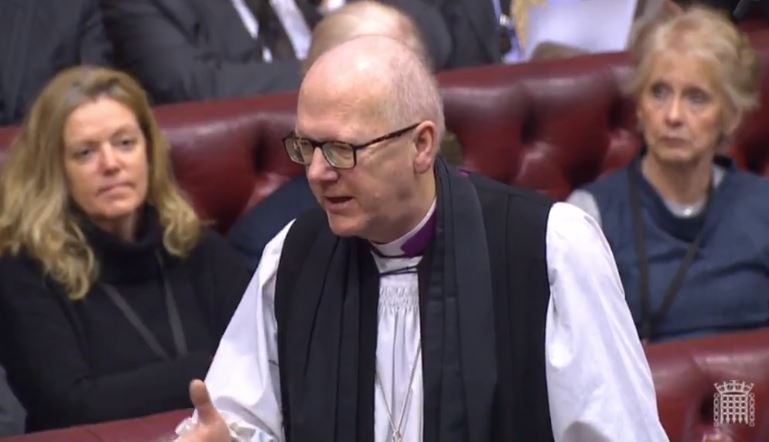
Bishop of St Albans asks about impact of reduction in pharmacy opening hours

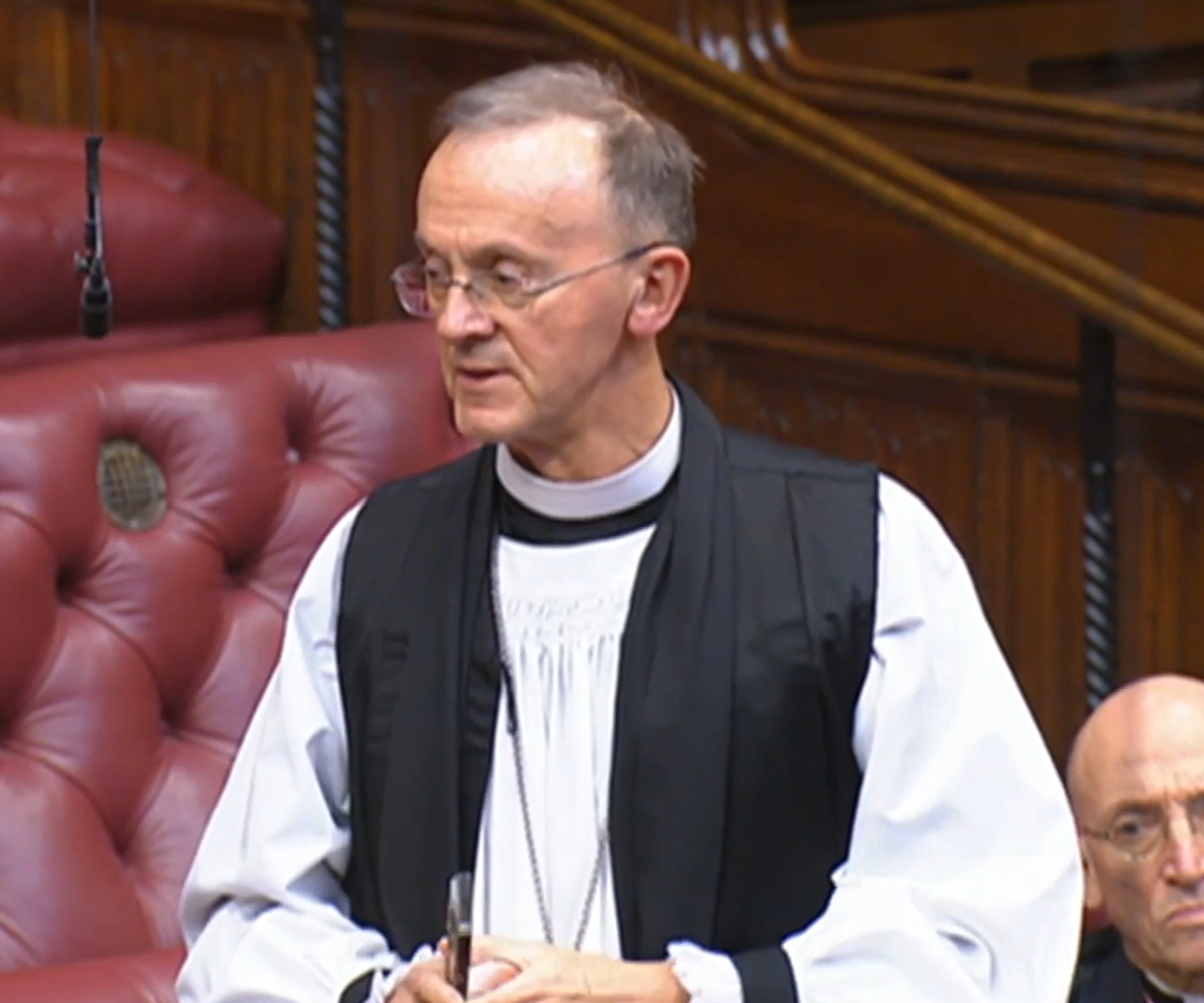
On 20th March 2025, the Bishop of St Albans asked a question he had tabled on the impact of reduced pharmacy opening hours:

The Lord Bishop of St Albans: To ask His Majesty’s Government what assessment they have made of the impact of the potential reduction in pharmacy opening hours.

Continue reading “Bishop of St Albans asks about impact of reduction in pharmacy opening hours”

Bishop of St Albans asks about number of employees at the Office for Health Improvement and Disparities

The Bishop of St Albans received the following written answers on 10th March 2025:

The Lord Bishop of St Albans asked His Majesty’s Government how many employees in the Department of Health and Social Care are working for the Office for Health Improvement and Disparities.

Continue reading “Bishop of St Albans asks about number of employees at the Office for Health Improvement and Disparities”

Bishop of Chelmsford takes part in debate on healthcare shortages in Myanmar

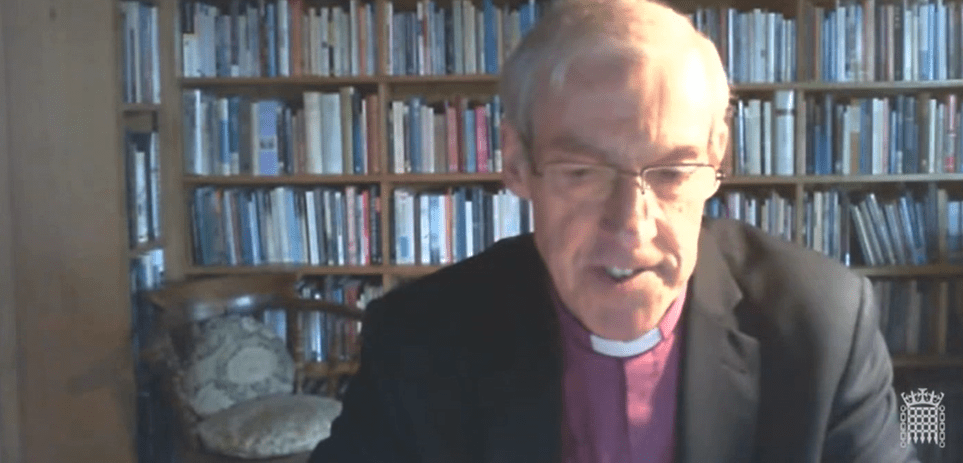
The Bishop of Chelmsford spoke in a debate on the reconstruction of the healthcare system in Myanmar on 29th February 2024, highlighting the impact of the humanitarian situation on the health system, and asking what interventions could be provided to address the medical need in the country:

The Lord Bishop of Chelmsford: My Lords, I thank the noble Lord, Lord Crisp, for securing this important debate and for his commitment to raising the profile of this important issue. This time nearly a year ago, the noble Lord asked an Oral Question about health workers in Myanmar in your Lordships’ House. The picture then was stark, but NGOs agree that in the intervening year, the situation has deteriorated further.

As we have heard, 104 health workers have lost their lives and many more have been detained in the three years since the coup. Although I certainly echo the congratulations to the UK Government on a number of impactful training and partnership programmes, it is clear that more needs to be done. We have heard about the appalling attacks on health workers, which have rightly been thoroughly condemned. However, it is important too to consider the broader humanitarian situation and its impact on the country’s health system. I do not personally have any specific connection with Myanmar but, like many others, I have a concern for how this country can play a positive part in places in the world that are suffering humanitarian disasters and injustice.

Continue reading “Bishop of Chelmsford takes part in debate on healthcare shortages in Myanmar”

Bishop of St Albans asks about numbers of doctors and nurses leaving the NHS in recent years

The Bishop of St Albans received the following written answer on 13th September 2023:

The Lord Bishop of St Albans asked His Majesty’s Government how many (1) doctors, and (2) nurses, left the NHS in (a) 2019, (b) 2020, (c) 2021, and (d) 2022.

Lord Markham (Con, Department of Health and Social Care): The table below shows the published data on the leaver rates as a percentage and the number of doctors and nurses & health visitors who have left active service in National Health Service trusts and core organisations, for each annual period 2019 to 2022.

Continue reading “Bishop of St Albans asks about numbers of doctors and nurses leaving the NHS in recent years”

Bishop of St Albans asks about ambulance response times

The Bishop of St Albans asked a question on bringing down ambulance response times on 11th May 2023, during a debate on financial resourcing of the NHS:

The Lord Bishop of St Albans: My Lords, I welcome what His Majesty’s Government are doing to try to get on top of this very difficult problem. Will the Minister give us a little more information, particularly about ambulance services? In Hertfordshire, which is in my diocese, category 2 call-outs, for strokes and hearts attacks, should have an 18-minute response but the response is averaging two hours and six minutes at the moment. There is a great deal of anxiety among ordinary people when these things happen. When do we think that the money going to the ambulance service is going to bring response times down?

Lord Markham (Con, Department of Health and Social Care): I am pleased to say that the figures announced today show that response times are coming down. For category 1, the most serious, we achieved the 15-minute target for 90% of calls. We are moving in the right direction, albeit there is a lot more that needs to happen in this space. That is what the investment in 800 new ambulances is about, as well as the £200 million of funding. Most importantly, it is about making sure we have the right services in place. Some 50% of ambulance calls do not result in a trip to the hospital. There are fall services, which are often best placed to help, which will pick people up in their home.

Hansard

Bishop of London speaks in debate to mark international women’s day

The Bishop of London took part in a debate to mark International Women’s Day on 10th March 2023, speaking about the role of women in the Church of England and in healthcare and nursing:

The Lord Bishop of London: My Lords, it is wonderful to be able to participate in this year’s International Women’s Day debate alongside such inspirational women. It is an honour to follow the noble Baroness, Lady Finlay.

I was recently fortunate to have a participant from the Jo Cox Women in Leadership Programme spend a day with me and the Bishop of Stepney as we visited the Stepney area, which is part of the diocese of London. The House may know that the programme was set up in Jo’s memory and in recognition of her leadership and the empowerment of many women. I commend the programme and its recognition of the need for women leaders to spend their time with other women leaders.

Continue reading “Bishop of London speaks in debate to mark international women’s day”

Votes: Health and Care Bill

On 1st March 2022, the House of Lords debated the Health and Care Bill in the first day of the report stage. Votes were held on amendments to the bill, in which Bishops took part:

Continue reading “Votes: Health and Care Bill”

Bishop of Worcester asks about sourcing NHS pay rises

The Bishop of Worcester asked a question on tackling inefficiencies in NHS resources to provide for future pay rises for health workers, during a discussion on the NHS pay review on 9th March 2021:

The Lord Bishop of Worcester: My Lords, I appreciate the immense, unprecedented and unforeseen pressure that the Government are under as they struggle with the devastating effects of the pandemic on public finances. At the same time, as has been noted, we all want to recognise the huge debt of gratitude that we owe to nurses and other health workers. Recognising that would best be done by a pay increase. We are told that a 1% increase is all that can be afforded. Can the Minister comment on whether he thinks tackling the estimated £2 billion lost annually through inefficiencies related to unnecessary A&E attendance and GP consultations might give more wriggle room?

Continue reading “Bishop of Worcester asks about sourcing NHS pay rises”

Bishop of Carlisle asks Government about routine health checks for over 75s

On 10th June Baroness Kennedy of Cradley asked Her Majesty’s Government “what assessment they have made of the impact of cancelled medical operations due to the COVID-19 pandemic”. The Rt Revd James Newcome, Bishop of Carlisle asked a follow up question, focusing on routine GP health checks for those over 75.

The Lord Bishop of Carlisle: My Lords, given the disproportionate effect of Covid-19 on those aged over 75 and the likely knock-on effects of cancelled operations, will the Minister take steps to encourage ​the reintroduction of routine GP health checks among people in this age group which, understandably, have been largely suspended during the pandemic?

Continue reading “Bishop of Carlisle asks Government about routine health checks for over 75s”

Bishop of Durham asks for Covid-19 Strategy to take into account spiritual, social and mental well-being

On 12th May the Government made a statement on their strategy for tackling COVID-19. The Rt Revd Paul Butler, Bishop of Durham, asked a follow up question, focusing on recognising the importance of spiritual, social and mental well-being.

Bishop Paul Butler

Lord Bishop of Durham: My Lords, language matters. Loose language and sloppy images hinder, rather than help. We need to continue to suppress the coronavirus—learn to coexist with it—as eradication is a long way off. Does the Leader agree that any recovery road map must recognise and speak of the importance of spiritual, social and mental well-being, as much as physical and economic health? Will she guarantee that this will be the case as phases 2 and 3 are developed?

Continue reading “Bishop of Durham asks for Covid-19 Strategy to take into account spiritual, social and mental well-being”