
On 5th April, a vote took place on the Health Service Medical Supplies (Costs) Bill. The Bishop of St Albans took part. Continue reading “Votes: Health Service Medical Supplies (Costs) Bill”
Tag: health
Bishop of Peterborough asks Government about progress towards eradicating leprosy
 On the 3rd April 2017, Baroness Hayman tabled a debate in the House of Lords, asking the Government “what is their assessment of progress made in combating neglected tropical diseases since the London Declaration made in January 2012.” The Bishop of Peterborough, the Rt Revd Donald Allister, highlighted the lack of progress towards the eradication of leprosy. Lord Bates responded on behalf of the Department for International Development.
Continue reading “Bishop of Peterborough asks Government about progress towards eradicating leprosy”
Bishop of St Albans highlights importance of church in promoting disease prevention
On the 3rd April 2017, Baroness Hayman led a short debate in the House of Lords, to ask the Government “what is their assessment of progress made in combating neglected tropical diseases since the London Declaration made in January 2012.” The Bishop of St Albans, the Rt Revd Alan Smith, spoke about the role that the Anglican Communion could play in providing a bridge between NGOs and local communities.
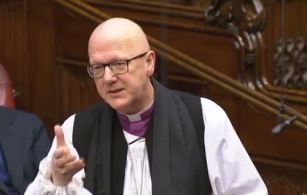 Bishop of St Albans: My Lords, I, too, thank the noble Baroness, Lady Hayman, for introducing the debate. It is good to pause and reflect on the extraordinary progress that has been made, as well as the salutary thought of just how much more needs to be done. I am not a medic and do not want to engage in the medical aspect of this, but I want to make one, very brief point: the need to adopt clear protocols and joined-up approaches if we are going to be really effective in combating neglected tropical diseases. Continue reading “Bishop of St Albans highlights importance of church in promoting disease prevention”
Bishop of Winchester asks Government about access to healthcare for residents of the Occupied Territories

On the 28th March 2017 Baroness Sheehan asked a question about access to healthcare in East Jerusalem for residents from the Occupied Territories. The Bishop of Winchester, Rt Revd Tim Dakin, asked a supplementary question:
The Bishop of Winchester: My Lords, we have heard how the people of the Occupied Territories continue to face challenges accessing emergency care. The diocese of Jerusalem provides hospitals and health centres across this area, but many of the vital facilities and services are not fully operational because the equipment cannot be calibrated and staff lack accreditation. What conversations have Her Majesty’s Government had with the Israeli Government to facilitate the necessary inspections to ensure that these and similar facilities become operational and therefore reduce the reliance of Palestinian people on reaching hospitals in East Jerusalem?
Bishop of Durham highlights the importance of chaplaincy and a whole person approach to end of life care
 On 14th March 2017, Baroness Finlay of Llandaff led a short debate on the question of ‘how the Government intends to ensure that Clinical Commissioners respect the undertakings made in Our Commitments to You for End of Life Care: The Government Response to the Review of Choice in End of Life Care’. The Bishop of Durham, the Rt Revd Paul Butler spoke in the debate, paying tribute to the importance of chaplaincy to end of life care.
The Lord Bishop of Durham My Lords:
“The medical side of a patient’s health is not always the key to treating them”.
So said a medical student recently, describing what he had learned from a leading end-of-life care specialist at St Benedict’s Hospice and Centre in Sunderland. Another medical student said:
“Palliative care is not just end-of-life care. It is a very holistic approach which supports the patients’ needs very well”. Continue reading “Bishop of Durham highlights the importance of chaplaincy and a whole person approach to end of life care”
Votes: Health Service Medical Supplies (Costs) Bill
On 8th February 2017 two votes took place in the Lords on amendments to the Government’s Health Services Medical Supplies (Costs) Bill. The Bishops of Chester and St Albans took part in the first vote and the Bishops of Carlisle, Chester and St Albans in the second. Continue reading “Votes: Health Service Medical Supplies (Costs) Bill”
Bishop of St Albans raises concerns about self-harm by young people
 On 19th January 2017 Labour Peer Lord Hunt of King’s Heath asked Her Majesty’s Government “what is their assessment of Young Minds’ analysis published on 21 December 2016 that 64 per cent of Clinical Commissioning Groups are diverting new funding for children’s mental health services to other areas”. The Bishop of St Albans, Rt Revd Alan Smith, asked a follow up question:
The Lord Bishop of St Albans: My Lords, this is a very serious and growing problem. Recent research has shown over the last five years that the number of hospital admissions associated with children’s self-harm has grown by 93% among girls and 45% among boys. It seems extraordinary that when money is announced for mental health services it is then not spent. First, how many years will we wait until we need to ring-fence that money, because this is a really important issue? Secondly, to pick up on the previous but one question, will the Government commit to producing guidelines for schools and colleges about preventing and responding to self-harm, so that we have some practical things put in place? Continue reading “Bishop of St Albans raises concerns about self-harm by young people”
Bishop of St Albans raises serious need to address self harm amongst children and young people
On 6th December 2016, the Bishop of St Albans, the Rt Revd Alan Smith, spoke to a question he had tabled to ask the Government “what assessment they have made of the rise in the number of children and young people being treated for self-harm.” Lord Prior of Brampton responded for the Government. The Bishops’ follow-up question and those of Peers are reproduced below.
 The Lord Bishop of St Albans To ask Her Majesty’s Government what assessment they have made of the rise in the number of children and young people being treated for self-harm.
Lord Prior of Brampton My Lords, the Government are aware of the appalling rise in self-harm in children and young people and the misery this reflects. The Government are also acutely aware that self-harm is a leading indicator of risk of suicide and recognise that much more needs to be done to address this issue.
The Lord Bishop of St Albans I thank the Minister for his reply. The research from the World Health Organization shows that around 20% of British 15 year-olds report some sort of self-harm. In the past five years, research shows that hospital admissions associated with self-harm have gone up by nearly 93% among girls and 45% among boys. Having recently visited the outstanding charity selfharmUK, in Luton in my diocese, I have seen what a concerted and systematic approach to this problem can have on a very difficult issue, and we need something similar at a national level. Will Her Majesty’s Government commit to publishing guidelines for schools and colleges about preventing and responding to self-harm?
Bishop of Ely calls on Government to “make care work a recognised and valued profession.”
On 24th November 2016 the House of Lords debated a motion from Baroness Finlay of Llandaff “To move that this House takes note of the implications for the health and social care workforce of the result of the referendum on the United Kingdom’s membership of the European Union.” The Bishop of Ely, Rt Revd Stephen Conway, spoke in the debate:
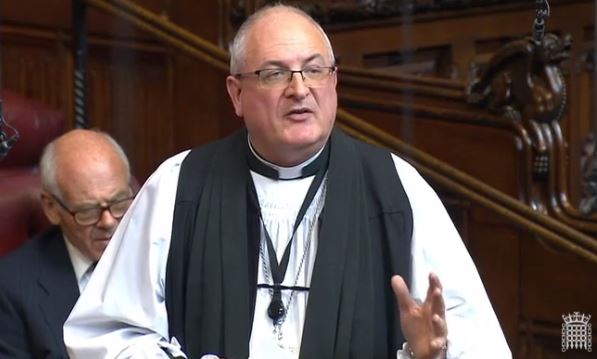 The Lord Bishop of Ely: My Lords, I am grateful to the noble Baroness, Lady Finlay, for bringing this important matter before the House today. The right reverend Prelate the Bishop of Carlisle, our lead bishop on health and social care, cannot be in his place today, but I am glad to contribute from these Benches on his behalf.
The debate brings to mind two principles central to Christian faith and practice: justice for the stranger in our midst and care for the vulnerable. Mosaic law enjoins us not to withhold justice from the outsider. Only yesterday, in conversation, the Secretary of State for Communities and Local Government sought to check that I had heard the words of Jesus, “Love thy neighbour as thyself”. I am grateful to him. This reminds us that the words of Jesus tell us that every care and service given to others is a service given to God. Continue reading “Bishop of Ely calls on Government to “make care work a recognised and valued profession.””
Bishop of Carlisle asks Government about the impact of work pressures on teachers’ mental health
 On 16th November 2016, Baroness Tyler of Enfield asked Her Majesty’s Government “what is their response to the Report of the Values-Based Child and Adolescent Mental Health System Commission, What Really Matters in Children and Young People’s Mental Health, published on 7 November.” The Bishop of Carlisle, Rt Revd James Newcome, asked a follow up question:
The Lord Bishop of Carlisle: My Lords, the commission highlighted the importance of valuing the workforce, but a 2014 survey of teachers and lecturers indicated that about 55% of them reckoned that their work was seriously damaging their own mental health. Have Her Majesty’s Government any plans to address that particular issue so that the mental health of teachers can be improved and so they are better equipped to help and improve the mental health of their pupils? Continue reading “Bishop of Carlisle asks Government about the impact of work pressures on teachers’ mental health”
 The Church of England in Parliament
You must be logged in to post a comment.