Bishop of Ely defends freedom of speech in universities

“If we allow the dominant agenda to become the refusal to be exposed to being offended, we deny ourselves the rich opportunity to be agents of the transformation of conflict through positive engagement.”–  Bishop of Ely, 26/11/5

On 26th November 2015 the House of Lords debated a motion from  Baroness Deech: “That this House takes note of the protection of freedom of speech in universities.” The Bishop of Ely, Rt Revd Stephen Conway, spoke in the debate:
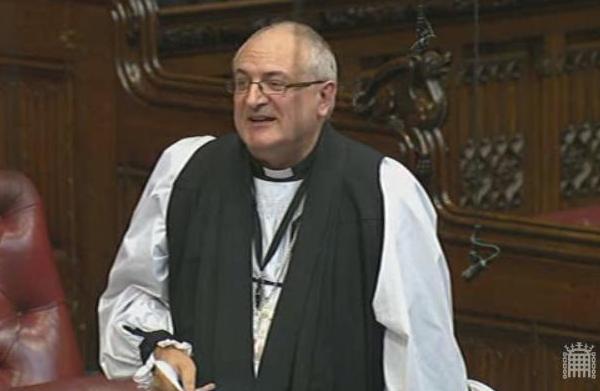
14.10.16 Bishop of Ely 1The Lord Bishop of Ely: I, too, take the opportunity to congratulate the noble Baroness, Lady Deech, for bringing this debate about. I would be very glad to engage in metaphysical conversation with the noble Lord, Lord Patten, about the soul of the university sometime outside the Chamber. I am more concerned for us to promote and understand the importance of religious literacy in the defence of free speech, and the Church’s engagement with a number of institutions in seeking to make the most of the Prevent agenda without throwing aside openness and readiness to engage in full debate. Continue reading “Bishop of Ely defends freedom of speech in universities”
Bishop of Chester takes part in debate on Counter-Terrorism and Security Bill

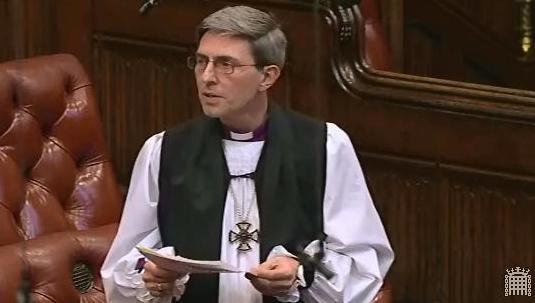
On 28th January 2015, the Bishop of Chester, the Rt Revd Peter Forster, took part in the debate on amendments to the Government’s Counter-Terrorism and Security Bill, during its Committee Stage. Speaking during the debate on the duties of higher education institutions under the Bill, the Bishop raised the point that places of religious instruction and education did not appear to fall under the remit of the Bill. Following the debate, the amendments were withdrawn.

14.03 Bishop of ChesterThe Lord Bishop of Chester: I will speak very briefly as we come to the end of this debate. As I was listening to it, I realised that there is a whole area to which we have not referred but which is entirely relevant; that is, religious institutions and places of religious instruction and education. Those are missing from the Bill. The application of the Bill to universities will have very uncertain benefits and be extremely impractical to apply in as much as universities are independent institutions. They do not always appear so to the heads of those institutions when they deal with Governments but they are independent institutions. That is a really important feature. Most of the authorities listed here are not independent in that way, although other educational establishments are included. Continue reading “Bishop of Chester takes part in debate on Counter-Terrorism and Security Bill”

Archbishop of York highlights risks to financial stability of higher education system

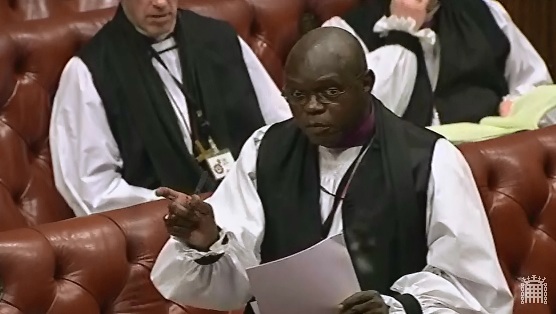
On 15th December 2014, Lord Sharkey asked Her Majesty’s Government what is their assessment of the Higher Education Commission’s report Too Good to Fail: The Financial Sustainability of Higher Education in England. The Archbishop of York, the Most Rev. and the Rt Hon. John Sentamu, asked a supplementary question:

Archbishop of YorkThe Archbishop of York: My Lords, will the noble Baroness tell us how, in the light of this report, she hopes to mitigate the risks to financial sustainability? Those are very big risks. Can she tell us how she will mitigate them? Forget the canoes.

Baroness Williams of Trafford: My Lords, the Government have asked HEFCE to monitor this situation, particularly in the light of the cap being lifted in 2016. That is a very important point.

(via Parliament.uk)

Bishop of Chester asks question on assessment of needs of dyslexics in higher education

On 30th June 2014, Liberal Democrat peer Lord Addington asked Her Majesty’s Government how the assessment of complex needs for dyslexics will be achieved under the new Disabled Students’ Allowance arrangements. The Bishop of Chester, the Rt Revd Peter Forster, asked a supplementary question.
14.03 Bishop of ChesterThe Lord Bishop of Chester: My Lords, I declare an interest in that my younger son has just graduated successfully and has benefited from the computer and software for someone with dyslexia. People with dyslexia often flourish later in the educational process as they gain their coping mechanisms. Does this not mean that it is even more important to make sure that this support is fully in place, not least at university?
Lord Ahmad of Wimbledon: The right reverend Prelate makes an important point, and I congratulate him on his son’s successful graduation. The point he makes is perfectly valid. I have already mentioned that we will be looking at a full equality impact assessment before laying the regulations. I am sure that part and parcel of that process, and the discussion around those regulations, will be to cover the points that the right reverend Prelate has made.

Maiden speech by the Bishop of Portsmouth – Higher Education

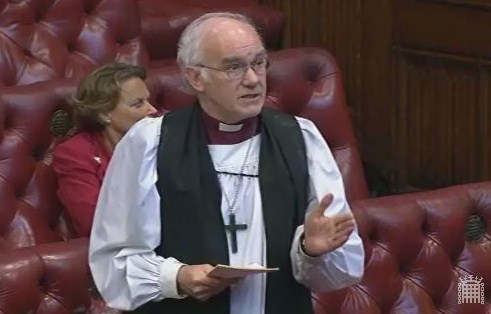
On 9th April 2014 the Bishop of Portsmouth, Rt Rev Christopher Foster, gave his maiden speech in a House of Lords debate to take note of Higher Education in the UK.

14.04.09 Portsmouth maiden speech 1

Bishop Christopher focused his remarks on his diocese, the important role of Portsmouth University, access for international students and on local economic disadvantage. His speech in full is below: Continue reading “Maiden speech by the Bishop of Portsmouth – Higher Education”

Higher Education: a public good for the common good – speech by Bishop of Winchester

There is need for public investment in universities, otherwise what is currently a public good will again become a private good, affordable to a few.” – Bishop of Winchester, 9/4/14 

Bishop of Winchester

On 9th April 2014 the House of Lords debated a Government motion to take note of Higher Education in the UK. The Bishop of Winchester, lead bishop for HE, spoke about the work of the Church of England in the field through its Cathedrals Group of universities, as well as the ethos and purpose of Higher Education. Continue reading “Higher Education: a public good for the common good – speech by Bishop of Winchester”

Higher Education: Student Loans

Lord Foulkes of Cumnock asked Her Majesty’s Government ‘what action they propose to take over the potential impact on university funding arising from lower than expected repayment of student loans?’ The Bishop of Chester asked a supplementary question:

14.03 Bishop of ChesterThe Lord Bishop of Chester: My Lords, I share the Government’s view that the higher education sector is in remarkably good health given the recession. However, does not setting fees at £9,000, which is far higher than fees in any other European country, imply a loans system that has its own element of generosity, including a repayment starting point of £21,000, rather than the original £16,000?
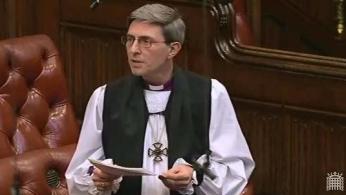
Lord Ahmad of Wimbledon: The right reverend Prelate raises an important point. I am sure he is aware that the Government have ensured that those universities that have chosen to raise their fees to the £9,000 limit have suitable access agreements so that those who come from disadvantaged backgrounds are given the opportunity to go to university. The Government’s policy remains that access to a university education should be based not on someone’s ability to pay but on their ability.

(via Parliament.uk)

Maiden Speech from the Bishop of Winchester

Bishop of WinchesterOn the 14th May 2013 the Bishop of Winchester, the Rt Revd Tim Dakin gave his maiden speech in the House of Lords. Following the convention of the House the Bishop spoke about his diocese and then addressed the debate covering his areas of interest education, social cohesion and agriculture.

Continue reading “Maiden Speech from the Bishop of Winchester”