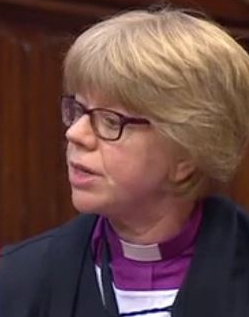
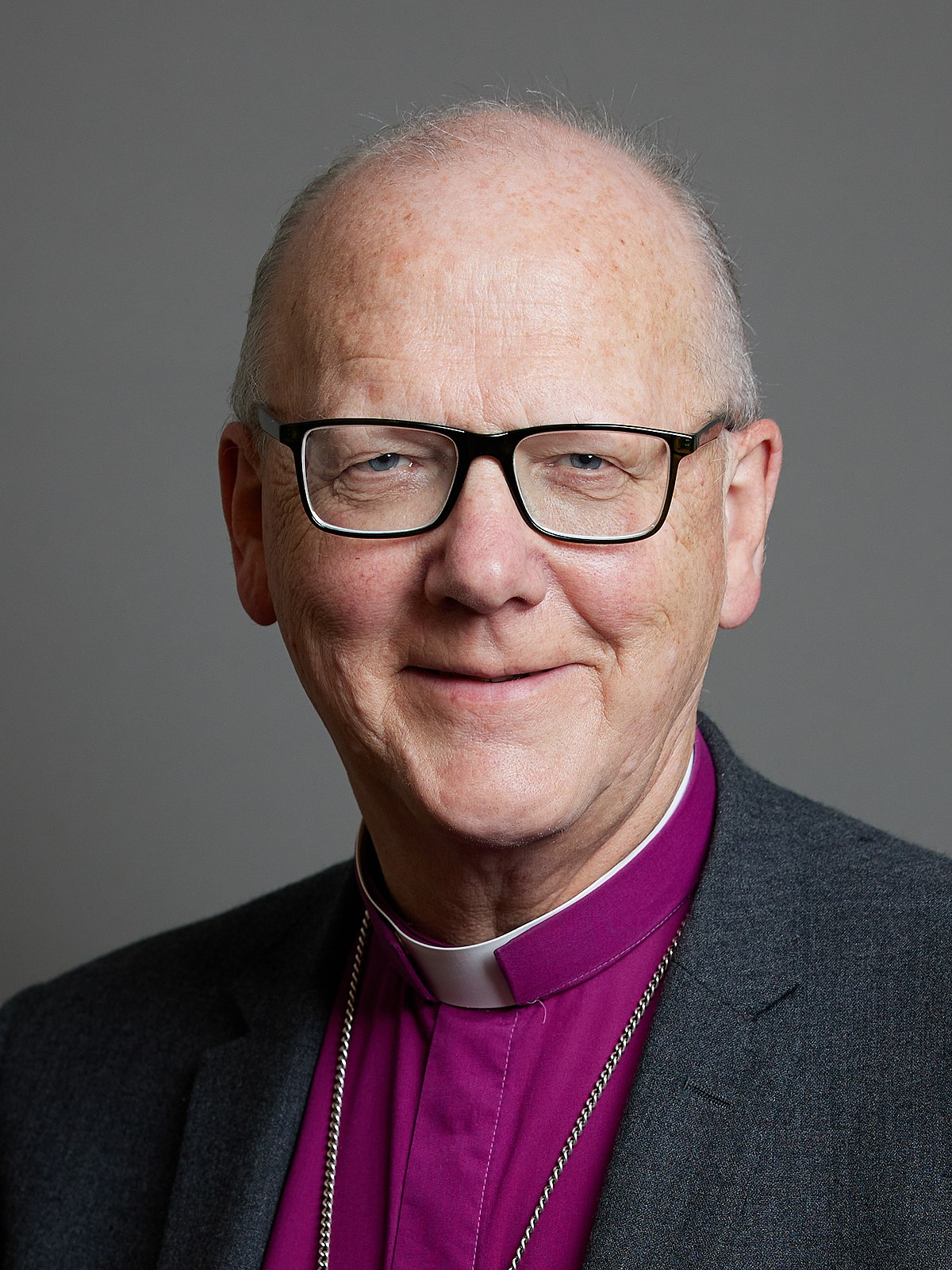
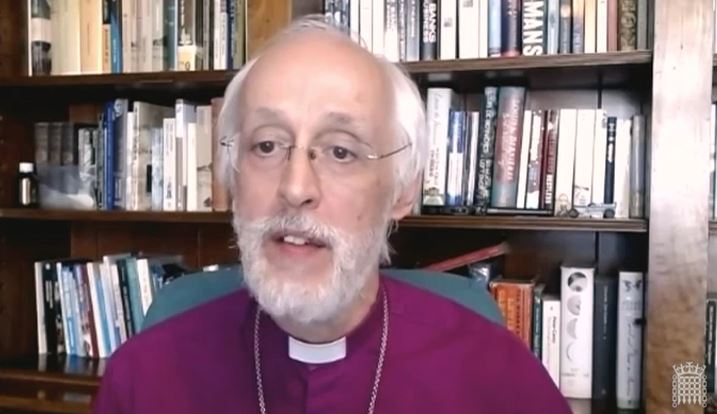
The Bishop of St Albans asked a question on government plans to build accessible homes on 17th June 2021:
The Lord Bishop of St Albans: My Lords, there is a real risk that the proposed changes to the planning process could mean that fewer accessible homes are built for older and disabled people. Research from the housing association Habinteg reveals that more than half of all local plans make no requirements for new homes to meet any accessible housing standard. Fewer accessible houses are being planned now compared with 2019. What plans do Her Majesty’s Government have to ensure that more homes are built to accessible and adaptable standards?
On 10th June 2021, the House of Lords voted on two deferred motions relating to an amendment to the Town and Country Planning Order. A Bishop took part in both votes:
On 24th May 2021 the Bishop of Blackburn asked a question on behalf of the Bishop of St Albans, on fire safety costs for leaseholders.
The Lord Bishop of St Albans: To ask Her Majesty’s Government what assessment they have made of the (1) current, and (2) future, incidence of leaseholder bankruptcies attributable to remedial fire safety works and interim fire safety costs.
The Lord Bishop of Blackburn: My Lords, on behalf of my right reverend colleague, I ask the Question standing in his name on the Order Paper.
On 18th May the Bishop of Manchester spoke in the fourth day of debate on the Queen’s Speech, focusing on proposals for policing, building safety and conversion therapy.
My Lords, I thank the noble Baroness, Lady Fullbrook, whose wisdom I look forward to hearing more often, for an excellent maiden speech. I also refer to my interests, stated in the register, in policing and housing.
A number of Bills mentioned in the gracious Speech will require our police to enforce new laws and regulations. We have already seen considerable disquiet expressed regarding what might amount to a very significant reduction in the ability of the public to engage in peaceful political protest, particularly where such protests directly or indirectly impact on others. I will reserve more detailed comments on this Bill for when it reaches your Lordships’ House, although I note the wise comments made earlier by the noble Baroness, Lady Chakrabarti. For now, I want briefly to lay it alongside my experience of 12 months of rapidly changing coronavirus regulations.
On many occasions, the precise boundaries between regulations—matters that police can enforce—and guidance, to which they can only direct our attention, have been seriously blurred. Meanwhile, ministerial statements have put pressure on our police to issue fixed penalty notices, but the Crown Prosecution Service is quite clear that an adequate chain of evidence will be almost impossible to achieve.
On 17th May 2021 the Bishop of St Albans spoke in the third day of debates on the Queen’s Speech in the House of Lords, focusing on the continuing issues of leaseholders facing costs for replacing dangerous cladding, and the new planning Bill.
“My Lords, I too look forward to hearing the maiden speeches of the noble Lords, Lord Coaker and Lord Morse, but I want to start by congratulating the Minister on introducing the leasehold reform Bill.
“Ending ground rents—or, as one person called it recently, the serfdom charge—in new developments is an important and positive reform, and I will welcome this opportunity to be mostly congruent with the Minister, after been being on opposing sides of the Fire Safety Bill. While this is a great victory for future leaseholders, existing leaseholders, particularly those in developments affected by the building and fire safety scandal, nervously await their fate.
On 12th May 2021 the House of Lords questioned Government on fire safety and cladding, following a recent fire in east London.
The Lord Bishop of St Albans [V]: My Lords, the Government have said that it is not right for the taxpayer to bail out leaseholders, but taxpayers’ money through the building safety fund could be bailing out developers for building substandard developments. What plan do the Government have to investigate whether developments met fire safety regulations at the time of construction and, in those cases where regulations were not met, to apportion remedial liability to the developers, so that those responsible actually pay?
On 28th April 2021, the House of Lords debated amendments to the Fire Safety Bill. The Bishop of Rochester spoke in the debate, raising concerns he and other members of the Bishops Benches had over the effects of the bill on tenants and leaseholders:
The Lord Bishop of Rochester: My Lords, the right reverend Prelates the Bishop of St Albans and the Bishop of London have both been involved in earlier stages on the Bill and, regretfully, neither is able to be in your Lordships’ House this evening. However, I come with my own background and interests, as a former board member of various housing associations over 25 years and as the former chair of the charity Housing Justice.
As noted by the noble Baroness, Lady Pinnock, the right reverend Prelate the Bishop of St Albans has been heavily involved in this matter and has been persistent. He said yesterday that none of us wanted to be in this position at this stage. But while so much of the Bill is welcome—not least the £5 billion which has been referred to—there are continuing and serious concerns, some of which have already been expressed in the debate this evening, about the position of leaseholders and tenants, and particularly certain groups of leaseholders and tenants.
The Bishop of Durham received the following written answers on 26th April 2021:
The Lord Bishop of Durham asked Her Majesty’s Government how many asylum seekers they have asked (1) Mears, (2) Serco, and (3) Clearsprings Ready Homes, to provide accommodation for as part of Operation Oak.
Lord Greenhalgh (Con, Home Office): We currently have c8100 people in hotels, with our providers working to procure sufficient accommodation across the UK to exit contingency accommodation and maintain a business as usual operation thereafter.
The Bishop of Newcastle gave a speech during the Archbishop of Canterbury’s debate on the Coming Home report from the Archbishops’ Commission, highlighting the issues in the housing stock in the North of England and the need for stable and secure homes:
The Lord Bishop of Newcastle: My Lords, at a time when spirit-lifting is much needed, I can say with pleasure that my spirit has been lifted, as indeed has my heart, by this report from the Archbishop’s Commission. My heart and my spirit have been lifted because this report recognises that building homes and communities, not just houses, is of the deepest significance to the human dignity of every man, woman and child in this country and to the kind of society we aspire to build.
The Bishop of Manchester took part in the Archbishop of Canterbury’s debate on the Coming Home report from the Archbishops’ Council on 24th March 2021:
The Lord Bishop of Manchester: My Lords, I thank my most reverend friend the Archbishop of Canterbury for sponsoring this debate. My personal interest and passion in tackling homelessness and creating good homes for the people of our nation go far beyond the interests contained in the official register, to which I draw your Lordships’ attention. Alongside those, as the noble Lord, Lord Best, has indicated, I now chair the board of governors of the Church Commissioners, as deputy to my most reverend friend. I gladly confirm to your Lordships that the board welcomes the report, and indeed I am member of the group set up by the Church charged with overseeing its implementation.
Today we have no Bill to scrutinise, no complex Marshalled List of amendments to work through; what we have is something that runs far deeper, something that should underpin and equip us for such future legislation on the matter of housing as is brought forward to your Lordships’ House to determine. The five values for housing that the Archbishops’ Commission has set before us—sustainable, safe, stable, sociable and satisfying—have been implicit in much of the work I have engaged in over the years. But now we have them encapsulated in a simple and memorable form. Not least, they recognise that a home is far more than walls, roofs, bricks, tiles, glass and mortar. A home is somewhere we can belong.
You must be logged in to post a comment.