On 8th February 2016, Lord Roberts of Llandudno asked the government “what action they are taking to relieve the situation of unaccompanied refugee children.” The Bishop of Rochester, the Rt Revd James Langstaff, asked a follow up question.
 The Lord Bishop of Rochester: My Lords, as one of the bishops from Kent, may I take the Minister back to his previous answer? In fact, some 1,300 unaccompanied refugee children are housed in Kent, and the local authorities and the voluntary agencies are under very significant pressure. May I push him a little as to whether, in the light of the somewhat unencouraging response from other local authorities, Her Majesty’s Government intend to do anything else to ensure a more effective national dispersal programme—given that we are talking not just about this moment, but about the likely 10 years that will be needed to get a young person from the point of arrival to full integration, with all the work in education, language and healthcare needed to go with that, and the considerable investment required? Some assurance would help my colleagues in Kent. Continue reading “Bishop of Rochester asks about unaccompanied refugee children”
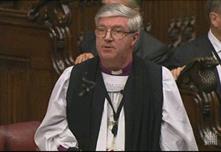 The Lord Bishop of Norwich: My Lords, I support Amendment 230 in this group. My colleague, the right reverend Prelate the Bishop of Southwark, spoke at Second Reading of his concern about the architecture of Clause 37 and Schedule 8. I share his belief that the reduced weekly support of £36.95 per person, to which the noble Lord, Lord Rosser, referred, for an asylum seeker under the current system is inadequate. Where that financial provision is refused, it is subject to a right of appeal. I note that in nearly two-thirds of such appeal cases, the appeal is successful or the refusal is withdrawn.
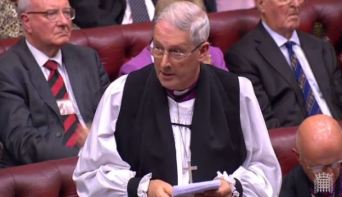 The Lord Bishop of Southwark: My Lords, I share some of the concerns of the noble Baroness, Lady Lawrence, who sketched out the problems with enacting this clause. As the Government rightly tell us, reasonable suspicion is a well-established precept in English law and policing practice. However, this does not mean that it is infinitely elastic in its application. A prior question needs to be asked when legislating: is it applicable in this circumstance, and with what effect?
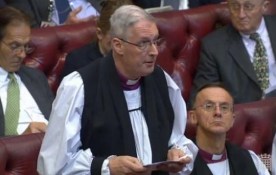 The Lord Bishop of Southwark: My Lords, the Bill is the latest in a list of substantive immigration legislation that this House has considered in recent years. Since the Nationality, Immigration and Asylum Act 2002 we have had five further pieces of primary legislation in this area, yet Her Majesty’s Government have published no White Paper on immigration since 2002—no considered, detailed overview and proposals through which we might consider all aspects relating to immigration before embarking on major legislation. The Explanatory Notes are helpful but they are no substitute for a White Paper.


 The Lord Bishop of Derby: My Lords, I shall make a couple of comments and invite the House to think a little about the humanitarian basis of this debate.
 The Lord Bishop of Chester: My Lords, does the Minister think that the current European regulations are working, and indeed workable, in the face of the sheer volume of people who are seeking to migrate?
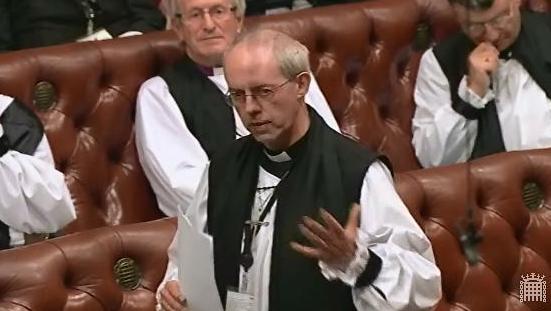
 On the 22nd July 2015 the Bishop of Peterborough, the Rt Revd Donald Allister, spoke in a debate on the relocation of Mediterranean migrants within the EU. The Bishop spoke of our duty as a nation to help the persecuted and dispossessed, alongside addressing the root causes through aid, diplomacy and other appropriate means.


You must be logged in to post a comment.