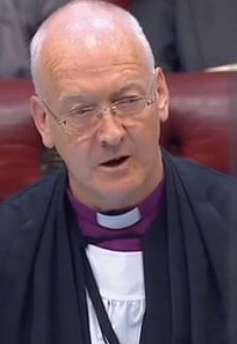
Bishop of Leeds leads debate on the humanitarian situation in Sudan

On 27th November 2025, the Bishop of Leeds tabled a question for short debate on the humanitarian situation in Sudan:
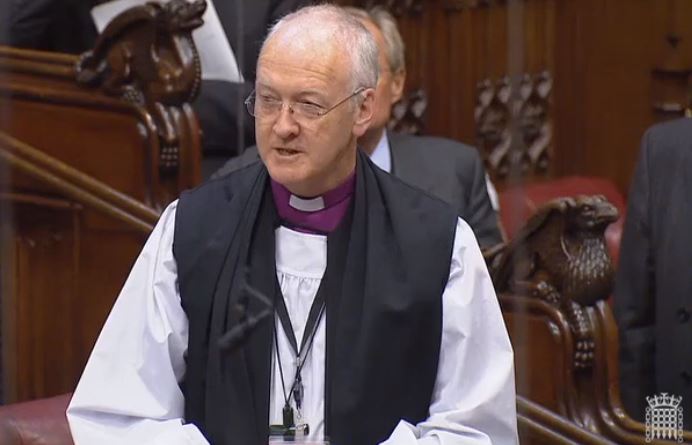
The Lord Bishop of Leeds: To ask His Majesty’s Government what assessment they have made of the humanitarian situation in Sudan.

My Lords, I am very grateful to the Government for granting this debate at a very opportune time, with Lady Sandwich in the Gallery and a detailed report, Rivers of Blood, dedicated to the late Lord Sandwich, being delivered this morning to the APPG.

I thank the Minister for her commitment to addressing the urgent and long-term situation in Sudan, a country I love, where I have friends and which I have visited a number of times, most recently in June 2024. My concerns and engagement will continue after I retire from the House this afternoon, albeit in a different way. I note that the Order Paper says this is a valedictory speech, but I would be grateful if we kept our focus on Sudan.

The humanitarian situation in Sudan is so dire that “urgent” does not do justice to the need for action. I will not repeat the many reports from agencies engaged on the ground in Sudan, but they make for harrowing hearing and reading. A number have provided briefings in Parliament in the last few days. We had planned for the Archbishop of Sudan, Ezekiel Kondo, to be here today, but he had to return to Port Sudan a couple of days ago.

Continue reading “Bishop of Leeds leads debate on the humanitarian situation in Sudan”

Sentencing Bill: Bishop of Leeds tables amendment on purpose of imprisonment

On 26th November 2025, the Bishop of Leeds spoke to the Bishop of Gloucester’s amendment to the Sentencing Bill, which would seek to give a statutory definition to the purpose of imprisonment:

The Lord Bishop of Leeds: My Lords, I shall speak to Amendment 45A in the place of the right reverend Prelate the Bishop of Gloucester, who, regrettably, is not able to be here today. It seems that in wider society there is a greater push for harsher punishment and longer sentences, and there is a tension with what the purpose of such punishment is. This amendment is designed to provide some elucidation on that. It would define in law the purposes of imprisonment and require the courts and the Secretary of State to have regard to the purposes of imprisonment.

Continue reading “Sentencing Bill: Bishop of Leeds tables amendment on purpose of imprisonment”

Bishop of Leeds asks about preserving Ukrainian sovereignty

The Bishop of Leeds asked a question on the need to preserve the integrity of Ukraine’s sovereignty on 26th November 2025, following a government statement on the meeting of the coalition of the willing during the G20 and recent discussions on peace plans:

The Lord Bishop of Leeds: My Lords, one of the principles that we apply in many debates is that we should not talk about people without them being present. Can the Minister confirm that we will continue to resist the carve-up of an independent country by two major powers? That means that we have to put pressure on the United States to see this not just as an object of interest but as something that has to involve the Ukrainians at every step.

Continue reading “Bishop of Leeds asks about preserving Ukrainian sovereignty”

Bishop of Leeds asks about response to Russian espionage

The Bishop of Leeds asked a question on UK response to potential acts of war by Russia, following a government statement on the Russian spy ship Yantar on 25th November 2025:

The Lord Bishop of Leeds: My Lords, it is clear that that message is conveyed, but it seems to do nothing to deter the Russians from continuing with their activity. Can the Minister say whether our military leaders have come to any conclusions about what an appropriate response will be to what, in the end, could be an act of war?

Continue reading “Bishop of Leeds asks about response to Russian espionage”

Bishop of Leeds asks about resilience of democracy in Bosnia and Herzegovina

The Bishop of Leeds asked a question on UK government efforts to hold Serbia to account in the public arena during a discussion on democratic resilience in Bosnia and Herzegovina on 25th November 2025:

The Lord Bishop of Leeds: My Lords, it is perhaps salutary to remember that the GDR lasted for only 40 years, that the 30 years since the Dayton accords is not a very long time, and that what can be built up over a period of time can be demolished very quickly. Can the Minister say what the UK Government are doing to hold particularly Serbia to account in the public arena, exposing what is going on and what its influences are—from Russia in particular but not from Russia alone?

Continue reading “Bishop of Leeds asks about resilience of democracy in Bosnia and Herzegovina”

Bishop of Leeds asks about ongoing conflict in Ukraine

The Bishop of Leeds asked a question on countering ongoing and future effects of the forcible removal of Ukrainian children from their homes and country by Russia on 24th November 2025:

The Lord Bishop of Leeds: My Lords, will the Minister respond to two questions? First, on the real impact of sanctions, they do not seem to have diminished in any way Russia’s ability or intention to pursue this war of attrition and the cruelties that have already been mentioned, particularly in relation to children. Secondly, as someone who was a Soviet military specialist in a previous career, I can say that their aim is not to punish children but to wipe out a generation’s memory and retell a story. The effects of that, even if children are brought back at the end of this war, are going to go on for a generation. Have the Government given any consideration to how the rules-based international order can be effectively used to counter this and prepare for that longer term future?

Continue reading “Bishop of Leeds asks about ongoing conflict in Ukraine”

Bishop of Leeds asks about treatment for brain tumours

The Bishop of Leeds asked a question on treatment for brain tumours on 24th November 2025:

The Lord Bishop of Leeds: My Lords, would the Minister agree that it is important to recognise and praise the treatment that is already available while challenging to do more? I was diagnosed with a benign tumour and the treatment was exemplary. On the real upside of this, I have a lot of documentary evidence that I have a brain.

Continue reading “Bishop of Leeds asks about treatment for brain tumours”

Bishop of Leeds asks about government response to Leveson recommendations

The Bishop of Leeds asked a question on the government response to the Leveson recommendations on delays between charges and trials in the courts on 10th November 2025:

The Lord Bishop of Leeds: My Lords, the Minister has said a couple of times that the response to the Leveson recommendations will be delivered in due course. Can she possibly tell us what “in due course” looks like, because it has been quite a long time already?

Continue reading “Bishop of Leeds asks about government response to Leveson recommendations”

Bishop of Leeds asks about support for unpaid carers

The Bishop of Leeds asked a question on the balance between state offerings and charitable support during a discussion on unpaid carers on 15th October 2025:

The Lord Bishop of Leeds: My Lords, many of the children and other young carers, referred to in a previous question, depend on charities. Are the Government content that the balance is right between what the state offers and charitable support?

Continue reading “Bishop of Leeds asks about support for unpaid carers”

Bishop of Leeds asks about Chinese espionage in the UK

On 13th October 2025, the Bishop of Leeds asked a question on the history of espionage conducted by China in the UK:

The Lord Bishop of Leeds: My Lords, can the Minister confirm that spying by the Chinese is not a new phenomenon but has been conducted under previous Governments as well?

Continue reading “Bishop of Leeds asks about Chinese espionage in the UK”