
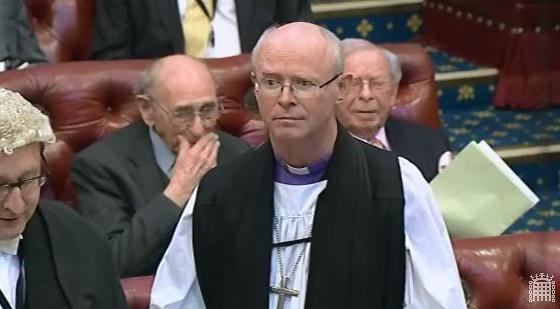
 On Tuesday 1st April, James Henry Langstaff, Lord Bishop of Rochester, was introduced and took the oath, supported by the Bishop of Leicester and the Bishop of Norwich, and signed an undertaking to abide by the Code of Conduct. Continue reading “In pictures: Introduction of the Bishop of Rochester”
Tag: Leicester
Bishop of Leicester urges greater consideration of child welfare in immigration cases
The Bishop of Leicester spoke during Report Stage of the Immigration Bill, speaking in favour of Baroness Lister’s Amendment 21. The amendment sought to reduce the threshold at which a child becomes a material factor in a parents’ immigration case from seven to four years. The amendment was not moved, with the Minister giving assurances that the Bill would not have a negative impact on the safeguarding or welfare of children in the United Kingdom.
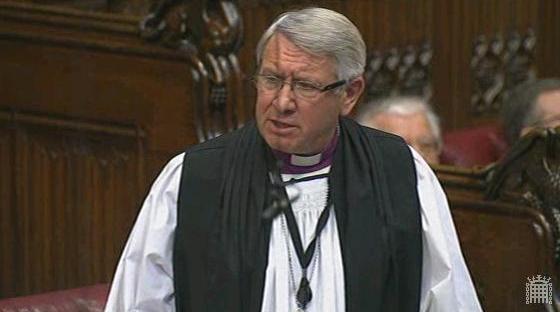 The Lord Bishop of Leicester: My Lords, I want just to assure your Lordships that as the noble Baroness, Lady Lister, suggested, I support Amendment 21 in spirit. I also support it in practice. It seems that the arguments, from any understanding of child development, are clearly overwhelming. I speak as a former chair of the Children’s Society and as a member of the commission that published the A Good Childhood report on behalf of the Children’s Society some four or five years ago, which was based on the evidence of more than 20,000 children, many of them very young children. They made it very clear, even at the age of five or six, that friendships were an absolutely primary part of their understanding of their well-being. This is documented and spelt out in that report, as indeed it is in many other more academic reports. I would be happy to support this amendment as it stands or even if it is reduced to fewer years. On the basis of any understanding of child development, the argument for a cut-off period of four years seems overwhelming. I hope the Minister will be able to respond positively to the amendment.
Lord Wallace of Tankerness: …The noble Baroness, Lady Lister, talked about her experience of losing friends at the age of four, and that was echoed by the right reverend Prelate the Bishop of Leicester, but let us face it: many parents move with their children around the country or out of the country for work or other temporary purposes, and the family leaves to return home or move elsewhere. When a family comes to the United Kingdom for a temporary purpose, they cannot and should not expect to settle permanently in the UK, and should not be able to do so unless they meet the rules for doing so. It is essential that the public interest in controlling immigration and protecting the public be properly weighed in the balance, even when children are involved. We believe that Clause 18 strikes the right balance in this regard…
(via Parliament.uk)
Votes – Immigration Bill
Three bishops took part in two vote in the House of Lords yesterday (1st April 2014), on amendments to the Government’s Immigration Bill, during its Report Stage.

House of Lords Reform Bill – speech by Bishop of Leicester
“I am sure, as are others, that this cannot be the end of the reform process for another generation.” – Bishop of Leicester
On 28th March 2014 the House of Lords debated a Bill that sought to enable Peers to retire their membership of the House, enforce retirement for non-attenders and expel those convicted of serious offences. This Private Member’s Bill, sponsored by Lord Steel and Dan Byles MP, was given widespread support during its Second Reading debate, including by the Bishop of Leicester.
 The Lord Bishop of Leicester: My Lords, I, too, am deeply grateful to the noble Lords, Lord Steel, Lord Cormack and Lord Norton, and other noble Lords, for bringing us to this point. Continue reading “House of Lords Reform Bill – speech by Bishop of Leicester”
In pictures: Introduction of the Bishop of Chelmsford
 On Tuesday 25th March 2014 Stephen Geoffrey Cottrell, Lord Bishop of Chelmsford, was introduced and took the oath, supported by the Bishop of Chester and the Bishop of Leicester, and signed an undertaking to abide by the Code of Conduct.
Continue reading “In pictures: Introduction of the Bishop of Chelmsford”
Schools: Bad Behaviour
On 25th March 2014 Baroness Massey of Darwen asked Her Majesty’s Government ‘what policies they promote to prevent bad behaviour in schools, apart from punishment?’. The Bishop of Leicester asked a supplementary question:
The Lord Bishop of Leicester: My Lords, in view of the Minister’s clear endorsement of the policy of positive reinforcement of good behaviour, does he agree that we should be doing much more to promote a culture of mutual respect more widely in society so that the benefit of the positive work of many schools is not lost when our children step out of the school gate?
Lord Nash: I agree entirely with the right reverend Prelate. I know that the church has a particularly strong record of promoting community cohesion across its schools. A culture of mutual respect and of respecting other races and religions is essential to a modern school.
(via Parliament.uk)
Votes – Offender Rehabilitation Bill / Antisocial Behaviour etc Bill
 Bishops took part in two votes in the House of Lords yesterday (11th March), on amendments to two separate Government Bills, which were at the final stages of their parliamentary progress.
Continue reading “Votes – Offender Rehabilitation Bill / Antisocial Behaviour etc Bill”
Votes – Pensions Bill
On 24th and 26th February 2014, a number of Bishops took part in votes on amendments to the Government’s Pensions Bill, during its Report Stage.
The Bishop of Leicester raises concerns about Immigration Bill during Second Reading deabte
My Lords, I am happy to declare an interest in this debate as the Bishop of Leicester, a city whose character, economy, culture and vibrancy have all been immensely enhanced by waves of immigration over the last 40 years. At last year’s 40th anniversary of the arrival of the Ugandan Asians expelled from east Africa by Idi Amin, we were reminded of an advertisement placed by Leicester City Council in 1973. It read:
“In your own interests and those of your family you should accept the advice of the Uganda Resettlement Board and not come to Leicester”.
It led to a headline in the Leicester Mercury: “No room here”. It is a reminder that general anxiety about immigration and the fears of politicians about public opinion on this matter are not new. Continue reading “The Bishop of Leicester raises concerns about Immigration Bill during Second Reading deabte”
The Bishop of Leicester speaks in favour of updating guidance on sex and relationship education
The Bishop of Leicester spoke in the debate on the Report Stage of the Children & Families Bill. He spoke in favour of Amendment 53, on behalf of the Bishop of Oxford, who co-sponsored the amendment. The amendment called for guidance on sex and relationship education to be updated in light of technological changes. He spoke of the need for holistic education of children, and reflected on the conclusions of the ‘Good Childhood’ commission that children themselves are keen to develop strong and healthy relationships. The amendment was not pressed to a vote.
The Lord Bishop of Leicester: My Lords, I support Amendment 53 and speak in place of the right reverend Prelate the Bishop of Oxford, who has lent his name to it but cannot be in his place today. Personally, I find myself on the side of those who want PSHE to be a formal part of the curriculum and Amendment 53 goes some way in that direction.
I have three brief points to make. First, we on these Benches see social, emotional and spiritual intelligence as a vital part of a child’s development. We are not just interested in raising children who can pass exams, but in creating opportunities for young people to take control of their lives and values. Secondly, it is clear that there is a strong and growing coalition of organisations involved in this work, which have some knowledge in this area, and which support this proposal, including the Children’s Society the Mothers Union and many others.
Thirdly, I speak as a former chair of the Children’s Society and as a member of the Good Childhood commission, which reported four years or so ago, and which took evidence from more than 5,000 children. It was not evidence on this specific point, but it was evidence on the general point of what children understand makes for their well-being. Over and over again, children said that one of their top priorities was their friendships. They were trying to find their way through a complex, labyrinthine world in which friendships, intimacy and relationships had to be understood in this technological age, which has been so vividly described by previous speakers, where it was children who were asking for help in this area.
That is the most telling contribution I want to make to this debate. We do not have children in this House; we do not have the voice of children here. If we listen carefully to what they are saying to us through the Good Childhood Report and in other ways, we will find that they want our generation to help them to understand who they are and who they are with others in this completely new world, which has not shaped the relationships or outlooks of any Members of your Lordships’ House. For that reason, I strongly support Amendment 53.
 The Church of England in Parliament
You must be logged in to post a comment.