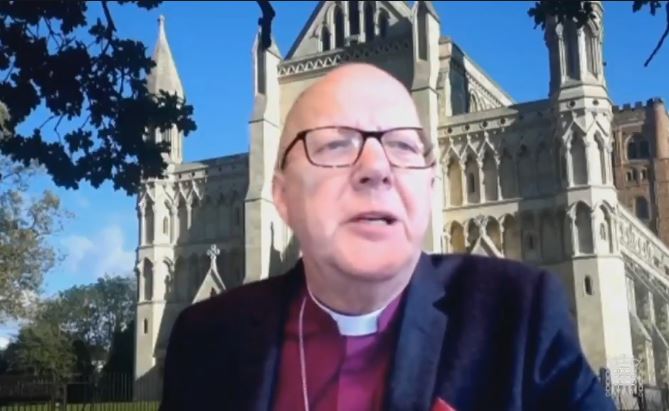
Levelling Up Bill: Bishop of Carlisle speaks on health inqualities

The House of Lords debated the Levelling Up Bill in its second reading on 17th January 2023. The Bishop of Carlisle spoke in the debate, focusing on health inequalities between the North and South of England:

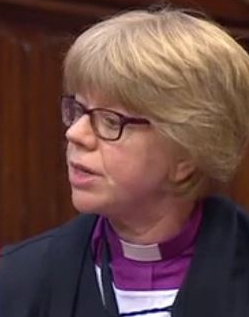
The Lord Bishop of Carlisle: My Lords, in the brief time available, I will address health inequalities between the north of England, where I live, and the south, and their implications for levelling up and regeneration. Health inequalities are defined as avoidable, unfair and systematic differences in health between different groups of people. In 2010, Sir Michael Marmot conducted his celebrated review into such inequalities, in the hope that this might lead to some improvement. Instead, we have seen an increase, rather than a reduction, of such inequalities over the last 12 years. For instance, life expectancy in deprived areas of the north-east is at least five years lower than it is in similar areas here in London. A baby boy born in Blackpool today can expect an additional 17 years of poor health compared with a baby born in Richmond upon Thames. People in all social groups in the north of England, male and female, are consistently less healthy than those in the south, and premature death rates are about 20% higher across all age groups in the north, due not least to lower lifetime chances.

These statistics—there are many more—are a stark reminder that inequalities in health are often closely linked to people’s socioeconomic circumstances. This has been forcefully illustrated by the Covid pandemic, which, in the words of one commentator, exposed “deep fractures of inequality” running across our society. During the first year of the pandemic, the mortality rate was 17% higher in the north than in the south, unemployment was 19% higher and there were significant differences in mental well-being between the north and the south. It is now reckoned that health issues account for about 30% of the gap in productivity between the north and the south.

Continue reading “Levelling Up Bill: Bishop of Carlisle speaks on health inqualities”
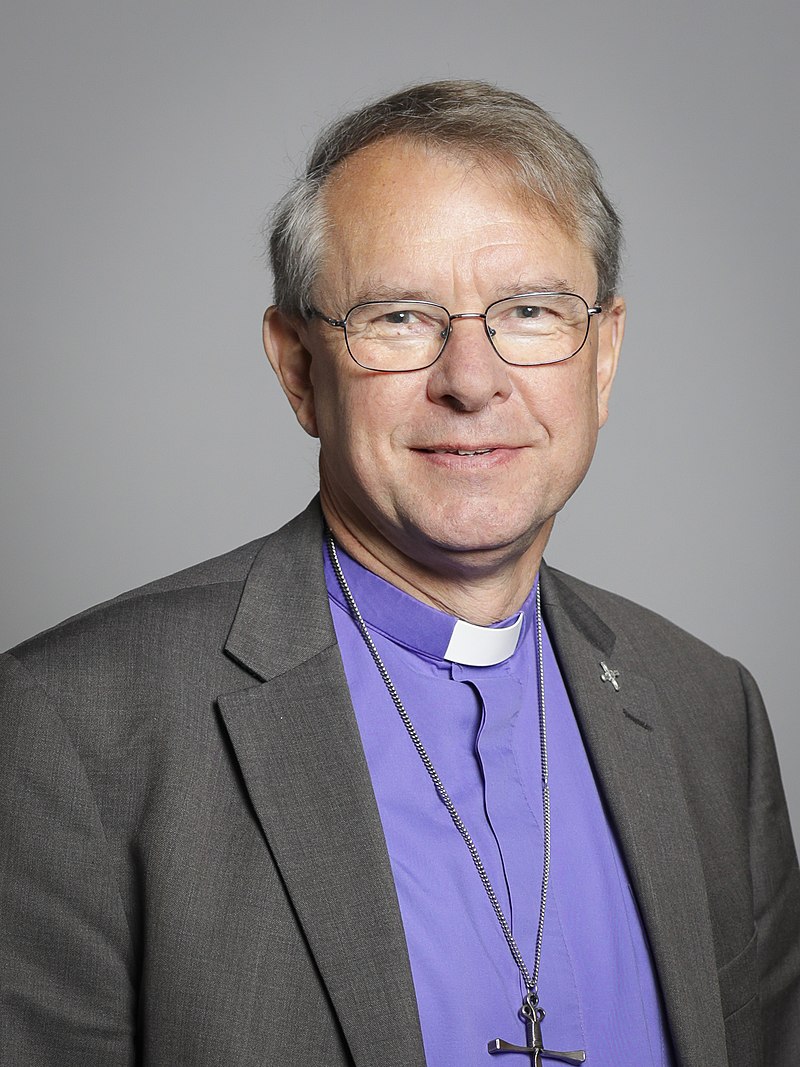
Levelling Up Bill: Bishop of Leeds highlights the importance of transport and education

On Tuesday 17th January 2023, the House of Lords debated the Levelling Up Bill in its second reading. The Bishop of Leeds made a speech on the importance of good transport links and amending discrepancies in education:

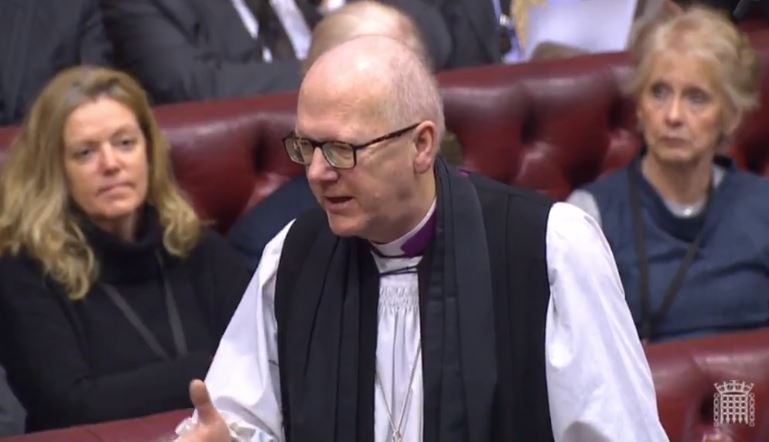
The Lord Bishop of Leeds: My Lords, I am delighted to follow the noble and right reverend Lord, who has already stolen some of what I was going to say—great minds and all of that, maybe. When I first heard the phrase “levelling up”, I thought, “Here we go again—another slogan in search of substance”. Yet what we have heard today so far is that there is a great deal of potential substance to this Bill. I applaud the motivation and ambition behind it, and the attempt in the 12 missions to have a holistic approach rather than simply to pick off bits of our society. But I do think we need to take seriously, after the honest analysis that we had from the Minister, the argument that it gives the lie to the opening assertion of the White Paper that the UK is an unparalleled success story. If it was, we would not need the detail that we have before us. This sort of language of hubris can very easily militate against us taking seriously the scale of the task.

Continue reading “Levelling Up Bill: Bishop of Leeds highlights the importance of transport and education”

Bishop of Durham asks about improving access to budgeting loans

The Bishop of Durham received the following written answer on 21st December 2022:

The Lord Bishop of Durham asked His Majesty’s Government what steps they are taking to reduce (1) the waiting time for, and (2) the size of the loans available through, the Department for Work and Pensions and the Department for Levelling Up, Housing and Communities’ budgeting loans scheme.

Continue reading “Bishop of Durham asks about improving access to budgeting loans”

Bishop of London asks about the government’s health strategy

The Bishop of London asked about the government’s plans to publish a health disparities white paper on 17th October 2022, during a debate on childhood obesity:

The Lord Bishop of London: My Lords, the National Food Strategy to tackle obesity, the new tobacco control plan and the health disparities White Paper were key to the Government’s aim to level-up health. The most recent NHS Providers report found that 95% of trust leaders said that the cost of living had either significantly or severely worsened health inequalities in the local area. Given the worsening situation, can the Minister confirm when the health disparities White Paper will be published? If not, can he point to what else the Government are doing to reduce inequalities in health?

Continue reading “Bishop of London asks about the government’s health strategy”

Bishop of St Albans asks a question on gambling

The Bishop of St Albans received the following written answer on 11th July 2022:

The Lord Bishop of St Albans asked Her Majesty’s Government what assessment they have made of the NERA report Economic Assessment of Selected House of Lords Gambling Reforms, published 26 May 2021; and what assessment they have made of how gambling reform could help to level up disadvantaged communities.

Continue reading “Bishop of St Albans asks a question on gambling”

Bishop of St Albans asks about government response to financial challenges

The Bishop of St Albans asked a question during a debate on the Trades Union Congress: Levelling Up, on 29th June 2022:

The Lord Bishop of St Albans: My Lords, the Government are to be congratulated on raising the minimum wage and I thank them for what they have done. There is, however, a really serious point here. As we are facing a serious range of strikes across many industries, the worry is that those people in positions of leadership and authority are not necessarily giving a lead.

Continue reading “Bishop of St Albans asks about government response to financial challenges”

Bishop of Southwark speaks in a debate on the Houses of Parliament

On 16th June 2022, the House of Lords debated the co-location of the Houses of Parliament. The Bishop of Southwark spoke in the debate:

My Lords, I am grateful to the noble Lord, Lord Norton of Louth, for securing this debate and bringing to it his distinguished record as a scholar of our constitution and of Parliament. My own contribution to the debate will, I think, chime with much of what we have heard already from noble Lords.

I wish to make a few simple points. First, we are two Houses but one Parliament, a point that has already been made. Secondly, although Covid has taught us much about the flexibility afforded by current technology, as did universal postage, the telegram, and the telephone in their day, it has also taught us a good deal about the importance of physical proximity. Finally, as has been eloquently pointed out, to separate out what was never meant to be put asunder will mean that the role of this House and its usefulness will diminish, and the capability of Parliament with it.

Continue reading “Bishop of Southwark speaks in a debate on the Houses of Parliament”

Bishop of St Albans speaks in a debate on the UK Infrastructure Bank Bill

On 14th June 2022, the House of Lords debated the UK Infrastructure Bank Bill in committee. The Bishop of St Albans spoke in the debate:

The Lord Bishop of St Albans: My Lords, I declare my interest as a vice-president of the Local Government Association and president of the Rural Coalition. I shall speak to Amendment 9, which stands in my name, but I also want to give my broad support to Amendments 6 and 7, which also deal with regional inequalities, and to echo the importance of getting biodiversity and nature into the Bill.

It is telling that London, as the most productive region of the UK, receives a larger per capita amount of public spending compared to other regions of the UK. Productivity relies as much on public investment as it does on private investment but, at the same time, it makes sense economically, from a private perspective, to invest in those areas that receive significant public backing, particularly in areas such as transport. The reality is that government transport spending by region remains heavily skewed towards London, at nearly double the UK average. Hence, it certainly holds that public expenditure is a significant contributory factor to productivity, even if other factors, such as economies of scale and private investment, also play their part.

Continue reading “Bishop of St Albans speaks in a debate on the UK Infrastructure Bank Bill”

Bishop of Chichester speaks in a debate on travel disruption

On 9th June 2022, the House of Lords debated the issue of travel disruption at UK airports and ferry ports. The Bishop of Chichester spoke in the debate:

The Lord Bishop of Chichester: My Lords, I am grateful to the noble Lord, Lord Davies, for initiating this important debate. I speak from the experience of working to support the chaplaincy of Gatwick Airport—I was glad to hear the Minister speak so positively of her experience of coming through it recently. However, like so many other parts of the aviation industry, the airport was dealt a harsh blow by the Covid pandemic. Many staff who were foreign nationals, though receiving furlough payments, went back to their home countries and have not returned to work in the UK. This affected the security department, hospitality industry and the hotels especially, and it has had a devastating effect on the economic life of the town of Crawley, which was already in receipt of investment from the towns fund as part of the Government’s levelling-up programme.

Continue reading “Bishop of Chichester speaks in a debate on travel disruption”

Bishop of St Albans asks about the rural economy

The Bishop of St Albans received the following written answer on 24th May 2022:

The Lord Bishop of St Albans asked Her Majesty’s Government what assessment they have made of the report by the APPG for Rural Business and Rural Powerhouse Levelling Up the Rural Economy: An Inquiry into rural productivity, published on 27 April.

Continue reading “Bishop of St Albans asks about the rural economy”