On 16th January 2015, a number of bishops took part in divisions in the House of Lords, during the Committee Stage of Lord Falconer of Thoroton’s Assisted Dying Bill.


On 16th January 2015, a number of bishops took part in divisions in the House of Lords, during the Committee Stage of Lord Falconer of Thoroton’s Assisted Dying Bill.
On 14th January 2015, Lord Phillips of Sudbury asked Her Majesty’s Government how they propose to enhance the amount and quality of citizenship education in order to increase the democratic participation and engagement of young citizens. The Bishop of Lichfield, the Rt Revd Jonathan Gledhill, asked a supplementary question:
 The Lord Bishop of Lichfield: My Lords, will the Minister join me in congratulating the young people highlighted by the I Will campaign, who have so ably demonstrated the impact that young people can have in transforming their own communities?
Lord Nash: I entirely agree with the right reverend Prelate. Active citizenship is an essential part of the citizenship national curriculum and all students should have the opportunity of participating in volunteering.
(via Parliament.uk)
On 30th October 2014, Baroness Cox asked Her Majesty’s Government what assessment they have made of recent developments in Nigeria, with particular reference to the terrorist activities of Boko Haram. The Bishop of Lichfield, the Rt Revd Jonathan Gledhill, asked a supplementary question:
The Lord Bishop of Lichfield: My Lords, what does the Minister make of the claims recently made by journalists that the girls kidnapped by Boko Haram are being held as trophies for various tribal leaders, as is apparently common in these regions, and that they will be released as soon as some way is found to flatter these leaders?
Baroness Anelay of St Johns: My Lords, I have read those reports. Anyone who is kidnapped in any situation is a bargaining chip. The difficulty is knowing with whom one strikes the bargain and at what price for all.
(via Parliament.uk)
The Bishop of Lichfield, the Rt. Revd. Jonothan Gledhill, made a speech during the short evening debate on the long term financial sustainability of the National Music Plan in England. In it, he called for an increase in the number of music hubs, as well as greater financial support for them; highlighting the tremendous benefits a high-quality music education can have for children in all aspects of their lives.
Read the full transcript of his speech here:
The Lord Bishop of Lichfield: My Lords, I congratulate the noble Lord, Lord Aberdare, on introducing this important and timely short debate. I welcome the national plan for music education, which emphasises the importance of music and the creation of music education hubs in this country, I also welcome the fact that the report has taken note of the recommendations made in the Henley review, perhaps the most comprehensive and thorough review of the state of music education in England for many years. I thank the noble Lord, Lord Berkeley of Knighton, for his support of church music as well. Continue reading “BISHOP OF LICHFIELD SPEAKS IN SHORT DEBATE ON THE SUSTAINABILITY OF MUSIC EDUCATION”
On 27th October 2014, four bishops took part in divisions on the Criminal Justice and Courts Bill, on the third day of its Report Stage. Details of the votes can be seen below.
Amendment 146 – Judicial review in the High Court and Upper Tribunal
Crossbench peer Lord Pannick moved amendment 146, which sought to soften the Government’s proposal that the High Court must refuse permission for a Judicial Review if it is ‘highly likely’ that the decision whose legality is being challenged would be unchanged even if the Review were successful.
Four bishops voted ‘content’ to this amendment. They were the Bishop of Derby, the Rt Revd Alastair Redfern, the Bishop of Lichfield, the Rt Revd Jonathan Gledhill, the Bishop of Rochester, the Rt Revd James Langstaff, and the Bishop of St Albans, the Rt Revd Alan Smith. No bishop voted ‘not content’. There were: Contents: 247 | Not Contents: 181 | Result: Government Defeat
(via Parliament.uk)
Continue reading “Bishops take part in votes on reforms to Judicial Review”
On 21st October 2014 three bishops took part in three votes on the Government’s Deregulation Bill during the House of Lords committee stage . Details on the Bill can be found here. Continue reading “Votes on the Deregulation Bill”
Rt Hon Sir Tony Baldry MP, representing the Church Commissioners, was asked questions in the House of Commons on 12th June, on the service of remembrance for Stephen Sutton, school chaplains, persecuted Christians overseas, listed church building repairs, credit unions and biblical literacy amongst children. The transcript is below:
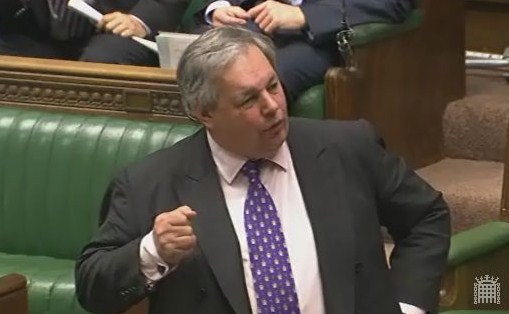
Michael Fabricant (Lichfield) (Con):If he will visit Lichfield cathedral to discuss the service of remembrance and celebration of the life of Stephen Sutton. [904158]
The Second Church Estates Commissioner (Sir Tony Baldry): I am always happy to visit Lichfield cathedral. The whole country will have celebrated the life and achievements of Stephen Sutton. The recent service of remembrance and celebration at Lichfield cathedral demonstrates the importance of cathedrals as a focus for unity at times of local and national celebration, commemoration and mourning. Continue reading “MPs questions to Church Commissioners’: Stephen Sutton, school chaplains, persecuted Christians, church repairs, credit unions, biblical literacy”
“I spent some time recently with an intelligent and engaging Somali prisoner …This man was given an 18-month tariff, but last Christmas was his ninth in prison. What an injustice, and what a huge expense.” – Bishop of Lichfield
On 27th March 2014 the Bishop of Lichfield took part in a debate tabled by Lord Wigley, ‘to ask Her Majesty’s Government what steps they are taking to address the position of individuals serving indeterminate sentences on public protection grounds who have already passed their tariff’.
The Lord Bishop of Lichfield: My Lords, I am most grateful to the noble Lord, Lord Wigley, for his initiative and to the noble Lord, Lord Dholakia, and the noble and learned Lord, Lord Phillips, for their very helpful introductions.
As a general principle, it is accepted in this country that people should be sent to prison because they have been convicted of an offence rather than because of the risk that they will offend. Indeterminate tariffs are even now available for the most serious offences, in the form of life sentences, and extended sentences now provide a way to manage and contain risk in relation to those convicted of serious violent and sexual offences which do not call for a life sentence. Continue reading “Prisons and the problem of indeterminate sentences – speech by Bishop of Lichfield”
On 26th March two bishops took part in a Division on an amendment to the Government’s Defence Reform Bill, during its Report Stage in the House of Lords.
The Bishop of Lichfield spoke during Lord Eames’ debate on reducing the levels of suicide among young people in the United Kingdom. He focused his remarks on the relationship between low levels of self-worth amongst young people as a factor that contributes to suicidal thoughts. He also raised particular concerns about the risks of bullying or coercion that young people with disabilities face, specifically as debates about assisted suicide become more widespread, and the need to support children who are refugees or asylum seekers and particularly vulnerable due to a lack of adequate mental health care.
The Lord Bishop of Lichfield: My Lords, I, too, thank the noble and right reverend Lord, Lord Eames, for initiating this debate.
The Association for Young People’s Health recently published its key data on adolescence. At present, the statistics show that the levels of self-harm are relatively stable, although for such a sensitive topic there is likely to be low reporting. It is clear that girls are at least three times more likely to self-harm than boys; on the other hand, suicide is much more prevalent among young males, particularly those aged between 20 and 24. This coincides with the evidence from ChildLine. Numbers have fallen fractionally in more recent years but the report questions whether this will continue.
How this correlates with child well-being needs careful consideration. We all remember the United Nations report about the unhappiness of children in this country. ChildLine reports that the number of children contacting it about suicidal feelings has risen for the third year running, including a rise of 33% in the last year. Overall, child well-being in the UK, according to the United Nations, has improved from 21st out of 21 to 16th out of 29 countries. Economic reasons have been stated and there is much correlation with the commentary from the Association for Young People’s Health. Continue reading “Bishop of Lichfield calls for greater support of vulnerable young people in preventing suicide”
 The Church of England in Parliament
You must be logged in to post a comment.