Queen’s Speech – Bishop of Gloucester on criminal justice, violence against women and girls, online safety

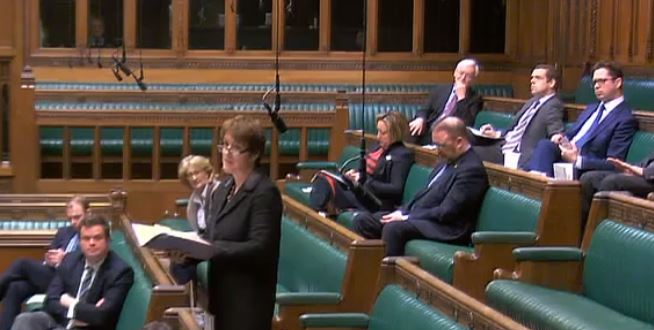
On 18th May 2021 the Bishop of Gloucester took part in the fourth day of debate in the House of Lords on the Queen’s Speech. She focused on criminal justice, violence against women and girls, and online safety:

My Lords, I too look forward to the maiden speeches of the noble Baroness, Lady Fullbrook and Lady Fleet. In my few minutes, I shall briefly mention women in the criminal justice system, the Police, Crime Sentencing and Courts Bill, violence against women and girls and the online safety Bill. I refer to my interests in the register, as Anglican bishop to prisons.

I begin by asking: when will we see a renewed timetable for the 2018 female offender strategy? While I welcome the implementation of some of the deliverables, analysis by the Prison Reform Trust shows that the Government have met less than half the commitments. The concordat published last year does not appear to have been progressed. Then there was that shocking announcement of 500 new prison places for women, totally at odds with the strategy’s direction to reduce the number of women in prison. What evidence is it based on, and why is the designated £150 million not being spent on women’s centres and implementing the concordat?

Continue reading “Queen’s Speech – Bishop of Gloucester on criminal justice, violence against women and girls, online safety”
Queen’s Speech – Bishop of Oxford welcomes online safety bill plans

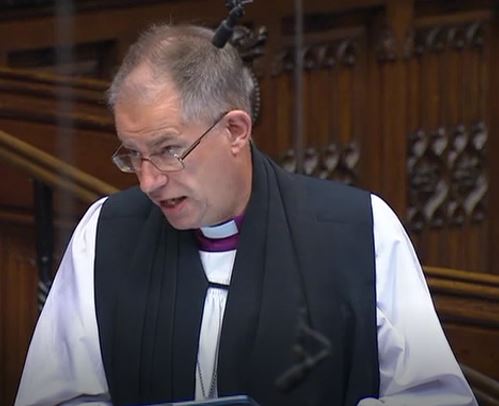
On 18th May 2021 the Bishop of Oxford spoke during the fourth day of debate in the House of Lords on the Queen’s Speech, focusing on proposals to legislate for online safety.


My Lords, it is a privilege to take part in this debate, to follow the noble Baroness, Lady Chakrabarti, and to welcome the noble Baroness, Lady Fullbrook—I thank her for her maiden speech. I warmly welcome the online safety Bill, referenced in the most gracious Address. I declare my interest as a board member for the Centre for Data Ethics and Innovation.

It is my view that the online safety Bill represents a major step forward in preventing harm to children, vulnerable adults and our wider society. The Bill places a robust duty of care on content-sharing platforms and creates a major new regulator by extending the remit of Ofcom. Those designing the Bill have listened carefully and have risen to the challenge of scoping a regulatory framework for new and rapidly changing technologies. The internet is used by over 90% of adults in the United Kingdom. There are many benefits to that use, as we have seen during the pandemic, but also great potential for harm. As the memorandum from DCMS indicates very clearly, this landmark regulation will end the era of self-regulation. The Bill is likely to prove a key benchmark, not only for the United Kingdom, but for governments around the world.

Continue reading “Queen’s Speech – Bishop of Oxford welcomes online safety bill plans”

Bishop of Oxford asks about tackling offensive material on social media

The Bishop of Oxford asked a question on development of a code of practice for tackling offensive online content on 23rd March 2021:

The Lord Bishop of Oxford: My Lords, the requirement to love our neighbours as ourselves makes practical demands of our online behaviour: not only what is posted but also what is endorsed, what is given the oxygen of repetition and what is tolerated. The digital common good is threatened from both sides: by those who post racist and offensive material and by some social media sites that craft algorithms to curate, propagate and perpetuate in order to maximise income. So will the Government give urgent consideration to implementing a code of practice for both hate crime and wider legal harms, perhaps along the lines of the model code that Carnegie UK and a number of other civil society organisations, including my office, recently co-drafted?

Continue reading “Bishop of Oxford asks about tackling offensive material on social media”

Trade Bill: Bishop of St Albans supports amendment on protection of children online

On 6th January 2021, the Bishop of St Albans spoke during a debate on the Trade Bill, supporting an amendment aimed at protecting children on online and digital platforms:

The Lord Bishop of St Albans: My Lords, I will speak briefly in support of Amendment 23. The Government’s proposed online harms Bill will provide a welcome framework to protect the most vulnerable from exposure to dangerous content by placing the burden of responsibility on social media companies. This crucial legislation will better equip Britain to deal with the digital age.

Continue reading “Trade Bill: Bishop of St Albans supports amendment on protection of children online”

Votes: Trade Bill

On 6th January 2021, the House of Lords debated the Trade Bill. Votes were held on amendments to the bill, in which Bishops took part:

Continue reading “Votes: Trade Bill”

Church Commissioner Questions: social media, telecommunications masts in parishes, FCO support for persecuted Christians, festivals in cathedrals, funding for Keighley constituency

On 25th July 2019 MPs asked questions of Rt Hon Dame Caroline Spelman MP, the Second Church Estates Commissioner. Questions were asked about social media, telecommunications masts in parishes, FCO support for persecuted Christians, festivals in cathedrals, and funding to the Keighley constituency:

spelman170119b

Continue reading “Church Commissioner Questions: social media, telecommunications masts in parishes, FCO support for persecuted Christians, festivals in cathedrals, funding for Keighley constituency”

Second Estates Commissioner welcomes relationships education in schools

On 16th July 2019 in the House of Commons Emma Hardy MP (Lab) asked an urgent question to the Secretary of State for Education on whether “he will make a statement on what steps he is taking to counter misinformation about the content of relationship education in schools”. The Second Church Estates Commissioner, Rt Hon Dame Caroline Spelman MP, asked a follow-up question:
Dame Caroline Spelman: The Church of England, the largest provider of primary education, fully supports this updating of the guidance. As the Minister says, it has not been updated for the past 20 years, and childhood has changed greatly during that time. Does the Minister agree that one of the imperatives for this change must be to protect pupils and keep them safe in the complex online world that they inhabit? My heart goes out to the children caught up in all this.

Continue reading “Second Estates Commissioner welcomes relationships education in schools”

Bishop of Ely asks Government about gaming addiction among young people

On 23rd May 2019  Lord Brooke of Alverthorpe ask the Government “what plans they have to sponsor research into the benefits of gaming for children’s mental health and wellbeing.” The Bishop of Ely, Rt Revd Stephen Conway, asked a follow-up question:

The Lord Bishop of Ely: My Lords, there has been much conversation already about research into gaming addiction among young people. My right reverend friend the Bishop of St Albans raised the issue of a mandatory pause function following calls from healthcare providers. As that was raised again in conversation and discussion around the Online Harms White Paper, will the Minister confirm that the Government are assessing the value of this function? Continue reading “Bishop of Ely asks Government about gaming addiction among young people”

Bishop of St Albans welcomes Online Harms proposals, calls for action on gaming addiction

The Lord Bishop of St Albans: My Lords, this is a vast subject, and I will limit my comments to just a few areas.

I and others on these Benches welcome this White Paper, in particular the attempt to rethink the way we see this whole area. In the past we brought in individual laws to deal with particular problems. My colleague the right reverend Prelate the Bishop of Chelmsford has been arguing for some while that we need to see this as public space. We need to try to understand how we can regulate it from first principles in a way that guarantees the freedoms we want and the huge benefits that have come through the online world, which has made a huge and incalculable difference to our lives, but also protects the many people who are vulnerable. We have heard some account of just some of the problems some people have faced.

Continue reading “Bishop of St Albans welcomes Online Harms proposals, calls for action on gaming addiction”

Bishop of Durham raises impact on children of digital advertising

On 25th April 2019 the House of Lords debated a Motion from Lord Gilbert of Panteg, “That this House takes note of the Report from the Communications Committee UK advertising in a digital age (1st Report, HL Paper 116).” The Bishop of Durham, Rt Revd Paul Butler, spoke in the debate:

The Lord Bishop of Durham: My Lords, I also thank the noble Lord, Lord Gilbert of Panteg, and the committee for the report, which made for fascinating reading. My friend the right reverend Prelate the Bishop of Chelmsford sends his apologies for not being in his place today; he is elsewhere in the world with the most reverend Primate the Archbishop of Canterbury, and so asked me to address one or two matters. I take complete responsibility for what I say, although he said that I must talk about self-regulation.

We all love digital; at least, most of us do. We love its possibilities. I do not go anywhere without my phone, frankly: I keep looking at it and I get bombarded with adverts through it. It was not planned but, yesterday evening, as it happens, I watched a lecture from a two-day conference for theologians being held in Durham this week, entitled “Missio Dei in a digital age”. Maggi Dawn, a British theologian based at Yale University, tracked the history of the impact of digital on Christian mission. She said this about how we handle digital:

“We need to recognise both the glorious possibilities of digital and its profound brokenness”.

Her point was that although digital is wonderful, with glorious possibilities we must use to the full, we must not fail to recognise its profound brokenness because it is infected by human beings, who make all kinds of mistakes in their use of things. Continue reading “Bishop of Durham raises impact on children of digital advertising”