On 27th April 2021, the House of Lords debated Commons reasons and amendments to the Fire Safety Bill. Votes were held on further amendments to the bill, in which Bishops took part:

On 27th April 2021, the House of Lords debated Commons reasons and amendments to the Fire Safety Bill. Votes were held on further amendments to the bill, in which Bishops took part:
On 22nd April 2021, the Bishop of Durham moved the Church of England Cathedrals Measure in the House of Lords, asking that the measure be approved for Royal Assent. The Bishop of Oxford also spoke in support of the measure:
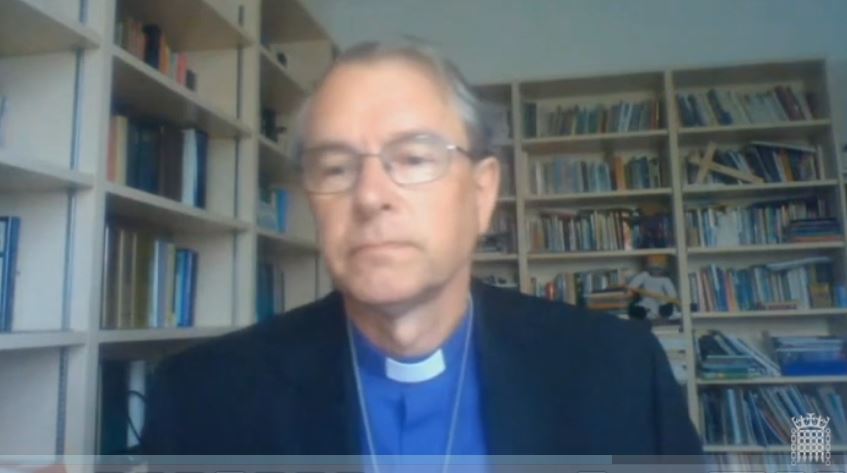
The Lord Bishop of Durham [V]: That this House do direct that, in accordance with the Church of England Assembly (Powers) Act 1919, the Cathedrals Measure be presented to Her Majesty for the Royal Assent.
My Lords, I beg to move the second Motion standing in my name on the Order Paper. The Cathedrals Measure provides a new statutory framework for the governance and regulation of 41 Church of England cathedrals and will replace the framework in the Cathedrals Measure 1999.
Our cathedrals are national treasures which it is both a privilege and a responsibility to care for. They play a key role in our national life, with some 10 million adults visiting them each year and around 330,000 children enjoying free educational visits to them. All our cathedrals are involved in work in their local community, and they contribute around £220 million annually to the UK economy, employing some 3,000 people. Above all, however, each cathedral serves its community as the mother church of its area and the seat of a bishop, and remains in use for its original purpose.
Continue reading “Bishop of Durham moves Cathedrals Measure”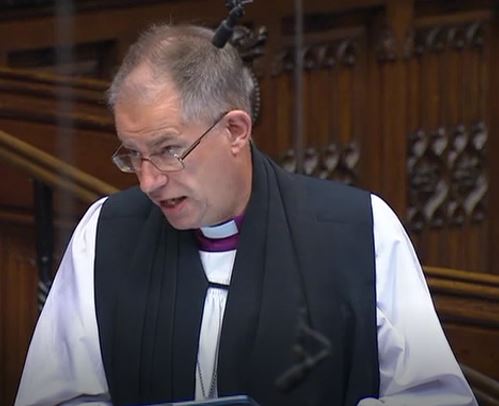
The Bishop of Oxford asked a question on development of a code of practice for tackling offensive online content on 23rd March 2021:
The Lord Bishop of Oxford: My Lords, the requirement to love our neighbours as ourselves makes practical demands of our online behaviour: not only what is posted but also what is endorsed, what is given the oxygen of repetition and what is tolerated. The digital common good is threatened from both sides: by those who post racist and offensive material and by some social media sites that craft algorithms to curate, propagate and perpetuate in order to maximise income. So will the Government give urgent consideration to implementing a code of practice for both hate crime and wider legal harms, perhaps along the lines of the model code that Carnegie UK and a number of other civil society organisations, including my office, recently co-drafted?
Continue reading “Bishop of Oxford asks about tackling offensive material on social media”
The Bishop of Oxford tabled a question on new media legislation in Australia and the potential for similar legislation in the UK on 25th February 2021:
The Lord Bishop of Oxford [V]: To ask Her Majesty’s Government what assessment they have made of (1) the proposed legislation in Australia for a news media and digital platforms mandatory bargaining code, and (2) the case for similar such legislation in the United Kingdom.
Continue reading “Bishop of Oxford asks about new media legislation”On 2nd February 2021, the House of Lords debated Commons Amendments to the Trade Bill. Votes were held on further amendments to the bill, in which Bishops took part:
The Bishop of Oxford spoke in a debate on a report from the Select Committee on Tackling Intergenerational Unfairness on 25th January 2021, raising the issues of education, the gig economy, and all-age communities:
The Lord Bishop of Oxford [V]: My Lords, I welcome this key report on intergenerational unfairness and this debate. It is a privilege to take part. I want to focus my contribution on three issues.
The first concerns education and training. I welcome the report’s perspective and recommendations; as others have said, they are even more relevant now. However, as we know, the landscape is shifting significantly beneath our feet because of the immediate demands of the pandemic and the likely longer-term shifts in working patterns created by the fourth industrial revolution. We are sorely in need of creative, imaginative, cross-party and cross-society intergenerational thinking on education for life, not simply for work.
Continue reading “Bishop of Oxford takes part in debate on report on tackling intergenerational unfairness”On 6th January 2021, the House of Lords debated the Trade Bill. Votes were held on amendments to the bill, in which Bishops took part:
 The Lord Bishop of Oxford [V]: My Lords, I declare my interests, particularly my membership as a board member of the Centre for Data Ethics and Innovation.
Continue reading “Bishop of Oxford welcomes Government plans to tackle online harms”
 The Lord Bishop of Oxford [V] : My Lords, I thank the Minister for her answer. What will the Government do if other platforms do not follow the Netflix example? According to the BBFC, over 90% of parents said that age-related guidance was helpful, and there is no doubt that voluntary action may be more forthcoming if platforms are very clear that the UK Government expect content consumed here in the UK to be properly signposted with BBFC symbols and content advice. How else do the Government plan to ensure that only age-appropriate content is accessible to young and vulnerable viewers?
On 10th November the Bishop of Oxford received written answers to three questions, on employment conditions in the gig economy:
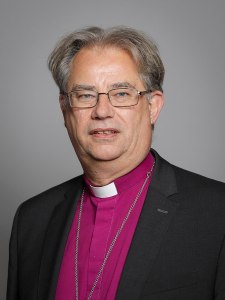 The Lord Bishop of Oxford: To ask Her Majesty’s Government what assessment they have made of (1) the impact, and (2) the effectiveness, of requiring employers in the gig economy to provide workers and contractors with a written statement of their core terms of employment. [HL9569]
Lord Callanan: In response to the Taylor Review, the Government recognised that there was a significant lack of awareness among individuals and employers about applicable rights and responsibilities in non-standard contracts. We therefore amended legislation so that the Employment Rights Act 1996 entitles both employees and workers to receive a written statement of employment particulars that sets out the position regarding remuneration and hours of work etc. Continue reading “Bishop of Oxford asks about employment rights in the gig economy”
 The Church of England in Parliament
You must be logged in to post a comment.