Police, Crime, Sentencing and Courts Bill: Bishop of Gloucester moves amendments on bail for primary carers of children

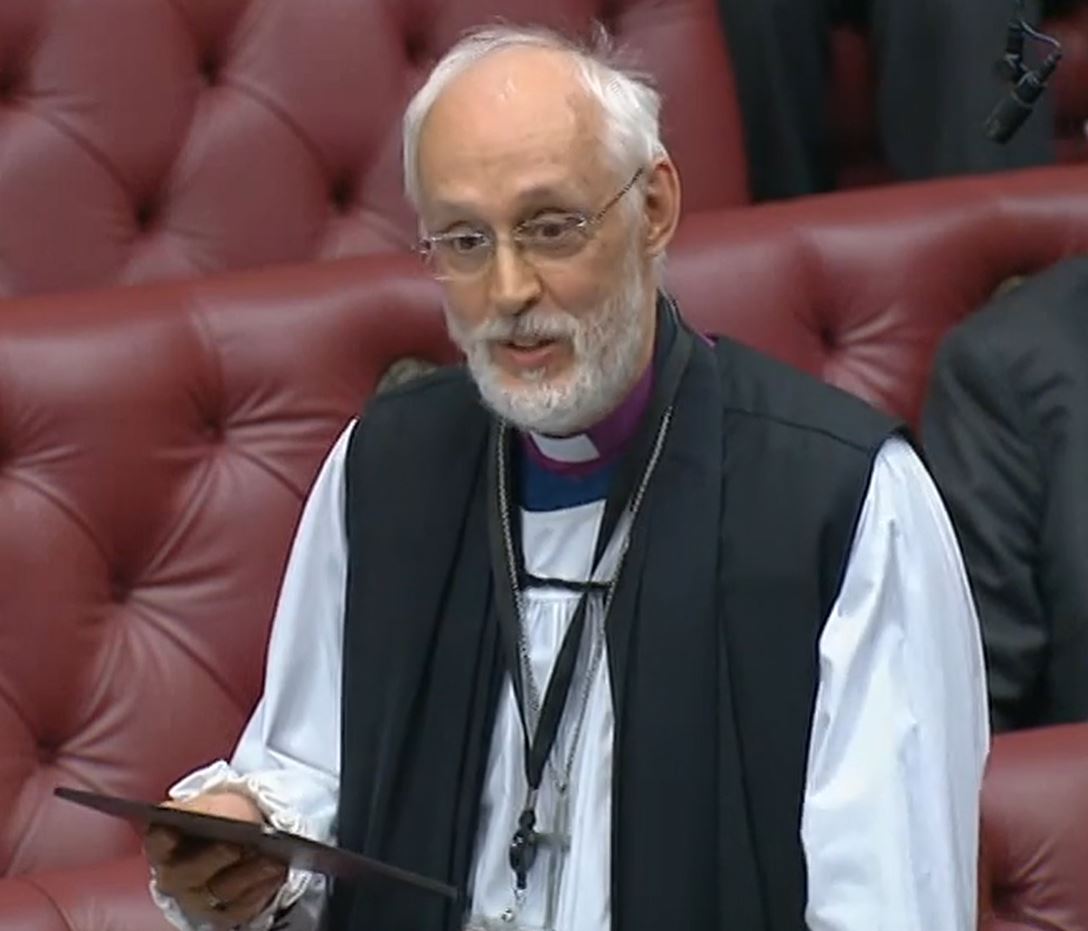
On 1st November 2021, the House of Lords debated the Police, Crime, Sentencing and Courts Bill in Committee. The Bishop of Gloucester spoke in the debate, in support of her amendment 110 and other amendments which would require courts to consider the impact of not granting bail on a child when the recipient of a bail decision is a primary carer to that child:
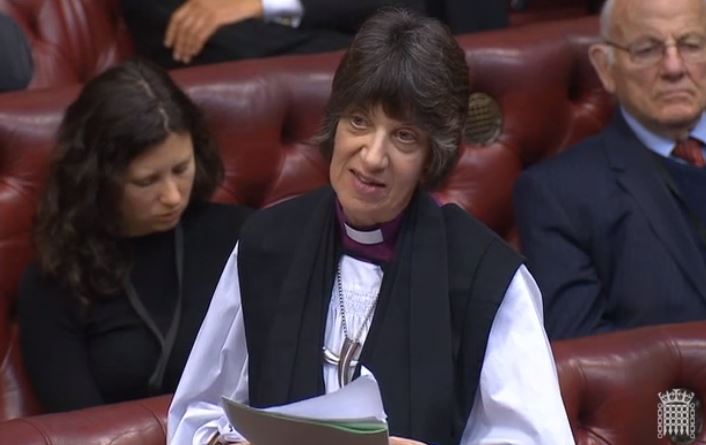
The Lord Bishop of Gloucester: My Lords, I am pleased to move this amendment, which has the support of the noble and learned Lord, Lord Falconer, the noble Lord, Lord Dubs, and the noble Baroness, Lady Massey. I am grateful for the knowledge and wisdom they will bring to the debate. I declare an interest as Anglican Bishop for Her Majesty’s Prisons in England and Wales and president of the Nelson Trust.

The sentencing of a primary carer can have a serious detrimental impact on the rights of a child and their life chances, yet the fact that they are a primary carer is not consistently considered by the court making the sentencing decision. Amendment 110 would require judges to consider the impact on a child of the decision of not granting bail when determining in criminal proceedings whether to grant bail to a primary carer of that dependent child. Amendments 215 to 217 aim to address inconsistencies in sentencing by requiring judges and magistrates to give due regard to the impact of a sentence on any dependent children and their welfare when sentencing a primary carer. The intention of Amendment 218 is to gather the relevant data about the number of prisoners who are primary carers and the number of children who have a primary carer in custody. Given that there are five amendments here, I hope noble Lords will bear with me.

Continue reading “Police, Crime, Sentencing and Courts Bill: Bishop of Gloucester moves amendments on bail for primary carers of children”
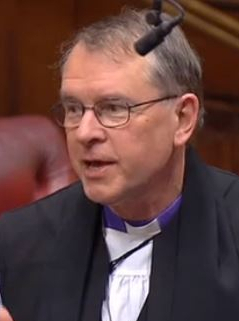
Police, Crime, Sentencing and Courts Bill: Bishop of Gloucester supports expansion of “serious violence” definition to include domestic abuse

On 27th October 2021, the House of Lords debated the Police, Crime, Sentencing & Courts Bill in the third day of committee. The Bishop of Gloucester spoke during the debate, supporting an amendment tabled by Baroness Bertin to include domestic abuse in the definition of “serious violence” under the bill:

The Lord Bishop of Gloucester: My Lords, I too add my support to the amendment moved by the noble Baroness, Lady Bertin. Many points have been covered, and I simply want to say that if the definition of serious violence is not expanded in this way, the concern is that many local areas will not consider it within their strategies.

Continue reading “Police, Crime, Sentencing and Courts Bill: Bishop of Gloucester supports expansion of “serious violence” definition to include domestic abuse”

Police, Crime, Sentencing and Courts Bill: Bishop of Durham backs amendments to safeguard children involved in serious violence on behalf of the Bishop of Manchester

On 20th October 2021, during a debate on the Police, Crime, Sentencing and Courts Bill, the Bishop of Durham spoke in support of amendments intended to increase safeguarding efforts relating to children involved in serious violence, on behalf of the Bishop of Manchester:

The Lord Bishop of Durham: My Lords, the right reverend Prelate the Bishop of Manchester was in his place earlier but has had to go elsewhere for the evening. He has asked me to speak on his behalf on the amendments in this group tabled in his name alongside those of the noble Lord, Lord Rosser, and the noble Baroness, Lady Jones. I thank the Children’s Society and Barnardo’s for their support and helpful briefings.

The Church has a particular concern for vulnerable children. As far as the Church of England is concerned, there are 4,644 schools in which we educate around 1 million students. This educational commitment is combined with parish and youth worker activities that bring the Church into contact with thousands of families each year. Through the Clewer Initiative, many parishes and dioceses have worked closely on the issues of county lines and confronting the blight of modern slavery. Accordingly, we have seen at first hand and, sadly, all too frequently the terrible damage caused by serious youth violence and by the criminal exploitation of children. The latter is an especially insidious form of abuse, which one victim has described as “when someone you trusted makes you commit crime for their benefit”.

Continue reading “Police, Crime, Sentencing and Courts Bill: Bishop of Durham backs amendments to safeguard children involved in serious violence on behalf of the Bishop of Manchester”

Police Crime Sentencing and Courts Bill: Bishop of Durham supports amendment on prison workers’ safety on behalf of the Bishop of Gloucester

On 2oth October 2021, the House of Lords debated amendments to the Police, Crime, Sentencing & Courts Bill. The Bishop of Durham, on behalf of the Bishop of Gloucester, spoke in favour of an amendment which would aim to expand the definition of emergency worker to include prison workers:

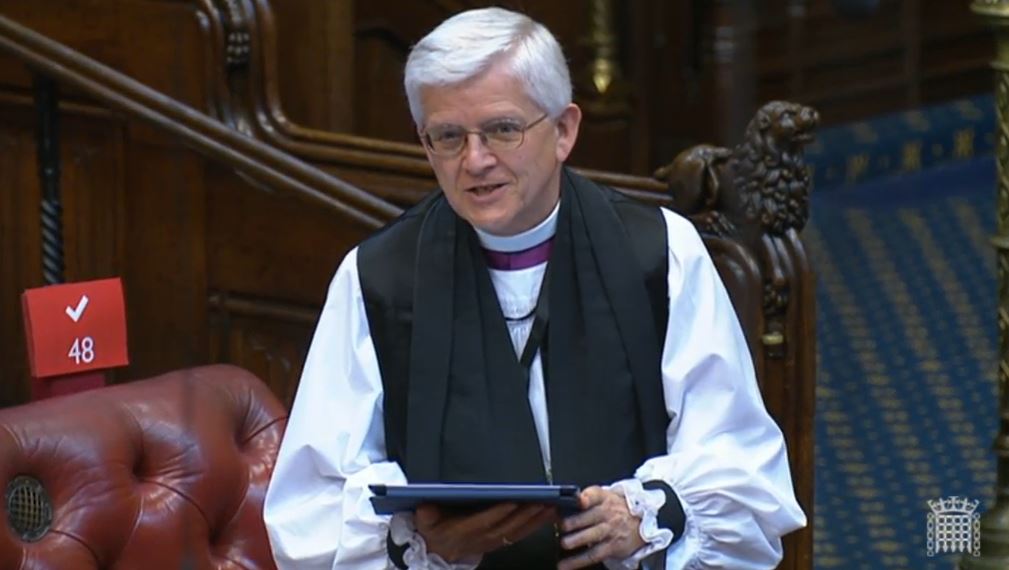
The Lord Bishop of Durham: My Lords, I will speak to Amendment 11, in the name of my right reverend friend the Bishop of Gloucester, with her permission, as she is sadly unable to be here today. I declare her interest as Anglican bishop of prisons in England and Wales.

This amendment seeks to improve Section 3 of the Assaults on Emergency Workers (Offences) Act 2018 by expanding the definition of “emergency worker” to include all staff working in prisons. All those who work in prisons play a valuable role. However, currently, only officers and some healthcare staff are covered by this legislation and, as such, the risk for others working in prisons is increased, because prisoners are well aware of the more severe consequences of assaulting an officer compared with others working in prisons. Someone described this as effectively painting a target on their backs. This is an unintended consequence of the current legislation, which is unfair to many prison workers, undermines their safety and can be easily dealt with through this amendment.

Continue reading “Police Crime Sentencing and Courts Bill: Bishop of Durham supports amendment on prison workers’ safety on behalf of the Bishop of Gloucester”

Police, Crime, Sentencing and Courts Bill: Bishop of Manchester supports amendments consolidating mental health and family support for police force

On 2oth October 2021, the Bishop of Manchester spoke in a debate on the Police, Crime, Sentencing and Courts Bill, adding his support to a group of amendments intending to create a police covenant to better support the mental health and wellbeing of police and their families:

The Lord Bishop of Manchester: My Lords, I draw your Lordships’ attention to my interests in the world of policing as set out in the register, particularly in policing ethics, both with the Greater Manchester Police and the National Police Chiefs’ Council.

At Second Reading I referred briefly to the culture of policing. I did not specifically mention a policing covenant given that time was so short, but I have been intrigued by the debate we have had this afternoon. I note the way in which Members have referred to the Armed Forces covenant. That is helpful in some ways, although I am just a little concerned. As I said at Second Reading, the heart of the policing model is that our police are civilians in uniform; they are not the Armed Forces. We need to be careful not to put police too easily into the same category as the Armed Forces. The Armed Forces are agents of the state while police are agents of society in a slightly different way. That is an important civilian distinction I would want always to hold before us.

Continue reading “Police, Crime, Sentencing and Courts Bill: Bishop of Manchester supports amendments consolidating mental health and family support for police force”

Police, Crime, Sentencing and Courts Bill: Bishop of Manchester expresses concern over increased police powers

The Bishop of Manchester spoke in a debate on the Police, Crime, Sentencing and Courts Bill on 14th September 2021, expressing concern over the increased police powers relating to protest and approaches to Gypsy, Roma and Traveller Communities:

The Lord Bishop of Manchester: My Lords, I draw the House’s attention to my interests as set out in the register, particularly in the world of policing as a trustee of the Clink Charity.

Two centuries ago, in the aftermath of the Peterloo massacre, where a politically motivated militia killed and maimed dozens of citizens who were protesting for voting rights in Manchester city centre, Robert Peel introduced the principles of civilian policing. Those principles have served this country with distinction ever since. British police are civilians in uniform, not agents of state control. Their calling is to police by consent, enabling the public to exercise their rights and freedoms as well as maintaining good order. It is a delicate balance. It requires Governments to stay their hand when proposing legislation and senior police officers to guard their operational independence. It is especially sensitive when the rights of citizens to protest come into the frame.

Continue reading “Police, Crime, Sentencing and Courts Bill: Bishop of Manchester expresses concern over increased police powers”

Police, Crime, Sentencing and Courts Bill: Bishop of Blackburn calls for greater recognition of faith communities

The Bishop of Blackburn spoke in a debate on the second reading of the Police, Crime, Sentencing and Courts Bill, noting the lack of reference to faith communities and calling for more recognition for those communities in the bill:

The Lord Bishop of Blackburn: My Lords, I offer to the noble Lord, Lord Sandhurst, my congratulations on his maiden speech. We are glad to welcome him to this House.

With so many words in this wedge of a Bill, it is easy to forget that we are talking about people—as someone said earlier, real people—and the potential consequences for real lives. There is a huge responsibility, therefore, to get these details right, for both the police and the public. The noble Baroness, Lady Chakrabarti, is right, that deep scrutiny is needed here in this House. An example of the wide range of the Bill and the important but almost impossible nature of covering all of its detail is that, although my friend the right reverend Prelate the Bishop of St Albans is unable to attend today’s proceedings, he has asked me to relay his intention to amend the Bill in Committee, to strengthen the ability of the police to deal with the issue of hare coursing. That is something to look forward to.

Continue reading “Police, Crime, Sentencing and Courts Bill: Bishop of Blackburn calls for greater recognition of faith communities”

Police, Crime, Sentencing and Courts Bill: Bishop of Gloucester speaks on need for “restorative, responsible, and relational” criminal justice system

On 14th September 2021, the Police, Crime, Sentencing and Courts Bill had its second reading in the House of Lords. The Bishop of Gloucester spoke in response to the bill, expressing concern over the effects of the bill on women and children and calling for a “restorative, responsible, and relational” approach to criminal justice:

The Lord Bishop of Gloucester: My Lords, I am grateful for the varied contributions heard today from noble and learned Lords, many of whom have vast experience in this area. I declare an interest as Anglican Bishop to Her Majesty’s Prisons in England and Wales and as president of the Nelson Trust.

As a Lord spiritual rooted in Christian hope, I look for a criminal justice system which is restorative, responsible and relational, and which is effective in focusing holistically on prevention and rehabilitation as well as appropriate conviction and punishment.

There are some welcome proposals within this very long Bill. These include community and diversionary cautions, problem-solving courts and additional support for employment for ex-offenders. There are other aspects that raise concern, and I will name just a few of them: increasing sentence lengths, police-led diversion, sentencing of mothers, racial disparities and young offenders.

Continue reading “Police, Crime, Sentencing and Courts Bill: Bishop of Gloucester speaks on need for “restorative, responsible, and relational” criminal justice system”