Written answer: Debt and poverty campaign groups, Blackburn diocese

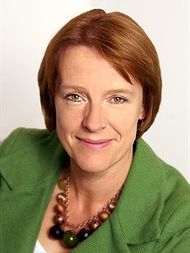
Church CommissionersOn 5th February 2016 the Second Church Estates Commissioner Rt Hon Caroline Spelman MP, responded to a written question from Mark Hendrick MP:

Mr Mark Hendrick(Preston): To ask the right hon. Member for Meriden, representing the Church Commissioners, on how many occasions buildings or parts of buildings have been made available by the Diocese of Blackburn and churches within its boundaries to (a) Christians Against Poverty and (b) other organisations providing debt counselling and employment services or campaigning against poverty. Continue reading “Written answer: Debt and poverty campaign groups, Blackburn diocese”
Welfare Reform Bill – Bishop of Durham supports amendments on children’s life chances

On 9th December 2015 the House of Lords considered the Government’s Welfare Reform and Work Bill in its second day of Committee. 

The Bishop of Durham, Rt Revd Paul Butler, spoke in support of a group of amendments to clauses 4 and 5 of the Bill, concerned with Government reporting on the life chances of children. The amendments sought to require the Government to lay before Parliament a report setting out the measures it proposes to take to improve children’s life chances, and to rename the proposed Social Mobility Commission the ‘Life Chances Commission’. The amendments were withdrawn after the debate.

Bp Durham June 2015 bThe Lord Bishop of Durham: My Lords, I rise to speak first to Amendment 31. Given the serious enthusiasm that the Government have for introducing “life chances” as a title and theme, it would make complete sense for the Government to want to report on improvement in children’s life chances in the future. So I commend this as being entirely in line with the purpose of the whole Bill—it would make sense to report. Continue reading “Welfare Reform Bill – Bishop of Durham supports amendments on children’s life chances”

Welfare Reform Bill – Bishop of Durham supports amendments on child poverty

On 9th December 2015 the House of Lords considered the Government’s Welfare Reform and Work Bill in its second day of Committee. 

The Bishop of Durham, Rt Revd Paul Butler, spoke in support of a group of amendments to clause 4 of the Bill, concerned with Government reporting on the life chances of children. The amendments sought to require the Government to report on the situation of children in low-income households, not only workless households and educational attainment. The amendments were withdrawn after the debate.


Bp Durham June 2015 bThe Lord Bishop of Durham: My Lords, I will speak in support of Amendments 24, 25 and 26. I know that everyone in this House, and indeed in the other place, is committed to protecting those children in our society who are vulnerable to suffering the worst effects of poverty. Indeed, I know that there is a broad recognition across the House that some form of statutory reporting on the issues of child poverty and children’s life chances is an important tool in driving initiatives that will combat that poverty. The questions about what should be included in Clause 4 are questions of best practice, rather than questions of best intention. Continue reading “Welfare Reform Bill – Bishop of Durham supports amendments on child poverty”

Welfare Reform Bill – Bishop of Durham raises child poverty concerns

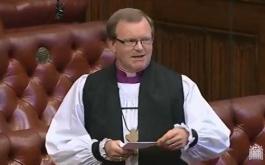
On 17th November 2015 the House of Lords debated at Second Reading the Government’s Welfare Reform and Work Bill. The Bishop of Durham, Rt Revd Paul Butler, raised concerns about the impact on child poverty of proposed changes, including the two-child limit. The Bishop of St Albans also spoke in the debate.


Durham171115The Lord Bishop of Durham: My Lords, I support many of the principles underlying this Bill: the importance of personal, as well as collective, responsibility; the value of decent work, not just financially, but for human dignity; the role of the welfare system in encouraging positive behaviours; the recognition that poverty is not simply about lack of income; and the desire for fairness for those who receive from and contribute to the system, including the vast majority of us who do both at different points in our lives. None of these is completely new, but the Government’s approach to welfare reform has certainly reinvigorated the debate about poverty, helping to challenge implicit assumptions and some very tired thinking. Governments naturally want to distinguish themselves, but in seeking to introduce a fresh perspective on old problems, there is always a danger of going too far or of throwing out the good with the bad. That is my concern about some of the measures being discussed today.
Continue reading “Welfare Reform Bill – Bishop of Durham raises child poverty concerns”

Church Commissioner Questions – Women bishops, funeral poverty, employment tribunal, carbon footprint, WW2 Civilian Memorials

On the 5th November 2015 the Second Church Estates Commissioner, Rt Hon Caroline Spelman MP, answered oral questions in the House of Commons on: women bishops, funeral poverty, the tribunal case of Jeremy Pemberton, the Church’s carbon footprint and a memorial day for civilian casualties of the Second World War. A full transcript is below.

Caroline SpelmanChurch Commissioners

The right hon. Member for Meriden, representing the Church Commissioners was asked—

Women Bishops

1. Diana Johnson (Kingston upon Hull North) (Lab): What assessment she has made of the effect of the introduction of the first woman bishop to the Lords Spiritual on the Church of England; and if she will make a statement. [902007] Continue reading “Church Commissioner Questions – Women bishops, funeral poverty, employment tribunal, carbon footprint, WW2 Civilian Memorials”

Bishop of Portsmouth asks Government about impact of tax credit cuts

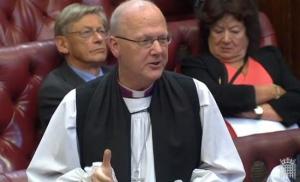
On 14th of September 2015 Lord Dubs asked the Government ‘what assessment they have made of the impact of cuts in tax credits on middle- and lower-income working people’. The Bishop of Portsmouth, the Rt Revd Christopher Foster, asked a supplementary question about the impact the proposed cuts would have on children.

14.04.09 Portsmouth maiden speech 1The Lord Bishop of Portsmouth: My Lords, bearing in mind that two-thirds of children who live in poverty are in in-work families, how will the Government monitor the impact of the proposed changes? In particular, will they review the exclusion of income-based measures from the suite of life chances indicators being brought in?
Continue reading “Bishop of Portsmouth asks Government about impact of tax credit cuts”

Bishop of Durham tells Peers churches will be dealing with more children going hungry during school holidays

Bp Durham June 2015 bOn 25th June 2015 the Bishop of Durham, Rt Revd Paul Butler, followed a Ministerial statement on child poverty by asking a question of Government about children going hungry during school holidays.

The Lord Bishop of Durham: Will the Minister recognise that across the country, churches and other organisations reckon that they will be providing more help for holiday hunger this summer than ever before because of children going hungry during school holidays? Will she also recognise that there is a serious problem regionally and that we need to tackle this in the north more significantly than in the south? Continue reading “Bishop of Durham tells Peers churches will be dealing with more children going hungry during school holidays”

Bishop of St Albans asks Government about fuel poverty

On 15th June 2015 the Bishop of St Albans, Rt Revd Alan Smith, received two written answers from Government to questions about the Warm Home Discount Scheme.

Bishop St Albans June 2015Asked by The Lord Bishop of St Albans:

(1) To ask Her Majesty’s Government what consideration they have given to providing eligible families with the Warm Home Discount automatically.

Continue reading “Bishop of St Albans asks Government about fuel poverty”

Bishop of Durham speaks on reducing child poverty and improving childcare

On 3rd June 2015, during the debate on the Queen’s Speech, the Bishop of Durham, the Rt Revd Paul Butler, spoke on the need to provide good quality childcare, alleviate child poverty, and fully address the complex needs of families, in order to enable equality of opportunity at the start of life. The text of his speech is below and can be watched here:

14.06.10 Bishop of Durham 5The Lord Bishop of Durham: My Lords, the stated intention of the Education and Adoption Bill is to,

“give all children the best possible start in life”.

Of course we all want this, so we must scrutinise carefully whether the proposals on adoption will produce it for children for whom adoption is the best route. Given that some of the most successful adoption agencies are small, localised ones, care will need to be taken in any move to regional agencies—which certainly has its strengths—so that the smaller agencies’ special skills and experience are not lost, particularly as they are often the most effective at placing and maintaining adoptions of the most hard-to-place children. Durham Family Welfare in my own area is a fine example. Continue reading “Bishop of Durham speaks on reducing child poverty and improving childcare”

Bishop of Truro leads debate on local welfare assistance for those in crisis

On 10th February 2015, the Bishop of Truro, Rt Rev Tim Thornton, led a debate in the House of Lords on local welfare assistance schemes and help for those in crisis. The full text of his speech is below, followed by those of Peers who participated. The Bishop of Portsmouth, Rt Rev Christopher Foster, also spoke in the debate towards the end.

Welfare Assistance Schemes

Question for Short Debate

7.30 pm

Asked by The Lord Bishop of Truro

To ask Her Majesty’s Government what steps they are taking to ensure that local welfare assistance schemes provide effective support to people in crisis and will continue to be able to do so.Bishop of Truro 20.6.13

The Lord Bishop of Truro: My Lords, I am very grateful indeed for this opportunity to raise a very important issue by putting some questions to the Government on, and raising matters relating to, local welfare assistance schemes. In doing so, I declare my interest that I am chair of the Children’s Society, a national charity which has conducted quite a lot of research in this area and to which I shall refer. Continue reading “Bishop of Truro leads debate on local welfare assistance for those in crisis”