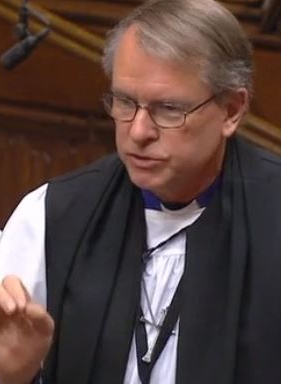
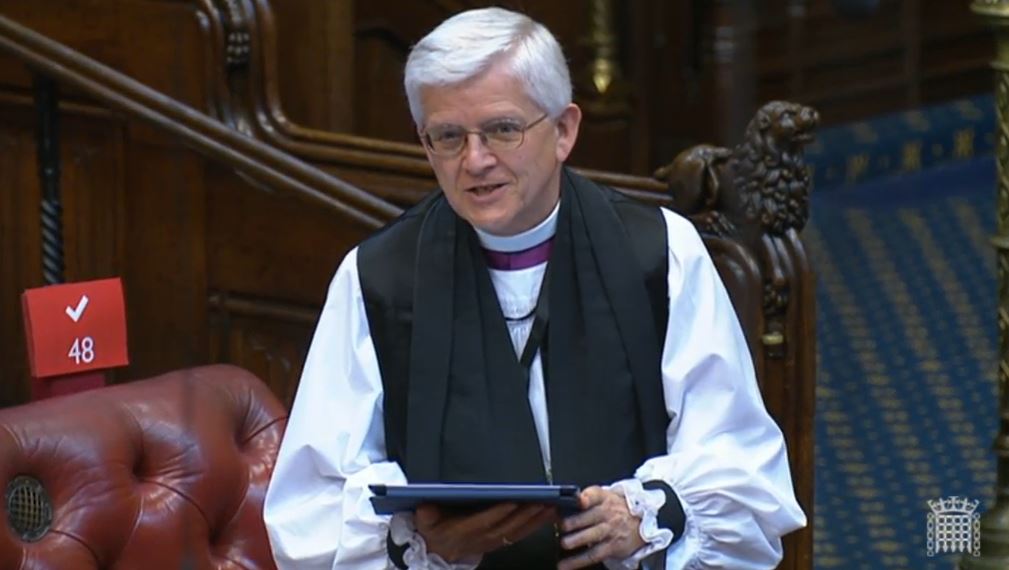
Bishop of Blackburn stresses importance of accessibility when encouraging behaviour change on the path to net-zero

The Bishop of Blackburn spoke in a debate on behaviour change and the transition to net-zero carbon emissions on 16th September 2021, urging that the government consider the issues faced by the poorest in society so that they are not left behind:

The Lord Bishop of Blackburn: My Lords, I too am grateful to the noble Baroness, Lady Blackstone, for the opportunity of this debate. I have just finished reading a book about wilding in the UK, and it is a classic story of how difficult it is to change a culture, attitudes and expectations from deeply embedded practices and convictions, in this case about how we manage our land—which was appropriate, with the Environment Bill this week. The same difficulty applies in this debate, which is less about government policy and more about how we, as citizens, choose to live.

My main point, in discussing the role behaviour change can play in helping us towards net-zero carbon emissions, is this: it is essential that our expectations are aspirational, but also realistic. They need to apply to all people. It is my fear that the poorest 10% will be left not just behind, but feeling that they are part of the problem, when they would rather be part of the solution.

Continue reading “Bishop of Blackburn stresses importance of accessibility when encouraging behaviour change on the path to net-zero”

Bishop of Gloucester raises issues of food poverty in debate on universal credit uplift

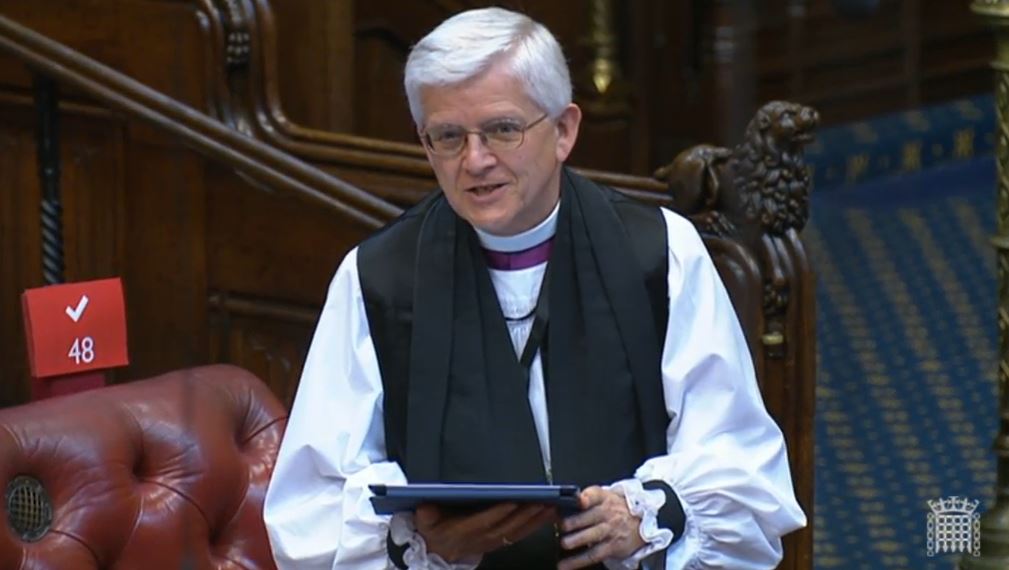
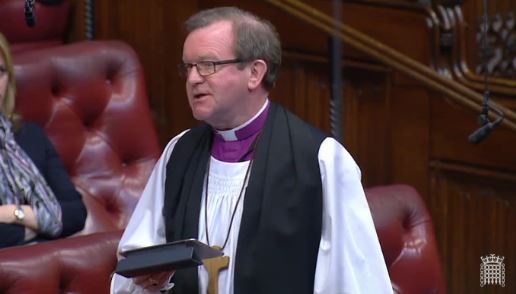
The Bishop of Gloucester spoke in a debate on the proposed removal of the universal credit uplift on 9th September 2021, with reference to the impact such a decision would have on levels of food poverty in the UK:

The Lord Bishop of Gloucester: I am grateful to the noble Baroness, Lady Tyler, for introducing this important debate, and I declare my interest as a trustee of Feeding Britain. I will focus my time on the impact that withdrawing the £20 uplift will have on food poverty. More than 500 anti-poverty workers, volunteers and supporters within the Feeding Britain network have signed a petition calling on the Government not to remove the increase, and that petition will be delivered to No. 10 in about an hour.

Continue reading “Bishop of Gloucester raises issues of food poverty in debate on universal credit uplift”

Bishop of Gloucester asks about effects of COVID-19 on the levelling-up agenda

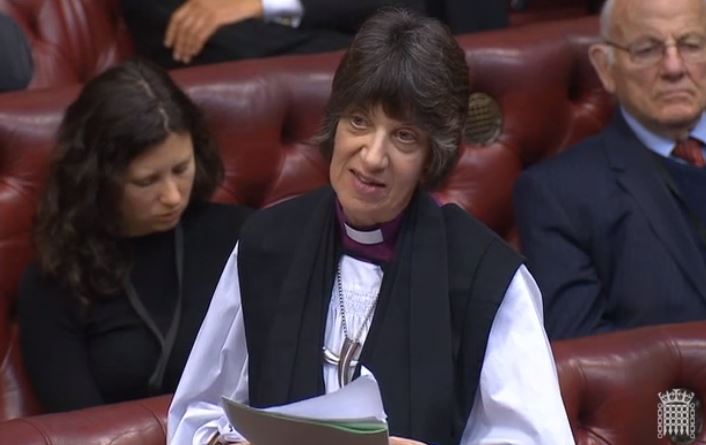
The Bishop of Gloucester asked a question on whether the government would provide an opportunity for the House of Lords to hold a debate on the effects of COVID-19 on the government’s levelling-up agenda on 1st July 2021, during a debate on addressing discrepancies in life expectancy and public health in deprived areas:

The Lord Bishop of Gloucester: In the light of Sir Michael Marmot’s report, will the Minister commit to providing an early opportunity for this House to debate the impact of Covid-19 on Her Majesty’s Government’s much-advertised agenda for levelling up, particularly relating to children and young people in those regions with the greatest level of deprivation?

Continue reading “Bishop of Gloucester asks about effects of COVID-19 on the levelling-up agenda”

Church Commissioners Written Questions: Poverty Prevention & Online Worship

On 21st June 2021, Andrew Selous MP, on behalf of the Church Commissioners, gave the following written answers to questions from an MP:

Poverty

Jim Shannon MP (DUP, Strangford): To ask the Member for South West Bedfordshire, representing the Church Commissioners, what steps the Church is taking to (a) prevent and (b) relieve poverty.

Continue reading “Church Commissioners Written Questions: Poverty Prevention & Online Worship”

Bishop of Blackburn asks Government about link between covid-19 and poverty

On 27th May 2021 the Bishop of Blackburn asked a question he had tabled on the link between covid-19 rates and high levels of poverty.

Question Asked by The Lord Bishop of Blackburn: To ask Her Majesty’s Government what assessment they have made as to whether there is a correlation between areas with high COVID-19 infection rates and high levels of poverty; and if there is such a correlation, what steps they intend to take to address this as part of their levelling up agenda.

The Parliamentary Under-Secretary of State, Department of Health and Social Care (Lord Bethell) (Con): My Lords, the facts are heartbreaking. Covid, like many diseases, has hit hardest those who are most vulnerable: the poorest, the most disabled and those who work in some of the most difficult jobs. The vaccine rollout and community testing programmes have shown what the country can do, but there is much more to be done. That is why we are publishing a levelling-up White Paper, and health inequalities will be central to that.

The Lord Bishop of Blackburn: My Lords, I am grateful to the Minister for his reply and the work that he and colleagues are doing in a fast-changing scene. We know that it is not easy. Does he agree that care for the poorest, most disadvantaged and most vulnerable in the community is one of the signs of a healthy society? Can he be more specific about how equality of opportunity in the levelling-up agenda will be rolled out?

Continue reading “Bishop of Blackburn asks Government about link between covid-19 and poverty”

Queen’s Speech – Bishop of Portsmouth gives farewell speech, on economy and poverty

On 12th May 2021 the Bishop of Portsmouth, Rt Revd Christopher Foster, gave his valedictory speech in the House of Lords during the first day of debate on the Queen’s Speech. He focused on the economy and poverty.

“My Lords, it is more than seven years since I first spoke in this House. It is a long time since I was a maiden like the noble Baroness, Lady Blake, and the noble Lord, Lord Lebedev, whom I congratulate on their arrival and their speeches.

“Today, my name has ‘Valedictory’ next to it. Three weeks ago, I said an emotional godspeed to the people of the Portsmouth diocese at a cathedral service: scaled-down but intensely moving, for me and my wife Sally, at least, as we thanked so many.

“That service also gave me the opportunity for a bishop’s equivalent of ‘Desert Island Discs’, choosing the music sung wonderfully well by the cathedral choir. This included my favourite hymn among very many, ‘There’s a Wideness in God’s Mercy’. It praises God’s gentleness, mercy and justice and how those qualities are rooted in His radical inclusion. It is something I touched on in my valedictory sermon: that the Church is its congregations, but it is far more its communities.

“We must always keep our doors open, especially to those who have no figurative or literal shelter—so I am interested, and not a little intrigued, by the Government’s talk of levelling up. The phrase suggests that those who already have will not have to give up anything and that those who need a hand up will be propelled upwards—but by what? Well, that is the question: how does the rhetoric become the reality? It is a dilemma that the Christian Church understands. We proclaim the kingdom, but find building it challenging.

Continue reading “Queen’s Speech – Bishop of Portsmouth gives farewell speech, on economy and poverty”

Bishop of London asks about steps to ensure deprived communities are not unduly effected by COVID-19

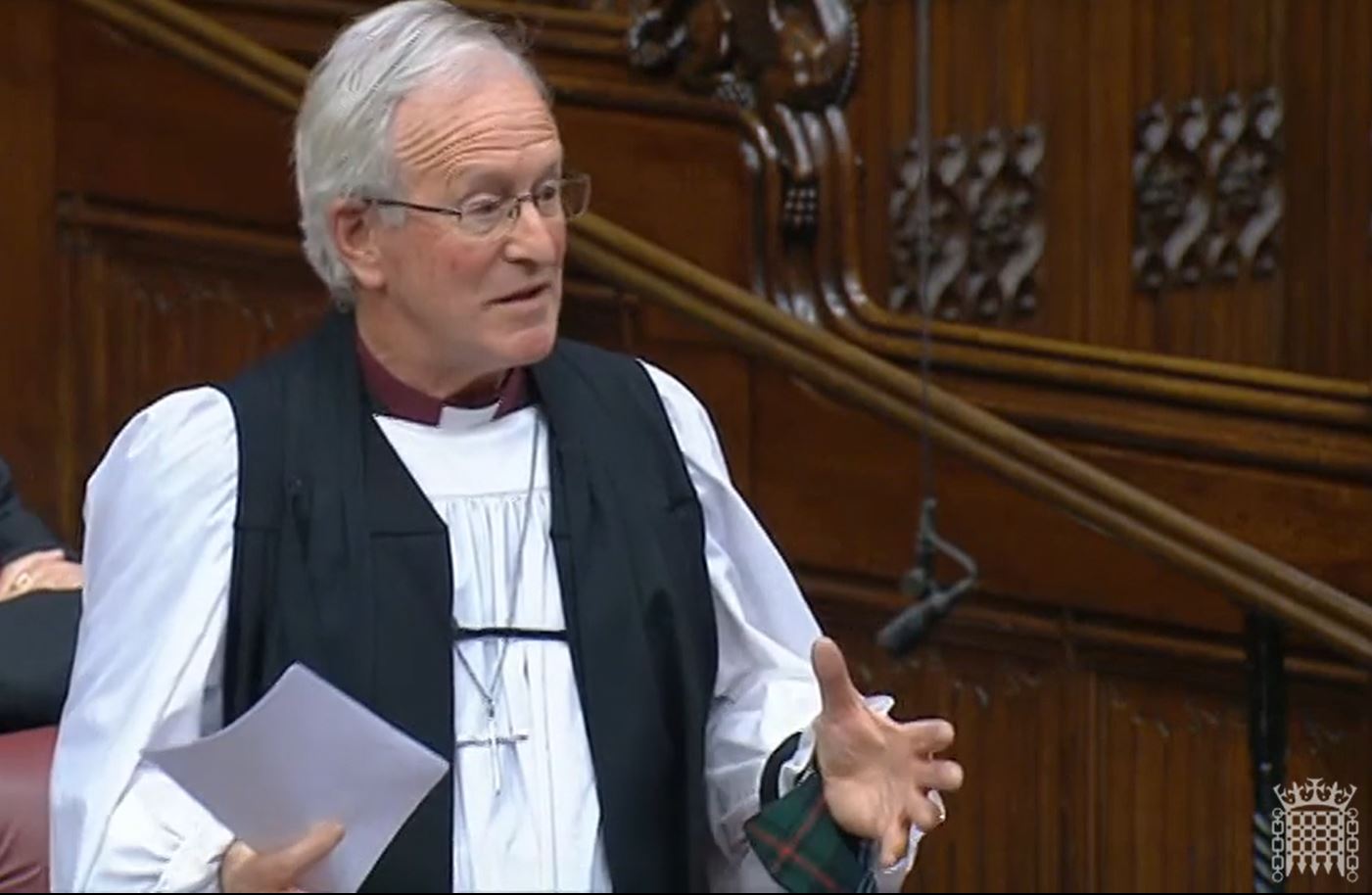
During a discussion on COVID-19 on 20th April 2021, the Bishop of London asked a question on the difficulties of addressing the effects of COVID-19 in deprived communities, particularly in regards to vaccines:

The Lord Bishop of London: I am sure the Minister knows that those from deprived communities are more likely to catch Covid-19, be admitted to ITU and to die from the disease. They are also less likely to take up a vaccination. Could the Minister update us on action by the Government to ensure that Covid-19 does not continue to be a disease of poverty?

Continue reading “Bishop of London asks about steps to ensure deprived communities are not unduly effected by COVID-19”

Vaccines for developing world, poverty in the pandemic, devolution and Ethiopia  

In the House of Lords on 14th January 2021 the Bishop of St Albans received written answers to questions on vaccines for developing countries and the situation in the Tigray region of Ethiopia while the Bishop of Durham received answers to questions on the recent updated report by the Child Poverty Action Group and the Church of England on Poverty in the pandemic.
Meanwhile in the Chamber, the Bishop of Birmingham raised the issue of devolution in England with the Government during Lord Young’s Oral question about the formation of a Constitution, Democracy and Human Rights Commission. Text below:

Continue reading “Vaccines for developing world, poverty in the pandemic, devolution and Ethiopia  “

Bishop of Birmingham asks about impact of economic pandemic recovery

On 12th January 2021, the Bishop of Birmingham asked a question on the future impact of economic recovery from the COVID-19 Pandemic:

The Lord Bishop of Birmingham [V]: I am grateful for the much-appreciated provisions made by the Chancellor so far in this extreme crisis and for his honesty in outlining the significant harm already caused to the economy by the pandemic. Will the Minister reassure the House that, following these emergency measures, many of which have been outlined just now, there are plans and policies already being formed for a recovery? Would he indicate some of the economic and social principles that the Government will be applying in leading the recovery? In addition to the question from the noble Lord, Lord Balfe, will the inevitable need to rebalance the public finances not unfairly burden the poorest?

Continue reading “Bishop of Birmingham asks about impact of economic pandemic recovery”

Bishop of Durham asks about universal credit and support for low income families

The Bishop of Durham received the following written answer on 11th January 2021:

The Lord Bishop of Durham asked Her Majesty’s Government:

  • what key (1) economic, and (2) health, indicators they plan to use to inform their planned assessment of how best to support low-income families; and whether such any such assessment will include determining whether to make the £20 uplift to Universal Credit permanent.
  • what is the timeline for their assessment of (1) how best to support low-income families, and (2) whether to make the £20 uplift to Universal Credit permanent.
Continue reading “Bishop of Durham asks about universal credit and support for low income families”