
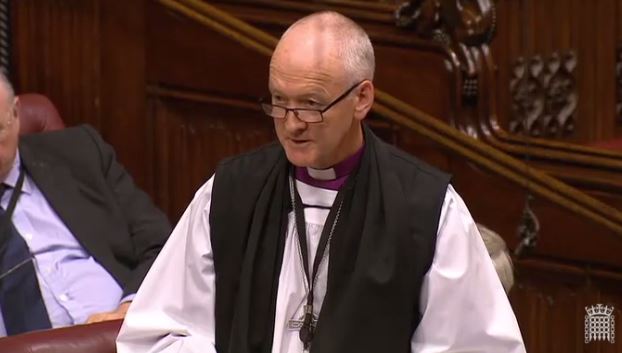
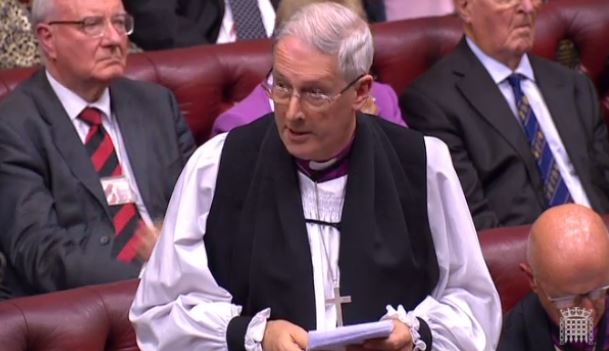
On 10th May 2016 the Bishop of St Albans, Rt Revd Alan Smith, asked a question in the House of Lords on support for unaccompanied child refugees. His question, the follow up and further questions from Peers are below:
The Lord Bishop of St Albans: To ask Her Majesty’s Government what extra resources they plan to provide to local authorities to support the foster care of unaccompanied refugee children, and what plans they have to engage charities that may have volunteers available to help.

The Advocate-General for Scotland (Lord Keen of Elie) (Con): My Lords, the Minister for Immigration will shortly be writing to local authorities to set out the new funding rates for unaccompanied asylum-seeking children. We are consulting with local authorities across the United Kingdom to understand how many children they can support, and we will engage charities with relevant expertise as a part of that process.
The Lord Bishop of St Albans: I thank the Minister for that Answer. In all our debates and statistics, it is vital that we remember that the needs of the child are paramount at every point. A number of my colleagues have signed a letter that was published in the Times today, calling on Her Majesty’s Government to ensure that the unaccompanied children living in the Calais camps who have families here in the UK are reunited with them in time for the new school term in September—and, furthermore, calling on the Government to act on the 300 unaccompanied children in Greece and Italy and deal with that in the same timeframe. In the light of this profound humanitarian need—indeed, crisis—would the Minister assure the House that the Government will act on these matters immediately? Continue reading “Bishop of St Albans asks Government about support for unaccompanied child refugees”
 On the 12th April 2016 the Bishop of Southwark, the Rt Revd Christopher Chessun received a written answer to a question about Syrian refugees.
 On 21st March the House of Lords considered the Government’s Immigration Bill at Report Stage. Lord Hylton tabled an amendment, co-sponsored by the Bishop of Southwark, that would expand the rules on family reunion and asylum. The Bishop of Norwich, the Rt Revd Graham James, spoke in support of the amendment, and Lord Bates responded on behalf of the Government. The amendment was withdrawn after debate.
  On 21st March the House of Lords considered the Government’s Immigration Bill at Report Stage. Labour Peer Lord Dubs tabled an amendment to require the Secretary of State to make arrangements for relocating 3,000 unaccompanied refugee children to the UK, from other countries in Europe. The Bishop of Chelmsford, the Rt Revd Stephen Cottrell, co-sponsored the amendment, speaking and voting in support. In the subsequent Division the amendment was agreed by 306 votes to 204.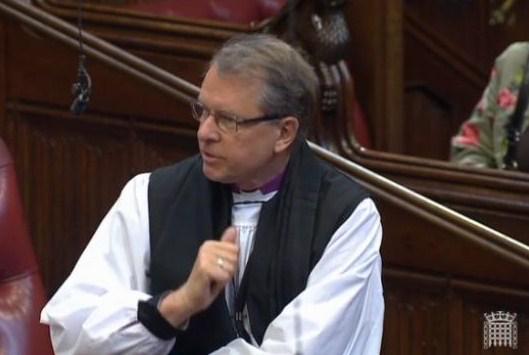
 On 15th March 2016, Baroness Lister moved an amendment to the Government’s Immigration Bill which would extend the period for those transitioning from asylum support to work or benefits from 28 to 40 days. The Bishop of Norwich, the Rt Revd Graham James, spoke in support of the amendment. Lord Bates responded on behalf of the Government.
  On 15th March, the Bishop of Norwich, the Rt Revd Graham James, moved an amenment to the Immigration Bill that would ensure a best interests assessment was undertaken for an child separated from their parents due to an immigration appeal. Lord Keen of Elie responded on behalf of the Government.
 The Church of England in Parliament
You must be logged in to post a comment.