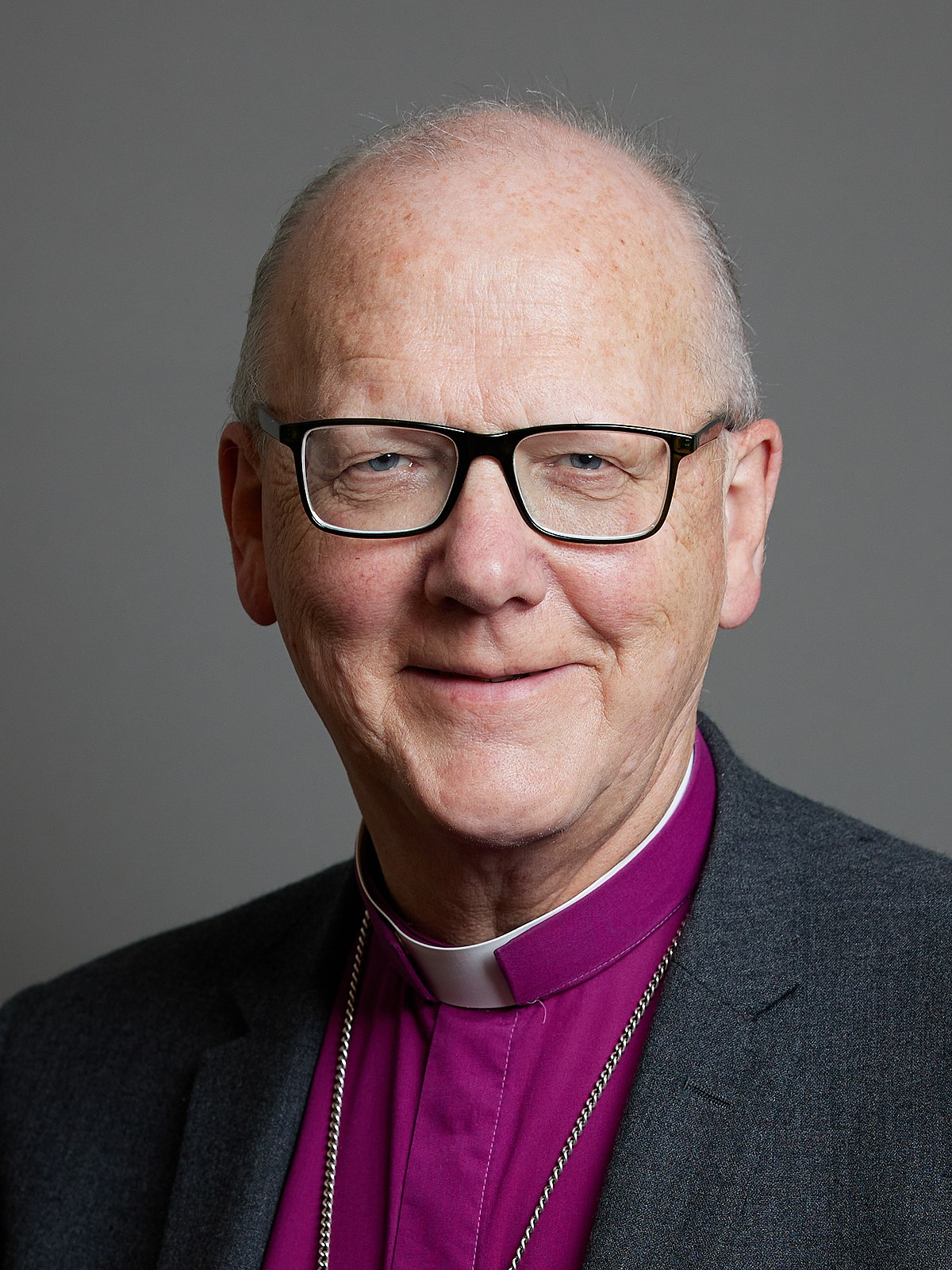
Bishop of Worcester asks about benefits of inter-school partnerships

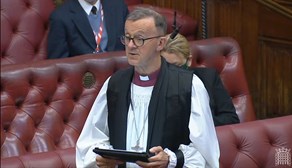
The Bishop of Worcester asked a question on the benefits of cooperation and partnerships between schools on 18th March 2024, during a discussion on the contribution of independent schools to the education sector:

The Lord Bishop of Worcester: My Lords, I draw attention to my interest as president of the Woodard Corporation, one of the largest Christian education charities in the country. The noble Lord, Lord Black, drew attention to the partnership between Brentwood School and other schools in the area.

Continue reading “Bishop of Worcester asks about benefits of inter-school partnerships”

Schools (Mental Health Professionals) Bill: Bishop of Winchester applauds measures to address mental health issues in young people

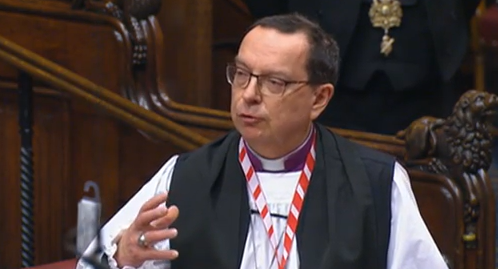
The Bishop of Winchester spoke in a debate on the second reading of the Schools (Mental Health Professionals) Bill on 1st March 2024, pointing out the need for a consistent, universally applied policy to improve student mental health, and the need to address the causes of mental health issues at a root level:

The Lord Bishop of Winchester: My Lords, I am grateful to the noble Baroness for bringing this Bill to us for its Second Reading. We indeed face a crisis in this area and need to be aware of the long-term consequences of not addressing it.

The Bill would pave the way for just the kinds of interventions that are sorely needed. The NSPCC and our own Library briefing state that more than 20% of children and young people are living with poor mental health. CAMHS referrals are provided for only the most severe presenting issues, while early intervention, though widely recognised to be key to good long-term outcomes, is now a thing of distant memory. The sobering fact is that children are taking their own lives while they wait to be seen, and that is deeply shameful.

Last summer, the Church of England published the document Our Hope for a Flourishing Schools System, which makes specific mention of mental health, it being the issue school leaders most often raise with us. It states:

“Children’s mental health and wellbeing is prioritised and resourced generously by a society that invests in the long-term future of its nation by placing children first in funding and political direction. The fulfilling of a child’s potential should never be hindered, blocked or prevented by the system in which they find themselves”.

However, those words are, sadly, far from being the current reality.

Continue reading “Schools (Mental Health Professionals) Bill: Bishop of Winchester applauds measures to address mental health issues in young people”

Bishop of Lincoln asks about methods of improving school attendance

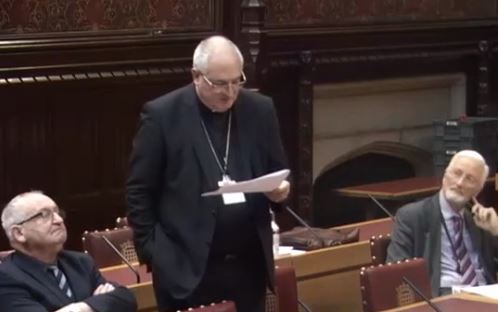
The Bishop of Lincoln asked a questions about application of data analysis to improve pupil attendance and experience in schools on 13th February 2024, during a discussion on the potential of Ofsted reviewing pupil absence rates as part of their inspections:

The Lord Bishop of Lincoln: My Lords, I express gratitude to the Minister for the way in which the data has been produced; I understand that more is to come, and that will be examined in great detail. As an unrepentant pedant, though, I am as interested in the adverbs as the nouns—in how the data is to be applied. How do we get more children across the line in terms of the culture of school? Some years ago, the Children’s Society’s Young Commissioners looked deeply into child poverty in school and how children are identified as those, for instance, receiving free school meals or who are not able to purchase the very expensive school uniforms from the agreed seller. How is school culture being encouraged by government further to change in order to get children across the line? How, indeed, do we expect Ofsted to become the “office of encouragement”?

Continue reading “Bishop of Lincoln asks about methods of improving school attendance”

Bishop of St Albans highlights risks posed by overdue maintenance and repair in UK schools

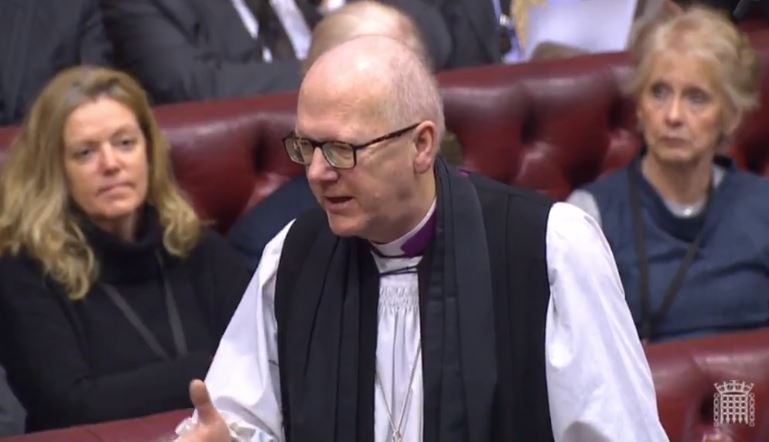
The Bishop of St Albans spoke in a debate on the safety risks of reinforced autoclaved aerated concrete in schools on 1st February 2024, raising the potential effects on exam results and the wider issue of a maintenance and repair backlog in UK schools:

The Lord Bishop of St Albans: My Lords, I thank the noble Lord, Lord Addington, for securing this debate on a subject that has already been raised in this House and is adversely affecting a significant minority of our schools. I pay tribute to those hard-pressed and sometimes overstressed heads, teachers, ancillary staff and pupils who are still having to cope with this on a daily basis; it really is having an effect on the ordinary running of some of our schools across our nation. I think, for example, of the staff and students of St Leonard’s Catholic School in County Durham, who have been extremely adversely affected by this crisis; the pupils are still being taught in temporary classrooms five months on. The DfE announced this week that it cannot make any exam dispensations for the GCSE and A-level students at this school, despite experts advising a 10% boost to grades to compensate for disruption to education.

Continue reading “Bishop of St Albans highlights risks posed by overdue maintenance and repair in UK schools”

Bishop of St Albans asks about SEND provision in schools

During a debate on capacity for Special Educational Needs and Disabilities (SEND) provision in schools on 15th November 2023, the Bishop of St Albans asked a question on the use of SEND provision and the need for statutory assessment of pupils needs before a transfer to alternative provision:

The Lord Bishop of St Albans: My Lords, the Education Committee report of September 2023 recommends that the department scrutinise the use of alternative provision settings and ensure that children and young people with SEND are transferred there only after having a statutory assessment, and not use them as a behavioural management tool. What steps has the department taken towards addressing this issue?

Continue reading “Bishop of St Albans asks about SEND provision in schools”

Bishop of Leicester asks about school attendance

The Bishop of Leicester received the following written answer on 26th October 2023:

The Lord Bishop of Leicester asked His Majesty’s Government what the school attendance rates are in (1) Leicester, (2) Leicestershire, and (3) nationally, broken down in each case by (a) primary, (b) secondary, and (c) special schools; and how these rates have changed since 2019.

Continue reading “Bishop of Leicester asks about school attendance”

Bishop of St Albans asks about support for purchasing school uniforms and stationery

The Bishop of St Albans received the following written answer on 17th October 2023:

The Lord Bishop of St Albans asked His Majesty’s Government what steps they are taking to support parents with back-to-school costs, including (1) uniform, and (2) stationery.

Baroness Barran (Con, DfE): The government understands the pressures people are facing with the cost of living and has provided £94 billion to support households with higher costs across 2022/23 and 2023/24.

Additional cost of living payments of up to £900 will be made in 2023/24 to households on means tested benefits.

Continue reading “Bishop of St Albans asks about support for purchasing school uniforms and stationery”

Church Commissioners Written Questions: Schools, Clergy, Community Relations, Engagement, Closures, and Repairs & Maintenance

On 12th September 2023, Andrew Selous MP, representing the Church Commissioners, gave the following written answers to questions from MPs:

Julian Knight MP (Ind, Solihull): To ask the Member for South West Bedfordshire, representing the Church Commissioners, what steps the Church is taking to collaborate with local schools and educational institutions to promote positive values and to engage with students and educators.

Continue reading “Church Commissioners Written Questions: Schools, Clergy, Community Relations, Engagement, Closures, and Repairs & Maintenance”

Bishop of St Albans urges government to work to provide financial and citizenship education in schools

The Bishop of St Albans spoke in a debate on life skills and citizenship teaching in primary and secondary schools on 7th September 2023, urging the government to work with organisations to provide financial education in schools, and drawing attention to the Church of England’s Living Well Together project:

The Lord Bishop of St Albans: My Lords, the diocese which I am privileged to serve has 138 church schools in it and another group of independent schools with Christian foundations. I am glad to have the opportunity to visit them regularly—I have been in one already this morning. As I go round, I am heartened by the teaching I see already going on on citizenship and value-based education. I want to comment, though, on just a couple of things and to suggest that, while it is important that the Government are clear what they are doing, there is actually a vital role for families and a vital role in collaborating with other bodies that are seeking to do similar sort of work.

Continue reading “Bishop of St Albans urges government to work to provide financial and citizenship education in schools”

Bishop of Durham asks about links between absenteeism and mental health & wellbeing in young people

On 20th July 2023, the Bishop of Durham asked a question on connections between absences from school and mental health, wellbeing and special educational needs:

The Lord Bishop of Durham: My Lords, I declare my interest as chair of the National Society and thank the Minister for visiting the north-east recently. The Church of England has just published a flourishing schools document, which I know she has. Absenteeism appears to also be connected to mental health and well-being; there are particular issues around special educational needs. Could the Minister comment on the work that is being done to note the connection with mental health and well-being and improve that to help with absenteeism?

Continue reading “Bishop of Durham asks about links between absenteeism and mental health & wellbeing in young people”