Bishop of Leeds raises need for increased security in the UK and overseas during foreign affairs debate

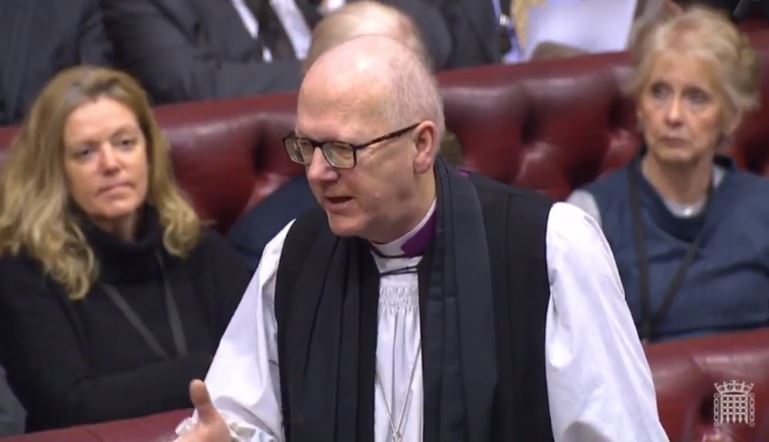
On 5th March 2024, the Bishop of Leeds gave a speech in response to a motion to take note of the UK’s position on foreign affairs, stressing the need for security in the UK and overseas, and making particular mention of the current civil war in Sudan:

The Lord Bishop of Leeds: My Lords, it is a great pleasure to follow the noble Lord, Lord Young. I endorse the comments made by many speakers about the great respect that we have for the noble Lords, Lord Cameron and Lord Ahmad. I note that it is not only the anniversary of the Fulton speech by Winston Churchill but the 71st anniversary of the death of Stalin—even tyrants are mortal.

Foreign policy is domestic policy, and vice versa. What happens in Gaza hits the streets of Leeds; what happens in Kashmir directly affects attitudes and events in Bradford. It is impossible to put foreign and domestic policies in separate compartments, which is why it is vital that the UK does not create a credibility gap when thinking that what we do in London is not noticed beyond these islands.

In the last 10 years, we have seen the absurdity of speaking of our neighbours as if they could not understand us—I witnessed Brexit—and of demanding adherence by Russia, China, Sudan and so on to the rule of law while being ready in this place to drop commitments made by us. I think that three Bills now have come to this House with a cover note saying that the Secretary of State cannot guarantee that our obligations under human rights legislation, for example, are being met. This country has achieved a credibility over decades, especially in the 80 years since the end of World War II, for honest diplomacy and pragmatic integrity. What takes decades to create can disappear in days when that integrity, or at least reputation for integrity, is compromised or questioned.

Continue reading “Bishop of Leeds raises need for increased security in the UK and overseas during foreign affairs debate”
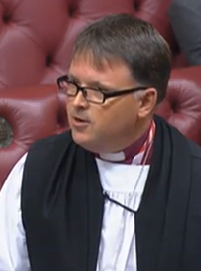
Bishop of Norwich responds to government statement on security of elected officials

The Bishop of Norwich spoke in response to a government statement on the security of elected representatives on 29th February 2024, asking how the model of disagreeing agreeably could be applied in government:

The Lord Bishop of Norwich: My Lords, I thank the Minister for repeating this important Statement. The protection that will be offered to our elected representatives is vital, because this is a period of time of immense concern. As has already been mentioned, the impact, particularly on women and women of UKME heritage, both in person and online, is deeply troubling, as is the abuse suffered by Muslim and Jewish colleagues. Anti-Semitism has been said to be a “light sleeper”, but it is very much wide awake at this time, and a lot of Islamophobia is built on immense ignorance and stereotyping of people.

Continue reading “Bishop of Norwich responds to government statement on security of elected officials”

Church Commissioners Written Questions: Independent Safeguarding Board, Charity Commission Reports, Church Security

On 8th February 2024, Andrew Selous MP, representing the Church Commissioners, gave the following written answers to questions from MPs:

Independent Safeguarding Board

Mr Ben Bradshaw MP (Lab, Exeter): To ask the Member for South West Bedfordshire, representing the Church Commissioners:

  • how many and what proportion of the case reviews that the Independent Safeguarding Board agreed to undertake have been commissioned by the interim commissioner of independent reviews.
  • whether the commissioners have had recent discussions with (a) the Archbishops’ Council and (b) other stakeholders on the commissioning of case reviews that the Independent Safeguarding Board agreed to undertake; what the timescale is for case reviews commissioned by the interim commissioner of independent reviews; and what steps are being taken to ensure the adequacy of such reviews.
  • whether the commissioners have had discussions with the Archbishops’ Council on the potential impact of recommendations from case reviews commissioned by the interim commissioner of independent reviews on earlier cases.
Continue reading “Church Commissioners Written Questions: Independent Safeguarding Board, Charity Commission Reports, Church Security”

Data Protection & Digital Information Bill: Bishop of St Albans raises concerns on police powers to access data

The Bishop of St Albans spoke in a debate at the second reading of the Data Protection and Digital Information Bill on 19th December 2023, raising concerns about the expansion of police access to and use of personal data:

The Lord Bishop of St Albans: My Lords, I too welcome the noble Lord, Lord de Clifford, and look forward to his maiden speech. We on these Benches appreciate that there is a need for updated data protection legislation in order to keep up with the many technological advances that are taking place and, wherever possible, to simplify the processes for data processing. From this perspective, we welcome the Government’s ambition to remove unnecessary red tape and to support British businesses and our economy. However, as ever, these priorities need to be balanced alongside appropriate security of new legislation and we must ensure that there are appropriate safeguards in the Bill to protect human rights that are fundamental to our democracy.

Continue reading “Data Protection & Digital Information Bill: Bishop of St Albans raises concerns on police powers to access data”

Investigatory Powers (Amendment) Bill: Bishop of St Albans raises ethical concerns over data access and developing technologies

On 20th November 2023, the Bishop of St Albans spoke in a debate on the Investigatory Powers (Amendment) Bill [HL] at the bill’s second reading, raising concerns regarding the expanded powers the bill would give to the intelligence services to access personal data, and the ethical considerations of developing technology:

The Lord Bishop of St Albans: My Lords, I too thank the noble Lord, Lord Anderson of Ipswich, for his very helpful and excellent work in his area. With the rapid acceleration of technology and technological capacity, I recognise the need for this Bill to be updated. In this context, I welcome the Government’s sense of urgency in addressing the changing landscape in this area, and seeking to close those gaps that potentially endanger both the security and the safety of our nation. My right reverend friend the Bishop of Leeds had hoped to be here today, as he has taken a particular interest in this area, but he is detained elsewhere. We would both like to express two concerns that we believe must be addressed as this Bill is debated in your Lordships’ House.

Continue reading “Investigatory Powers (Amendment) Bill: Bishop of St Albans raises ethical concerns over data access and developing technologies”

Bishop of St Albans asks about theft of items from the British Museum

The Bishop of St Albans received the following written answer on 19th September 2023:

The Lord Bishop of St Albans asked His Majesty’s Government what steps they are taking to support the recovery of stolen artefacts from the British Museum; and what measures they are taking to increase security in this area.

Lord Parkinson of Whitley Bay (Con, DCMS): My department is closely monitoring the situation at the British Museum, and engaging directly with the Museum on this concerning issue.

Continue reading “Bishop of St Albans asks about theft of items from the British Museum”

Bishop of St Albans asks about safeguards against data breaches

On 4th September 2023, the Bishop of St Albans asked a question on the safety and security of NHS data systems during a discussion on recent reports from the Electoral Commission regarding a data breach:

The Lord Bishop of St Albans: My Lords, the stakes are very high when these data breaches take place, because they erode public confidence in allowing organisations to collect and use our private data. I am thinking in particular of the NHS, and its great reliance on data; if it can analyse and collect information, this could be of huge help in solving medical problems and curing diseases. To prevent these things in future, what is being done to ensure that the NHS computer system cannot be hacked and that people can have real confidence in it being allowed to collect their data?

Continue reading “Bishop of St Albans asks about safeguards against data breaches”

Bishop of St Albans asks about Russian threats to Zaporizhzhia Nuclear Power Plant in Ukraine

The Bishop of St Albans tabled a private notice question on 6th July 2023 concerning recent developments at the Zaporizhzhia Nuclear Power Plant in Ukraine, and the risks posed if the plant were to be damaged by Russian forces:

The Lord Bishop of St Albans: To ask His Majesty’s Government (1) what assessment they have made of recent developments at the Zaporizhzhia Nuclear Power Plant and (2) what contingency plans are being made in the event of the power plant being damaged.

Continue reading “Bishop of St Albans asks about Russian threats to Zaporizhzhia Nuclear Power Plant in Ukraine”

Votes: National Security Bill

On 4th July 2023, the House of Lords debated Commons amendments and reasons for the National Security Bill. A vote was held on an amendment to the bill, in which Bishops took part:

Continue reading “Votes: National Security Bill”

Votes: National Security Bill

On 21st June 2023, the House of Lords debated Commons amendments to the National Security Bill. Votes were held on further amendments to the bill, in which Bishops took part:

Continue reading “Votes: National Security Bill”