
Bishop of St Albans – Underage Marriage (Written Answer)

On 16th December 2014, the Bishop of St Albans, the Rt Revd Alan Smith, received an answer to a written question on under-age marriages.
Bishop of St AlbansThe Lord Bishop of St Albans: To ask Her Majesty’s Government what steps they are taking to protect girls who come to the United Kingdom already in under-age marriages. [HL3558]

The Parliamentary Under-Secretary of State for Schools (Lord Nash): Local authorities, with the help of other organisations as appropriate, have a duty to make enquiries under section 47 of the Children Act 1989 if they have reasonable cause to suspect that a child is suffering, or is likely to suffer, significant harm. A belief that a girl may have been involved in an under-age marriage should lead to such an assessment.

Where a local authority encounters concerns about a child’s welfare that constitute, or may constitute, an offence against a child, social workers should discuss the case with the police at the earliest opportunity. Offences may have been committed by the girl’s parents, or by her ‘husband’. Legislation that came into force earlier in 2014 means that forced marriage is now a criminal offence. Continue reading “Bishop of St Albans – Underage Marriage (Written Answer)”

Bishop of St Albans calls for stronger enforcement and culture change to tackle lack of FGM prosecutions

“…as well as hoping to get prosecutions, we need to work really hard on changing culture. Law is a blunt instrument. We have loads of laws on drugs and substance abuse and we try to enforce them, but, in that and other areas, we need to keep trying to get behind the issue which is causing the problem in the first place.”

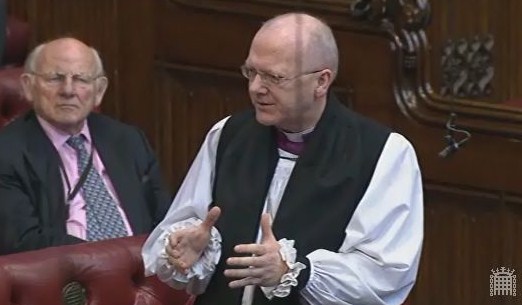
Bishop of St AlbansOn 11th December 2014, Labour Peer Baroness Rendell of Babergh led a debate in the House of Lords to ask Her Majesty’s Government what steps they are taking to encourage prosecutions of offenders under the Female Genital Mutilation Act 2003. The Bishop of St Albans, the Rt Revd Alan Smith, spoke in the debate. He welcomed the Government’s Action Plan on FGM and the cross-party consensus on dealing with the issue. He noted that efforts had been made to strengthen the law on FGM through the Serious Crime Bill, but cautioned that existing legislation needed to be better enforced, if prosecution rates were to rise. He also called for a renewed effort to understand and challenge the cultural underpinnings of the practice, in order to see lasting change.
Continue reading “Bishop of St Albans calls for stronger enforcement and culture change to tackle lack of FGM prosecutions”

Bishop of St Albans calls on Government to take up recommendations of hunger report

Bishop of St AlbansOn 11th December 2014, the Bishop of St Albans, the Rt Revd Alan Smith, asked Her Majesty’s Government what assessment they have made of the recommendations of the All-Party Parliamentary Group on Food Poverty’s recent report, Feeding Britain. A full transcript of the exchange is reproduced below:
Lord Wallace of Saltaire: My Lords, this report is a serious contribution to an important and wide-ranging debate, which recognises the multiple factors behind demand for emergency food assistance. As a country, we have enough food to go round. We agree that it is wrong that anyone should go hungry at the same time as surplus food is going to waste. There is a moral argument, as well as a sustainability one, to ensure that we make the best use of our resources.

Continue reading “Bishop of St Albans calls on Government to take up recommendations of hunger report”

Bishop of St Albans presses Government on child poverty strategy (Written Answer)

On 11th December 2014, the Bishop of St Albans, the Rt Revd Alan Smith, received an answer from the Department for Work and Pensions to two written questions on child poverty.

Bishop of St AlbansThe Lord Bishop of St Albans: To ask Her Majesty’s Government whether they have carried out any forecasts of the level of child poverty between now and 2020; and if so, whether they will be made public.[HL3230]

The Lord Bishop of St Albans: To ask Her Majesty’s Government whether they have calculated the impact on child poverty of the combined tax and benefit policy changes announced to date since May 2010.[HL3231] Continue reading “Bishop of St Albans presses Government on child poverty strategy (Written Answer)”

Bishop of St Albans – Forced Marriage (Written Answer)

On 10th December 2014, the Bishop of St Albans, the Rt Revd Alan Smith, received an answer to a written question on the subject of forced marriage.

Bishop of St AlbansThe Lord Bishop of St Albans: To ask Her Majesty’s Government whether they will clarify the role of teachers in monitoring girls at risk of being forced into under-age marriage. [HL3494]

The Parliamentary Under-Secretary of State for Schools (Lord Nash): All school staff have a responsibility to identify children who may be in need of extra help or who are suffering, or are likely to suffer, significant harm. All staff then have a responsibility to take appropriate action, working with other services as required. Those responsibilities, which apply to the risk of forced marriage as to any other form of abuse, are set out in ‘Keeping Children Safe in Education’ statutory guidance for schools and their staff which the Government published in April 2014. [1] Continue reading “Bishop of St Albans – Forced Marriage (Written Answer)”

Bishop of St Albans receives written answer on international violence against women convention

On 8th December 2014, the Bishop of St Albans, the Rt Revd Alan Smith, received an answer to a written question on the Convention on Preventing and Combating Violence against Women and Domestic Violence

Bishop of St AlbansThe Lord Bishop of St Albans: To ask Her Majesty’s Government by what date they expect that departments and the devolved administrations will have completed their consideration of extra-territorial jurisdiction in respect of offences established in accordance with the Istanbul Convention.[HL3233]

The Minister of State, Ministry of Justice (Lord Faulks): This government takes its international obligations very seriously. That is why we signed the Istanbul Convention on 8 June 2012, to show our strong commitment to tackling violence against women and girls.

The UK has some of the most robust laws in the world against violence towards women and girls. We have criminalised forced marriage but primary legislation will also be needed to comply with the extra-territorial jurisdiction provisions in Article 44 of the Convention before it can be ratified.

Justice Ministers are currently considering the extent to which we need to amend the criminal law of England and Wales for compliance with Article 44 prior to ratification of the Convention.

Any changes necessary to the criminal law in Scotland and Northern Ireland prior to ratification are matters for the devolved administrations. We will consult Ministers in the devolved administrations about whether legislative changes in England and Wales should extend to Scotland and Northern Ireland.

(via Parliament.uk)

Bishop of St Albans – Sex-Selective Abortion (Written Answers)

On 5th December 2014, the Bishop of St Albans, the Rt Revd Alan Smith, received answers to two written questions on the topic of sex-selective abortion.

Bishop of St AlbansThe Lord Bishop of St Albans: To ask Her Majesty’s Government how they intend to ensure greater accuracy in gathering gender-correlated abortion statistics.[HL3171]

The Parliamentary Under-Secretary of State, Department of Health (Earl Howe) (Con): Sex of the fetus is not recorded on the HSA4 forms submitted to the Chief Medical Officer; the gender of the fetus is not known for most abortions.

The Department’s latest analysis of birth ratios data published in May found no evidence of sex selection taking place in the United Kingdom. However, we will continue to monitor birth ratios and consider any other evidence that comes to light. Continue reading “Bishop of St Albans – Sex-Selective Abortion (Written Answers)”

Bishop of St Albans – Social Security Benefits (Written Answer)

On 2 December 2014, the Bishop of St Albans, the Rt Revd Alan Smith, received an answer to a written question on social security benefits:

Bishop of St AlbansThe Lord Bishop of St Albans: To ask Her Majesty’s Government what impact assessment they have made of further planned benefit freezes, including the impact on in-work poverty. [HL3232]

The Parliamentary Under-Secretary of State, Department for Work and Pensions (Lord Freud): This Government has no plans to further freeze benefits, so there are currently no plans to provide estimates of the potential effects or the impacts on in-work poverty.

(via Parliament.uk)

Bishop of St Albans – Energy Prices (Written Answer)

On 27th November 2014, the Bishop of St Albans, the Rt Revd Alan Smith, receieved an answer to a written question on energy prices.

Bishop of St AlbansThe Lord Bishop of St Albans: To ask Her Majesty’s Government what were the outcomes of the round-table event convened by Ofgem on 29 October on price differences between various payment methods for domestic consumers of electricity and gas, particularly in relation to addressing the higher fuel costs of pre-payment meters.[HL2852]

The Parliamentary Under-Secretary of State, Department of Energy and Climate Change (Baroness Verma): There was general agreement at the workshop that payment differentials was a complex issue and that any changes to the rules would create winners or losers with no clear benefit to vulnerable groups. For example, of households who were fuel poor in England in 2012, around 48% paid for their electricity and 40% paid for their gas through direct debit and around 27% paid for their electricity and 20% paid for their gas through prepayment meters. Changing rules in favour of pre-payment meter customers would make direct debit customers worse-off. Continue reading “Bishop of St Albans – Energy Prices (Written Answer)”

Bishop of St Albans – Work Capability Assessment (Written Answer)

On 25th November 2014, the Bishop fo St Albans, the Rt Revd Alan Smith, received a written answer from the Depatment of Work and Pensions on the Work Capability Assessment.

Bishop of St AlbansThe Lord Bishop of St Albans: To ask Her Majesty’s Government whether people who are undergoing a work capability assessment because of mental health problems are guaranteed assessment by health professionals who have psychiatric expertise.[HL2851]

The Parliamentary Under-Secretary of State, Department for Work and Pensions (Lord Freud): All healthcare professionals who carry out work capability assessments on behalf of the DWP are fully trained in disability assessment and are registered with their respective Regulatory Body. Healthcare professionals receive comprehensive training in the functional effects of mental health conditions. In addition all health professionals are supported by mental function champions who have specialist knowledge of mental health conditions and provide support and best practice advice.

(via Parliament.uk)