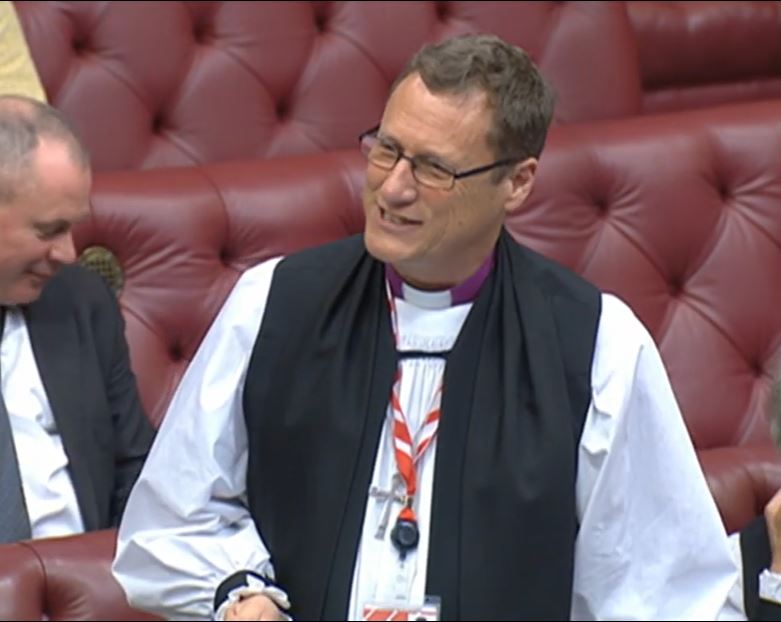
The Bishop of Lincoln received the following written answer on 6th January 2025:
The Lord Bishop of Lincoln: His Majesty’s Government what assessment they have made of the impact of the two-child limit on child poverty levels since it was introduced in 2017; and what steps the Child Poverty Taskforce is taking to address this impact.
The Bishop of Leicester received the following written answer on 10th May 2024:
The Lord Bishop of Leicester asked His Majesty’s Government, further to the Written Answer by Viscount Younger of Leckie on 24 April (HL3765), what plans they have to collect data to evaluate the success of the two-child benefit cap, especially in relation to the statements in the 2015 Impact Assessment which suggest the two-child limit would (1) encourage parents to consider their readiness to support an additional child, (2) help people move into sustained employment, and (3) provide incentives to have fewer children.
The Bishop of Leicester received the following written answer on 24th April 2024:
The Lord Bishop of Leicester asked His Majesty’s Government, further to the Written Answer by Viscount Younger of Leckie on 27 March (HL3520), why it is not possible to undertake a robust assessment of the impact of the two-child limit.
The Bishop of Leicester asked a question on the impact of the two-child limit on families receiving child benefit payments on 11th March 2024:
The Lord Bishop of Leicester: My Lords, there is strong evidence that in the early 2000s increases in child benefits led to an increase in the amount parents spent on fruit and vegetables and books and toys for their children. What assessment have the Government made of the impact of the two-child limit on benefits and, in particular, on the health and well-being of the 1.5 million children affected?
The Bishop of Durham tabled a motion for his Universal Credit (Removal of Two Child Limit) Bill to be discharged from the committee stage on 26th October 2022. No amendments had been tabled by other Members to the Bill, so it passed Committee Stage and proceeds to its final Lords stage, Third Reading:
The Lord Bishop of Durham: That the order of commitment be discharged.
My Lords, I understand that no amendments have been set down to this Bill and that no noble Lord has indicated a wish to move a manuscript amendment or to speak in Committee. Unless, therefore, any noble Lord objects, I beg to move that the order of commitment be discharged.
On 8th July 2022 the Bishop of Durham brought forward his Universal Credit (Removal of Two Child Limit) Bill, to be debated in the House of Lords. His speech introducing this Second Reading debate is below, followed by those of other Peers and the Government Minister responding:
The Lord Bishop of Durham: My Lords, I am glad to bring before you this Bill, which would abolish the two-child limit to universal credit. In doing so, I declare my interest as patron of the North East Child Poverty Commission.
When this policy was originally debated, I made it clear that we would seek to hold the Government to account for its impact. Working with others, including the Child Poverty Action Group, the Joseph Rowntree Foundation and many others, I have sought to do this. Before the policy was rolled out, its impacts were predicted—notably, that many children would pay the price. They are, with more families affected every year.
On 6th June 2022 the Bishop of Durham asked a question and a follow-up to Government, about its child poverty strategy:
The Lord Bishop of Durham asked Her Majesty’s Government what assessment they have made of the review by the Church of England Making the case for a child poverty strategy, published on 28 April; and what plans they have, if any, to introduce a child poverty strategy.
On 15th July 2020 Lord McNicol of West Kilbride asked the Government “what steps they are taking to reduce the number of children living in poverty in working households.” The Bishop of Durham, Rt Revd Paul Butler, asked a follow-up question:
The Lord Bishop of Durham [V]: My Lords, in the light of the Minister’s last answer about continual review, in April 2019 59% of families affected by the two-child limit were working, with many struggling to afford essentials. When the new statistics on the policy are released tomorrow, will Her Majesty’s Government finally agree to review and assess the evidence that the two-child limit negatively impacts children in working families and that lifting it is the most effective way to reduce the number of children living in poverty? Continue reading “Bishop of Durham asks Government about impact of two-child limit on poverty in working families”
On 29th May 2020 the Bishop of Durham, Rt Revd Paul Butler, received a written answer to two questions on social security benefits.
The Lord Bishop of Durham: HL4491 To ask Her Majesty’s Government what plans they have to publish the statistics detailing the number of families and children affected by the two-child limit benefit policy up to April.
The Lord Bishop of Durham: HL4492 To ask Her Majesty’s Government what plans they have to publish the statistics detailing the number of families affected by the two-child limit benefit policy broken down by (1) parliamentary constituency, and (2) local authority.
You must be logged in to post a comment.