The Bishop of Winchester received the following written answer on 10th March 2021:
The Lord Bishop of Winchester asked Her Majesty’s Government what steps they are taking to assist developing countries to develop a working cold-chain storage system for storing COVID-19 vaccines at the required temperatures.
The Bishop of Winchester received the following written answer on 9th March 2021:
The Lord Bishop of Winchester asked Her Majesty’s Government what assessment they have made of the COVAX Facility’s ability to provide (1) timely, (2) equitable, and (3) universal, access to COVID-19 vaccines for developing countries; and what plans they have to work with other countries to coordinate the relaxation of intellectual property protections for COVID-19 pharmaceutical technology to allow for such access.
On 8th February 2021, the Bishop of Winchester asked a question on support for students seeking graduate jobs on 8th February 2021, following a government statement on the effects of the COVID-19 Pandemic on university students:
The Lord Bishop of Winchester [V]: My Lords, while the short-term support offered by the Government to students facing financial difficulties is most welcome, the pandemic has also generated uncertainty about graduate employment in the short, medium and long term. What plans do Her Majesty’s Government have for supporting students and graduates who are or will be seeking skilled graduate employment?
The Bishop of Winchester asked a question on provision of high quality jobs and work placements for young people affected by the COVID-19 Pandemic on 2nd February 2021, during a discussion on youth unemployment:
The Lord Bishop of Winchester [V]: My Lords, in a recent survey by the Prince’s Trust, 21% of those aged 16 to 24 said that they felt their skills and training were no longer useful as a result of the pandemic. Given that about only 2,000 young people secured roles out of 120,000 approved placements in the Kickstart scheme, can the Minister say what action Her Majesty’s Government are taking to increase the numbers enrolled on placements and to ensure that they are all high quality?
The Bishop of Winchester received the following written answers on 28th January 2021:
The Lord Bishop of Winchester asked Her Majesty’s Government, further to the announcement made by the Department for Education on 2 January about the review of the Initial Teacher Training market, what plans they have, as part of that review (1) to ensure an increased supply of new teachers rather than displacement of trainee teachers between providers, and (2) to mitigate any risk of (a) complexity, and (b) disincentives, in the market.
On 30th December 2020 the House of Lords considered the Government’s European Union (Future Relationship) Bill at all stages. Three votes were held on the Bill, in which bishops took part:
On 11th November Lord Bruce of Bennachie asked the Government “further to the economic impact of the Covid-19 pandemic, what assessment they have made of (1) their foreign aid, and (2) their development spending, commitments.” The Bishop of Winchester asked a further question:
The Lord Bishop of Winchester [V]: My Lords, protecting freedom of religion or belief remains a pertinent issue in the developing world when more than 80% of the world’s population identify with a religion or belief system. My diocese has historic links with the Church of the Province of Myanmar, and during the pandemic many of its clergy have been providing volunteer support in understaffed hospitals. Can the Minister assure the House that, despite the almost £3 billion cut in the UK’s foreign aid budget, Her Majesty’s Government will continue to prioritise international freedom of religion and belief and recognise the contribution of religious groups in the development and support of their communities, particularly in times of crisis? Continue reading “Bishop of Winchester asks Government to continue to prioritise freedom of religion and belief overseas”
On 4th November 2020 the House of Lords debated the Government’s Health Protection (Coronavirus) (Restrictions) (England) (No. 4) Regulations 2020. The Regulations introduce a second coronavirus lockdown in England, including the susp0ension of public worship. The Bishop of Winchester responded:
The Lord Bishop of Winchester [V]: My Lords, I am grateful to Her Majesty’s Government for seeking to ensure that the appropriate measures are in place to protect the most vulnerable and restrict the spread of this virus. It is important that we do not prolong such stringent lockdown measures because of the way that they impact on the mental, physical and, indeed, spiritual well-being of the population. However, I will not be supporting the fatal Motion. I recognise the exceptional nature of these times, and welcome that the regulations will enable places of worship to remain open for private prayer and broadcasting acts of worship. Creating such broadcast acts of worship often requires a team of people, both amateurs and professionals. I would welcome more clarity from the Minister on the number of people allowed to do this.
Clergy across the country have worked hard to ensure that our church buildings are Covid-secure for public worship, education settings, food banks and other essential services. In most places, by distancing and limiting congregation sizes, communal worship can safely take place without the need for an outright ban.


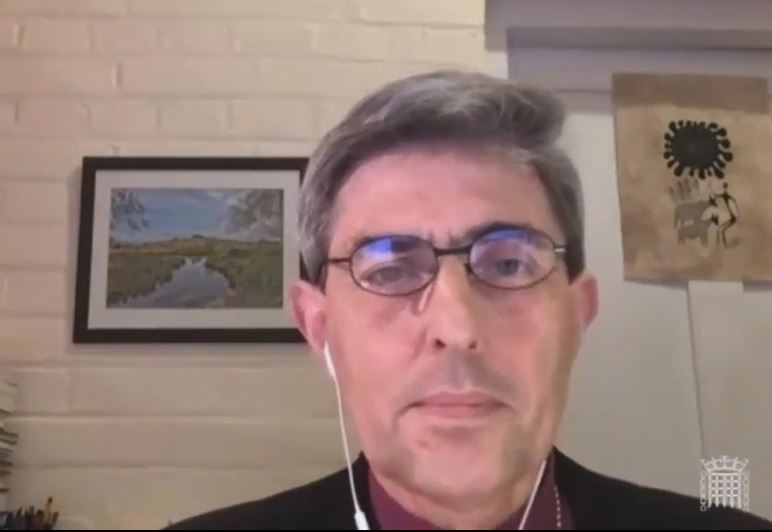
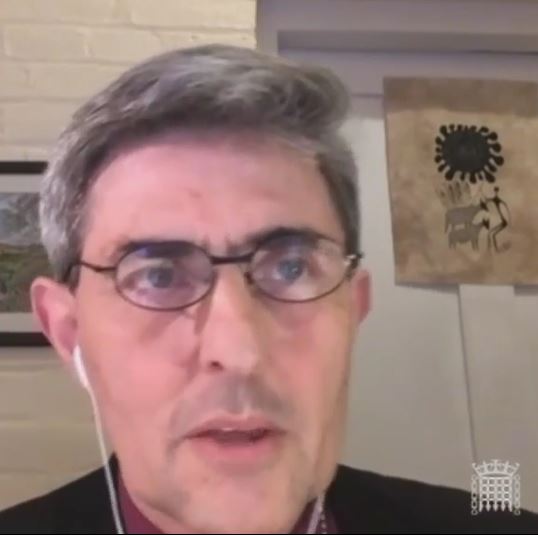
 The Lord Bishop of Winchester [V]: My Lords, protecting freedom of religion or belief remains a pertinent issue in the developing world when more than 80% of the world’s population identify with a religion or belief system. My diocese has historic links with the Church of the Province of Myanmar, and during the pandemic many of its clergy have been providing volunteer support in understaffed hospitals. Can the Minister assure the House that, despite the almost £3 billion cut in the UK’s foreign aid budget, Her Majesty’s Government will continue to prioritise international freedom of religion and belief and recognise the contribution of religious groups in the development and support of their communities, particularly in times of crisis?
  The Church of England in Parliament
You must be logged in to post a comment.