Schools: Bad Behaviour

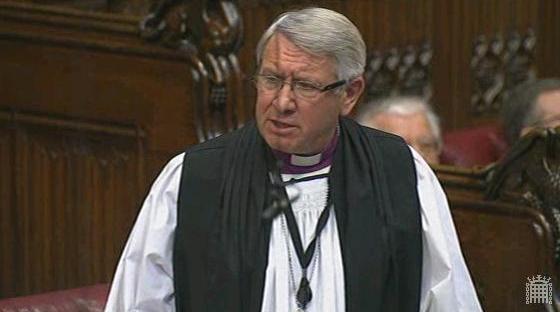
On 25th March 2014 Baroness Massey of Darwen asked Her Majesty’s Government ‘what policies they promote to prevent bad behaviour in schools, apart from punishment?’. The Bishop of Leicester asked a supplementary question:

The Lord Bishop of Leicester: LeicesterMy Lords, in view of the Minister’s clear endorsement of the policy of positive reinforcement of good behaviour, does he agree that we should be doing much more to promote a culture of mutual respect more widely in society so that the benefit of the positive work of many schools is not lost when our children step out of the school gate?

Lord Nash: I agree entirely with the right reverend Prelate. I know that the church has a particularly strong record of promoting community cohesion across its schools. A culture of mutual respect and of respecting other races and religions is essential to a modern school.

Bishop of Lichfield calls for greater support of vulnerable young people in preventing suicide

The Bishop of Lichfield spoke during Lord Eames’ debate on reducing the levels of suicide among young people in the United Kingdom. He focused his remarks on the relationship between low levels of self-worth amongst young people as a factor that contributes to suicidal thoughts. He also raised particular concerns about the risks of bullying or coercion that young people with disabilities face, specifically as debates about assisted suicide become more widespread, and the need to support children who are refugees or asylum seekers and particularly vulnerable due to a lack of adequate mental health care.

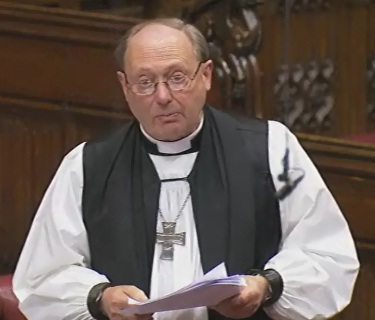
The Lord Bishop of Lichfield: My Lords, I, too, thank the noble and right reverend Lord, Lord Eames, for initiating this debate.

The Association for Young People’s Health recently published its key data on adolescence. At present, the statistics show that the levels of self-harm are relatively stable, although for such a sensitive topic there is likely to be low reporting. It is clear that girls are at least three times more likely to self-harm than boys; on the other hand, suicide is much more prevalent among young males, particularly those aged between 20 and 24. This coincides with the evidence from ChildLine. Numbers have fallen fractionally in more recent years but the report questions whether this will continue.

How this correlates with child well-being needs careful consideration. We all remember the United Nations report about the unhappiness of children in this country. ChildLine reports that the number of children contacting it about suicidal feelings has risen for the third year running, including a rise of 33% in the last year. Overall, child well-being in the UK, according to the United Nations, has improved from 21st out of 21 to 16th out of 29 countries. Economic reasons have been stated and there is much correlation with the commentary from the Association for Young People’s Health. Continue reading “Bishop of Lichfield calls for greater support of vulnerable young people in preventing suicide”

Bishop of Derby takes part in debate on apprenticeships

On 28th November 2013, the Bishop of Derby took part in Baroness Wilcox’ debate on what action the Government are taking to increase the take-up of apprenticeships among young people. In his speech, he spoke of the need for education to assist in the development of good citizens and a high-calibre workforce based on vocation. He also raised the importance of employees being bale to train the right people for the right roles and the need to ensure that all young people have access to employment.
Bishop of DerbyThe Lord Bishop of Derby: My Lords, I, too, congratulate the noble Baroness, Lady Wilcox, on securing this debate on this very important theme. The Richards review and the statement by the Minister of State for Skills and Enterprise make clear that there are three areas that we need to look at and hold together.

The first is the big context about the importance of using education and training, of which apprenticeship is part, to make good citizens and a proper workforce for the 21st century. That is the theme of vocation: developing people to have a sustainable working life. The second area is the need for employers to be able to train and recruit the kind of people they need for their particular industry. The third area is the fact that there are a large number of young people who lack the opportunity to engage with the world of work. Those three themes frame this debate. Continue reading “Bishop of Derby takes part in debate on apprenticeships”

Bishop of Guildford presses Government on use of force in juvenile prisons

On 29th July 2013, Lord Sheldon asked Her Majesty’s Government what steps they are taking to reduce the number of suicides of children in prisons. The Bishop of Guildford, the Rt Revd Christopher Hill, asked a supplementary question:

guildfordThe Lord Bishop of Guildford: Would the Minister care to comment, in the light of the reports of HM Inspectorate of Prisons of May this year on the increased violence at Ashfield and Feltham—it is 10 years to this month since the Commission for Racial Equality produced its report on Feltham—on the desirability of the elimination of the use of batons and routine strip searches in juvenile prisons?

Lord McNally: Every inclination I have is in that direction. Carrying on the policy of the previous Administration, we have tried to make sure that order and discipline in young people’s institutions of various kinds are maintained with the minimum of physical intervention and with the maximum attention on trying to manage difficult situations. A lot of the training addresses how the staff themselves are able to manage down situations before they become violent. However, we also have a duty of care to our staff and a duty of care to other inmates in these institutions, who may become victims of uncontrolled violence.

(via Parliament.uk)