
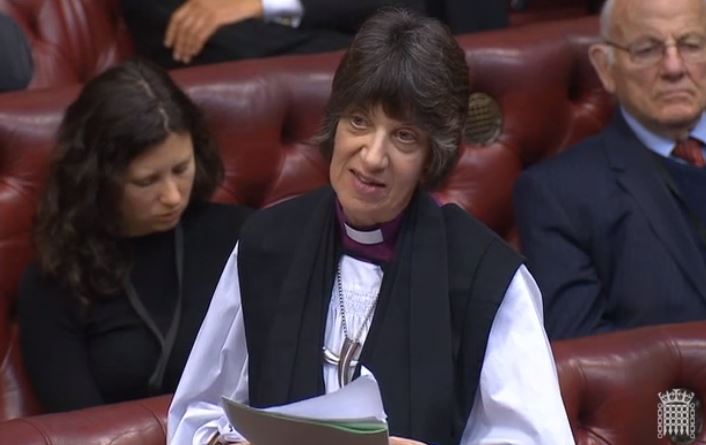
The Bishop of Gloucester gave a speech in the King’s Speech debate on 18th May 2026, urging the government to take a long term and nuanced view on prisons and criminal justice:
The Lord Bishop of Gloucester: My Lords, it is a great privilege to speak today in response to His Majesty’s gracious Speech. It was a delight and privilege to hear the maiden speech of the noble Lord, Lord Case, and of course, that of my friend, the right reverend Prelate the Bishop of St Edmundsbury and Ipswich. She and I share a commitment to justice, and I refer to my interests stated in the register as Anglican Bishop for HM Prisons.
The gracious Speech set out the Government’s ambition for the UK to be
“a country fair for all and a place where every child is included in the nation’s highest aspirations”.
In relation to energy, defence, and economic security, it specified taking decisions for the long term. This emphasis on both the child and the long term is vital. Looking at all legislation through the lens of the child would better join up government departments and would also bring clarity to a long-term holistic vision and resist short-termism.
While we do not have a Bill specifically on prisons, I urge the Government not to take their eye off the ball. We have made some progress with sentencing, but when looking at matters such as prison capacity, jury trials, court backlog, legal aid, et cetera, it is short-termism simply to act to try to fix an immediate crisis. There is an urgent need for a long-term plan which is effective and evidence led.
With regard to the police and the criminal justice system, the gracious Speech referred to
“services the British people expect”.
But for far too long we have let the public narrative and media headlines shape our penal policy. It is therefore not surprising that, too often, our system leaves people stuck in cycles of reoffending. We are not being courageous in acting on the evidence regarding what enables change and transformation. Our long-term vision must be about reducing offending and reoffending with a long-term aim of building stronger communities. It must be about investing in restorative rehabilitation, braver community alternatives, valued probation and, of course, victim support, because we cannot be siloed in focusing either on offenders or on victims.
We must be clear on the purpose of prison, and we must put relationship at the heart of our legislation to enable the flourishing of individuals and communities within a diverse and vibrant society. Outside this Chamber sits the statue of Queen Victoria, flanked by the statues of Justice and Mercy. As a Christian, I believe we must hold these together. Justice is about more than punishment. The gracious Speech stated a desire for every child to fulfil their potential, yet we are constantly treating symptoms and not underlying issues. We need to take adverse childhood experiences seriously and pay attention to nurturing healthy relationships, which begins in childhood, and we need to address all that underlies so much offending. Incidentally, this also connects with the Government’s commitment to halving violence against women and girls.
To conclude, if we want a country that is fair for all, we must resist siloed and short-term fixes, not least in relation to criminal justice. I urge the Government to be courageous in thinking long term to ensure safe and flourishing communities. Of course, that begins with the flourishing of every child within a network of healthy relationship.


You must be logged in to post a comment.