The wider debate requires a candid and truthful recognition of what has been a complex process, including an explicit acknowledgement that a successful negotiation requires significant compromise. Such truthful recognition makes for good civil discourse. This will be further helped by more accurate language about the good and less good aspects of the package and appropriate scrutiny of detail—sadly not possible today. I hope that the public debate is less about the intangibles of rhetoric and more about the true and honest cost of the investment, outreach and spiritual renewal needed if we are to flourish as a nation state, going forward.
My final point begins with comments from the former Archbishop of Canterbury, Lord Williams of Oystermouth, recently retired from this House, who, early in the pandemic, spoke of what has become a much wider perception that our lives are bound together with those of every human being on this planet. That, he said, poses “the biggest moral questions”. A more positive focus on our continuing interdependence, not least with other European nations but more widely—globally—would be welcome and herald the future partnerships that are so essential to our national well-being.
Therefore, I hope that, as we consider the Bill and continue the shared endeavour that is our proud national story, we recognise that people and institutions flourish best under relational frameworks and that individualism, freed of obligation or collective provision, will ultimately fail. We are still in the season of Christmas, and the birth of a saviour transcends all national boundaries with a message of peace and good will to all people.
The Lord Bishop of Durham: To ask Her Majesty’s Government what assessment they have made of the report by the Legatum Institute The Legatum Prosperity Index 2020, published on 16 November; and in particular that report’s findings that Burundi is (1) 157th out of 167 countries ranked in terms of overall prosperity, and (2) among the top 10 worst countries in the world in the categories of (a) economic quality, (b) living conditions, and (c) health. [HL11204]
The Lord Bishop of Worcester: To ask Her Majesty’s Government what plans they have to consult with (1) civil society, (2) faith groups, and (3) other humanitarian actors, before drafting any legislation to amend the International Development (Official Development Assistance Target) Act 2015. [HL11257]
The Lord Bishop of St Albans: To ask Her Majesty’s Government, further to the Government Response to the House of Lords Gambling Industry Committee Report: Social and Economic Impact of the Gambling Industry, published on 8 December, what plans they have to mandate a ban on all gambling transactions via credit cards. [HL11492]
On 30th December the Bishop of Coventry received written answers to three questions on abortion and the two-child benefit limit:
The Lord Bishop of St Albans: To ask Her Majesty’s Government, further to the Written Answer by Lord Agnew of Oulton on 3 December (

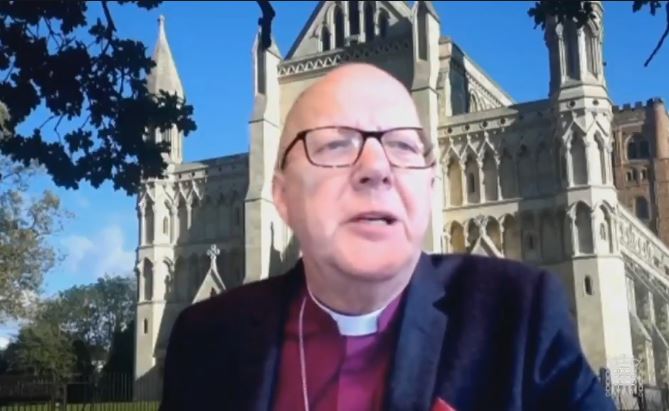
The Lord Bishop of St Albans [V]: My Lords, the news that forced labour was active in cotton supply chains is not the first example of business connections to Uighur repression.
You must be logged in to post a comment.