Bishop of London highlights failings with Windrush Compensation Scheme

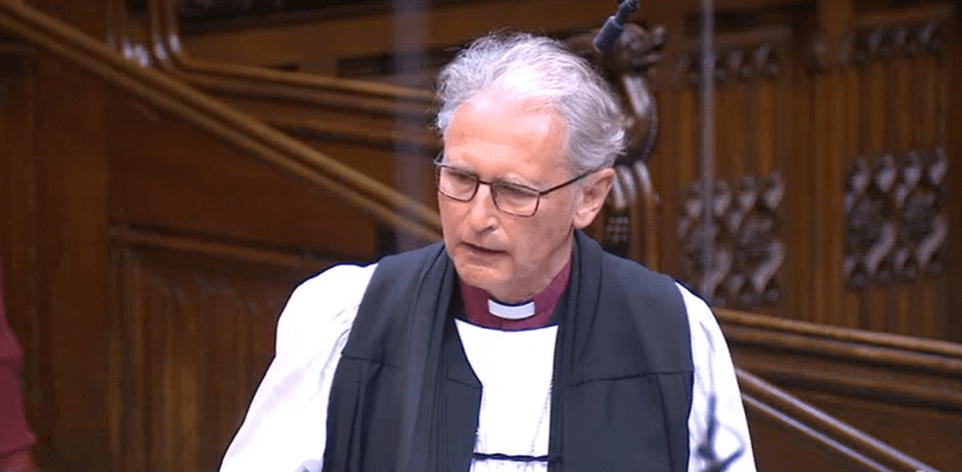
On 6th May 2020 the House of Lords debated a Government motion to take note of the Windrush Compensation Scheme. The Bishop of London, Rt Revd Sarah Mullally, spoke in the debate:

The Lord Bishop of London: My Lords, I thank the Minister for allowing this virtual debate. Almost two years ago, the Windrush scandal astounded this country. The hostile environment policy operated by the Home Office was shown to be discriminatory and damaging. It had neglected a critical principle that is foundational to my Christian faith: human dignity.

Process must support people. This needs to apply not only to our migration policy and departments, as clearly set out in the lessons learned review, but to the way we do what we have committed to do, such as the Windrush compensation scheme. From that standpoint, we need to evaluate how accessible the scheme is to those who are trying to rightfully claim underneath it, and that it is a process that honours their human dignity. Continue reading “Bishop of London highlights failings with Windrush Compensation Scheme”

Bishop of Durham asks Government about low earners, in work poverty and universal basic income

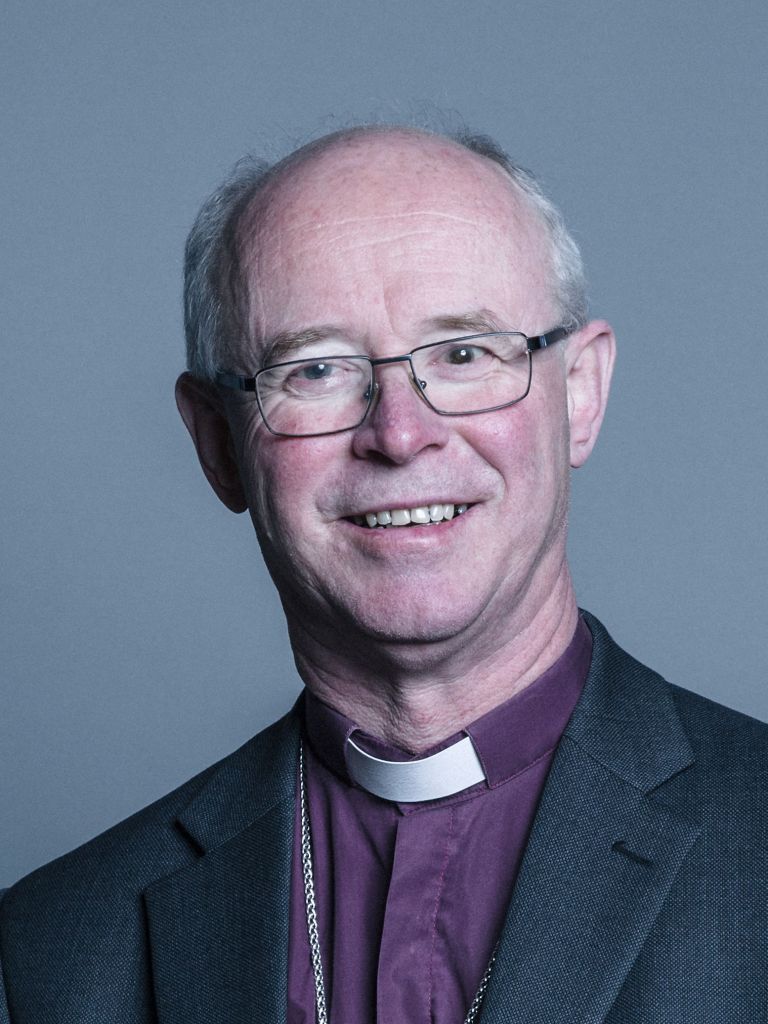
On 6th May 2020 the Archbishop of York, Most Revd John Sentamu, led a debate in the House of Lords on the motion that the Lords “do consider the case for increasing income equality and sustainability in the light of the recent health emergency.” The Bishop of Durham, Rt Revd Paul Butler, also spoke in the debate:

The Lord Bishop of Durham: My Lords, I congratulate the right reverend Prelate the Bishop of Derby on her moving maiden speech. I am grateful for all she does to champion the voices of children.

I want to thank Archbishop Sentamu for his leadership in consistently speaking up for racial and social justice. He champions work among young people, notably through the Archbishop of York Youth Trust. He inspires others to do the same.

The Covid-19 pandemic is a dividing experience through its unequal financial impact. The lowest-earning 10% are seven times more likely than high earners to work in a sector which has shut down. Archbishop Sentamu ​champions the real living wage. In-work poverty is compounded by irregular working hours. Such unpredictability means that families cannot easily save to safeguard themselves from unexpected life events. Eighteen per cent of the north-east’s working population experience insecure work. Turn2us found that people on zero-hours contracts expect a £193 drop in monthly income. These workers often provide essential services such as cleaning and delivery, yet face great financial instability. Will Her Majesty’s Government promote Living Hours accreditation? Continue reading “Bishop of Durham asks Government about low earners, in work poverty and universal basic income”

Archbishop of Canterbury raises economic insecurity of migrants without access to public funds

On 6th May 2020 the Archbishop of York, Most Revd John Sentamu, led a debate in the House of Lords on the motion that the Lords “do consider the case for increasing income equality and sustainability in the light of the recent health emergency.” The Archbishop of Canterbury, Most Revd Justin Welby, also spoke in the debate, highlighting the position of those with no recourse to public funds:

The Archbishop of Canterbury: My Lords, first, I thank the most reverend Primate for tabling this debate today, as well as for a lifetime’s work of battling inequality. May we continue to benefit from his wisdom and prophetic voice. I also look forward to hearing the maiden speech of the right reverend Prelate the Bishop of Derby.

I wish to highlight the issue of those particularly at risk because they do not have the right to access public funds. Migrants are more likely to be self-employed, in temporary work, or working in industries which have been especially badly hit. They are less likely to own their own homes, risking homelessness if they lose their income. Concerns have been raised that migrants may be compelled to continue working even if they become ill as to stop would be to risk destitution, which puts their and others’ health at risk. Continue reading “Archbishop of Canterbury raises economic insecurity of migrants without access to public funds”

Bishop of Derby maiden speech focuses on welfare of children

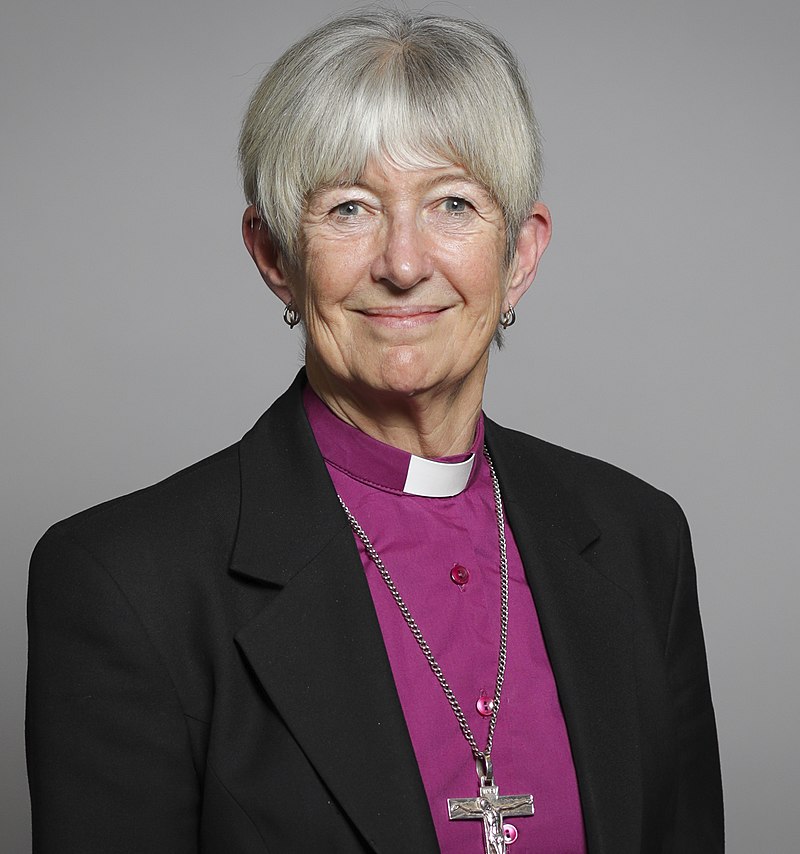
On 6th May 2020 the Archbishop of York, Most Revd John Sentamu, led a debate in the House of Lords on the motion that the Lords “do consider the case for increasing income equality and sustainability in the light of the recent health emergency.” The Bishop of Derby, Rt Revd Libby Lane, made her maiden speech in the debate:

The Lord Bishop of Derby (Maiden Speech): My Lords, Jesus said,

“seek first the Kingdom of God”,​

and in your Lordships’ House, I have caught glimpses of that kingdom: in the warm welcome, in the kind advice of officers and staff, in the patient support of the Church of England Parliamentary Unit, and in the substance of the work noble Lords do, as today.

In January 2015, I became the first woman consecrated bishop in the Church of England. I take this opportunity to thank my friend, the most reverend Primate the Archbishop of York for his support and encouragement, and to pay tribute to his integrity and influence. It is true to his priorities that he uses this debate to champion the poor and continue the fight for justice. It was a particular gift to be “called home” a year ago, to serve as Bishop of Derby and I am proud of the ways in which diocesan staff, clergy, schools and congregations have stepped up in these difficult times. Derby and Derbyshire have responded generously to meet the needs of the most vulnerable: they have made known the kingdom of God. Continue reading “Bishop of Derby maiden speech focuses on welfare of children”

Archbishop of York leads Lords debate on the case for income equality and sustainability

On 6th May 2020 the Archbishop of York, Most Revd John Sentamu, led a debate in the House of Lords on the motion that the Lords “do consider the case for increasing income equality and sustainability in the light of the recent health emergency.” The Archbishop started the debate, and summed up afterwards, referring to many of the speeches made by other Members over the course of nearly three hours. Amongst the other speakers were the Archbishop of Canterbury and the Bishops of Durham and Derby. The entire debate can be read in Hansard here, and the Archbishop’s opening and closing speeches are reproduced below:

Income Equality and Sustainability: Motion to Consider

Moved by The Archbishop of York, That the Virtual Proceedings do consider the case for increasing income equality and sustainability in the light of the recent health emergency.

The Archbishop of York: My Lords, I am grateful to the Government Chief Whip and the usual channels for granting me this opportunity to move a Motion that is very dear to my heart—thank you. I commend Her Majesty’s Government for their rapid action in the current crisis and, through unprecedented public spending, working to protect jobs and avert millions of redundancies. It is in the light of this recent health emergency that I beseech your Lordships’ House to take note of the case for increasing income equality and sustainability.

Last Thursday, the noble Baroness, Lady Bennett of Manor Castle, opened a Question for Short Debate on Covid-19 and people living in poverty. I believe that what we are doing today has the potential to make a lasting difference. As Amelia Earhart, the first woman to fly across the Atlantic, said:

“The most difficult thing is the decision to act, the rest is merely tenacity.”

As long ago as 28 April 1909, Winston Churchill, then president of the Board of Trade, gave a speech in the other place in which he said:

“It is a serious national evil that any class of His Majesty’s subjects should receive less than a living wage in return for their utmost exertions.”—[Official Report, Commons, 28/4/1909; col. 388]

Not much has changed since. That principle remains as strong as ever in our national life. Continue reading “Archbishop of York leads Lords debate on the case for income equality and sustainability”

Archbishop of Canterbury asks about support for UN call for global ceasefire

On 6th May 2020 Lord Oates asked the Government “what support they are providing to African countries in relation to the COVID-19 pandemic.” The Archbishop of Canterbury, Most Revd Justin Welby, asked a follow-up question:

The Archbishop of Canterbury: My Lords, I declare an interest as a member of the Secretary-General of the UN’s High-level Advisory Board on Mediation. What specific steps are the Government taking to support the very successful call for a global ceasefire as it applies to sub-Saharan Africa, particularly among those countries that already have some kind of ceasefire in place, to support the mediation and peace process? I am of course referring to the Secretary-General’s call. Continue reading “Archbishop of Canterbury asks about support for UN call for global ceasefire”

Church Commissioners Written Answer: Churches and VE Day

On 6th May 2020 the Second Church Estates Commissioner, Andrew Selous MP, answered a written question from Chris Loder MP, on VE Day anniversary commemorations:

Chris Loder (West Dorset): 43168 To ask the Right Hon. Member for South West Bedfordshire, representing the Church Commissioners, what steps the Church of England is taking to fly Union Flags on its churches for the 75th Anniversary of VE Day.

Andrew Selous: The House of Bishops revised their guidance on access to churches on the 5th May 2020.

The new guidance can be read here: https://www.churchofengland.org/more/media-centre/news/house-bishops-backs-phased-approach-revising-access-church-buildings

Government guidance states that ‘a minister of religion or worship leader may leave their home to travel to their place of worship’. In most cases, they will do so in order to pray or to stream a service of worship.

If clergy wish to mark VE Day by ringing a church bell or flying a flag from their church buildings, that is within government guidance. This advice does not extend to bell-ringers, sextons or other church officers or volunteers.

Continue reading “Church Commissioners Written Answer: Churches and VE Day”

Bishop of Coventry raises arrests of democracy activists in Hong Kong

On 6th May 2020 the Bishop of Coventry, Rt Revd Christopher Cocksworth, received a written answer on the mass arrests of pro-democracy activists in Hong Kong:

The Lord Bishop of Coventry: HL3685 To ask Her Majesty’s Government what representations they have made to the government of China regarding the mass arrests of pro-democracy activists in Hong Kong on 18 April.

Continue reading “Bishop of Coventry raises arrests of democracy activists in Hong Kong”

Bishop of Winchester asks about FE teaching hours during pandemic

On 6th May 2020 the Bishop of Winchester, Rt Revd Tim Dakin, received a written answer to a question on FE students and teaching hours:

The Lord Bishop of Winchester: HL3165 To ask Her Majesty’s Government what steps they are taking to ensure that all further education students who are (1) 16 or17 years old receive at least 540 teaching hours, and (2) 18 years old or over receive at least 450 teaching hours. Continue reading “Bishop of Winchester asks about FE teaching hours during pandemic”

Bishop of Durham asks Government to revisit two-child limit benefit policy in light of new report

On 5th May 2020 the virtual House of Lords heard the repeat of a Government statement on welfare benefit claims during the pandemic. The Bishop of Durham, Rt Revd Paul Butler, asked a follow up question:

The Lord Bishop of Durham: My Lords, I thank the Minister for repeating the Statement. I add my thanks to all those in DWP for the incredible amount of work that they are doing.

I want to return to the two-child limit. I am sorry but it simply will not do to keep parroting back the same answer every time we raise this issue. Today, the Church of England and the Child Poverty Action Group published our latest information and a report on the impact of the limit. It includes evidence from the early days of the Covid crisis. Sixty thousand more families will be impacted. The policy is utterly flawed. I have been assured by Minister after Minister that if we give them the evidence, they will re-examine the limit. It is time that it be re-examined. Please agree at least to look at our report and re-explore the arguments around this issue. Continue reading “Bishop of Durham asks Government to revisit two-child limit benefit policy in light of new report”