
On 31st January 2018, the Second Church Estates Commissioner, the Rt Hon Dame Caroline Spelman MP spoke in the House of Commons during a debate on a report of the Joint Committee about the restoration and renewal of the Palace of Westminster. Dame Caroline spoke twice, raising the possibility of adding Church House to the list of buildings which could be used to accommodate Parliament during the restoration of the Palace.
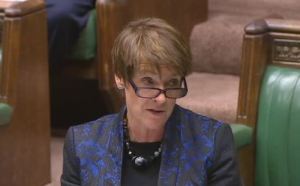 Dame Caroline Spelman (Meriden) (Con): I am grateful to my right hon. Friend for giving way—she is getting a lot of requests. On the subject of decanting, and just for the record—I will speak to this later—the House should know that until very recently there was a contract with Church House, under which, should we have needed to decant at short notice in an emergency, which can happen at any time, Church House had always stood ready to accommodate Parliament, as it did during the second world war. Continue reading “Caroline Spelman on advantages of Church House, Westminster hosting Parliament during renovations”
 On 31st January 2018, Baroness Lister asked Her Majesty’s Government ‘whether they have a policy goal to reduce income inequality; and if so, what is their strategy for achieving that goal.’ The Archbishop of York, Most Revd John Sentamu, asked a follow-up question:
  On 31st January 2018 the Bishop of Coventry, Rt Revd Christopher Cocksworth, received a written answer from Government about the Rohingya people in Burma:
  Lord Bishop of Leeds: My Lords, many speakers will attend to the technical and legal details of the Bill and they will be better equipped to do so than I am. I therefore want to use my time to pay attention to a question that lies behind the nature of the Bill and the choices that we are required to make in scrutinising and attempting to improve it. This question applies to all sides of the argument, whether we think that leaving the European Union is an unmitigated disaster or the best thing since Winston Churchill mobilised the English language and sent it into battle.
  On 28th January 2018
 This week in Parliament the House of Lords gave a Second Reading to the Bishop of St Albans’ Bill to reform the marriage registration process, including to allow mothers’ names alongside those of fathers on marriage certificates. Bishops spoke in debates on cancer care, the NHS winter crisis, access to water in developing countries, and a private members’ bill on conscientious objection. They asked questions about the effect on families of the two-child limit and benefit cap, anonymity for those accused of serious offences, prisons, development aid to Burundi, and food imports. In the House of Commons, the Second Church Estates Commissioner answered questions from MPs on marriage registration, vocations, gay conversion therapy, Christians in the Middle East, counter terrorism measures at religious premises, fracking and religious education.
  Second Reading
 The Lord Bishop of Peterborough: My Lords, yesterday, the River Restaurant downstairs helped us to celebrate Burns Night all day. I thoroughly enjoyed the Scotch broth at lunchtime, but I resisted the main course as I was eating out in the evening. I even resisted the whisky bread-and-butter pudding. The main course which I resisted was vegetarian haggis, celebrating Robert Burns in a way that respected the consciences of those who do not want to eat meat. That is a very proper and good thing to do. There is no legal requirement to provide vegetarian haggis, but it was welcome to many and I think that I would have enjoyed it.
 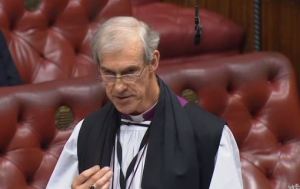 On 25th January 2018 Baroness Jowell hosted a debate in the House of Lords “To ask Her Majesty’s Government what action they are taking to evaluate innovative cancer treatments and make them available through the National Health Service, and to raise life expectancy for cancer patients”. The Bishop of Carlisle, Rt Revd James Newcome, spoke in the debate: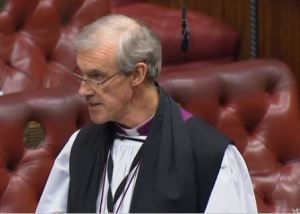


You must be logged in to post a comment.