Oaths and Affirmations

Any MP wishing to take their seat in the Commons has by law to either swear an oath or make a solemn affirmation of allegiance to the Crown. After this June’s General Election, 483 of Parliament’s 650 MPs, three quarters of the whole, chose to swear their oath of allegiance on a religious text (Christian or other faith). The option to affirm, for those MPs not wanting to involve God in their declarations of allegiance, was taken up by 160 MPs.

Prime Minister Theresa May swearing the parliamentary oath whilst holding the King James Bible, June 14th 2017

While swearing in habits might give some general insight into trends of religious and cultural affiliation, they don’t help us to pinpoint with exact precision numbers of the faithful on the green benches. Over half of all MPs, 378 in total, chose to swear an oath of allegiance on the King James Bible, but that may say more about tradition and precedent than about personal Christian commitment. Historically the option to affirm instead of swear on a religious text was as much about providing conscientious alternatives for the religious as well as for atheists, and choosing to affirm instead of swear is still practised by a small number of MPs of Christian and other faiths (both Sikh MPs affirmed, whilst one MP affirmed whilst holding the King James Bible). Even with those caveats, it’s possible to notice some broad trends. Continue reading “Oaths and Affirmations”
Bishop of Durham asks about humanitarian and food aid to Burundi

On 27th July 2017 the Bishop of Durham, Rt Revd Paul Butler, received a written answer to a question of Government about humanitarian and food aid to Burundi:

The Lord Bishop of Durham: To ask Her Majesty’s Government, further to the answer by Lord Bates on 19 July (HL Deb, cols 1616–17), whether humanitarian assistance to (1) the 700,000 in need of food aid, and (2) the three million in need of humanitarian aid, in Burundi will continue to be made available through organisations such as Tearfund, Christian Aid and Oxfam. Continue reading “Bishop of Durham asks about humanitarian and food aid to Burundi”

Bishop of Southwark asks Government about protection of Christians in Iraq and Syria

On 25th July 2017 the Bishop of Southwark, Rt Revd Christopher Chessun, received written answers to two questions of Government about protecting Christians in Iraq and Syria. 

The Lord Bishop of Southwark: To ask Her Majesty’s Government what steps they are taking in Iraq and Syria to discharge the responsibility set out by Mark Field MP, Minister of State at the Foreign and Commonwealth Office, on 4 July (HC Deb Col. 21WH) for “protecting and upholding the rights of Christian communities across the globe.” Continue reading “Bishop of Southwark asks Government about protection of Christians in Iraq and Syria”

Week in Westminster, 17th-20th July 2017

Welcome to our weekly round up of activity in Parliament. This week bishops in the House of Lords led a debate on welcoming refugees, supported an amendment to a Government Bill aimed at alleviating problem debt, and also spoke on the electricity market and transport to and from the island of Lindisfarne. Bishops also asked questions about mental health provision in schools, unaccompanied child refugees, Iraq, South Sudan, Nigeria, Indonesia, religious freedom in Russia, Tajikistan and Yemen, the UNHCR, the 2018 Commonwealth Summit, executions in Saudi Arabia, stalking offences and transport in the north-east. The Second Church Estates Commissioner answered questions from MPs in the House of Commons on food banks and rural church growth. Parliament rose on Thursday for its summer recess and will return in September. Continue reading “Week in Westminster, 17th-20th July 2017”

Bishop of Newcastle speaks about transport links to Holy Island of Lindisfarne

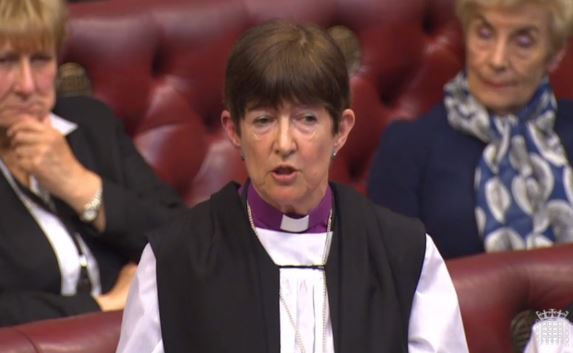
On 20th July 2017 the House of Lords debated a motion from Lord Berkeley “that this House takes note of the transport needs of remote island communities in England.” The Bishop of Newcastle, Rt Revd Christine Hardman, spoke about the Holy Island of Lindisfarne in Northumberland:

The Lord Bishop of Newcastle: My Lords, islands are special places and I am so grateful to the noble Lord, Lord Berkeley, for this debate and for learning, in his speech and those which have followed, so much more about the context of the Isles of Scilly. I discovered the Isles of Scilly only a few years ago. They are magical but after the boat trip over there, I understood why you can buy fridge magnets saying “I survived the ‘Scillonian’”.

Today, it is the transport needs of another remote island community I wish to speak about: the Holy Island of Lindisfarne in Northumberland. It is a very special place in my diocese. The island has been designated as an area of outstanding natural beauty. There is a national nature reserve covering 3,500 hectares. It has a rich historical and spiritual heritage including Lindisfarne Castle, owned by the National Trust, and Lindisfarne Priory, managed by English Heritage. The Holy Island of Lindisfarne is of course where St Aidan founded his monastery in the 7th century and based his mission to the people of Northumbria. Continue reading “Bishop of Newcastle speaks about transport links to Holy Island of Lindisfarne”

Church Commissioners’ Questions – Food Poverty, Rural Church Growth

On the 20th July 2017 the Second Church Estates Commissioner, Dame Caroline Spelman MP answered two oral questions to the Church Commissioners  in the House of Commons, on food poverty and on growing the rural church. A transcript of the questions and follow-up questions by MPs on other issues, are reproduced below.

The right hon. Member for Meriden, representing the Church Commissioners, was asked

 Kerry McCarthy (Bristol East) (Lab):  What steps the Church of England is taking to tackle food poverty. [900618] 

Seventy-five per cent. of churches collect food, 38% provide volunteers, 29% help to manage a food bank, and 21% distribute food vouchers. Churches also work in partnership with organisations such as Citizens Advice and Christians Against Poverty to tackle the underlying causes of food poverty.

Continue reading “Church Commissioners’ Questions – Food Poverty, Rural Church Growth”

Bishop of Newcastle asks Government about expansion plans for Tyne and Wear Metro

On 20th July 2017 in the House of Lords Baroness Quin asked the Government “what are their priorities for transport investment in the North East of England over the next two years”. The Bishop of Newcastle, Rt Revd Christine Hardman, asked a follow up question:

The Lord Bishop of Newcastle: My Lords, the proposed expansion of the Tyne and Wear Metro by the North East Combined Authority will provide very important greater access for rural towns and villages and opportunities for local rail integration. How will the Government support the North East Combined Authority to make this planned extension a reality? I will be grateful to hear from the Minister. Continue reading “Bishop of Newcastle asks Government about expansion plans for Tyne and Wear Metro”

Bishop of St Albans asks Government about protection from stalking and harassment

On 20th July 2017 the Bishop of St Albans, Rt Revd Alan Smith, received a written answer o a question of Government about the offences of stalking and harassment: 

The Lord Bishop of St Albans: To ask Her Majesty’s Government what action they are taking to improve recognition among criminal justice professionals of the difference between stalking and harassment; and whether they are planning to introduce stalking protection orders. Continue reading “Bishop of St Albans asks Government about protection from stalking and harassment”

Bishop of Durham leads House of Lords debate on Refugee Welcome report

On the 19 July 2017 the Bishop of Durham, the Rt Revd Paul Butler held a short debate on the report of the All-Party Parliamentary Group on Refugees, Refugees Welcome? The Experience of New Refugees in the UK. The Bishop  asked the Government to appoint a Minister for Refugees and to implement the report’s call for a national refugee integration strategy. Baroness Williams of Trafford, Minister of State at the Home Office responded to the debate for the Government. Her speech and that of the Bishop, are reproduced in full below. All speeches in the debate can be read in full: here

The Lord Bishop of Durham: To ask Her Majesty’s Government what is their response to the report by the All-Party Parliamentary Group on Refugees, Refugees Welcome? The Experience of New Refugees in the UK, published on 25 April.

durham-230117

The Lord Bishop of Durham: My Lords, I am pleased to be able to introduce this short debate on the All-Party Parliamentary Group for Refugees’ report, Refugees Welcome?. It was a privilege to serve on this group. It was also often disturbing to hear the stories of those who, having experienced years of difficulty as asylum seekers, found the joy of being finally given refugee status taken away by the poor ways in which they were then treated. As a nation, we had agreed that they deserved to be fully welcomed—but our systems often left them bereft and destitute. As the report makes clear, we have work to do as a nation to ensure that those who we have agreed are refugees and whom we believe have much to offer our land are made truly welcome.

Continue reading “Bishop of Durham leads House of Lords debate on Refugee Welcome report”

Financial Guidance and Claims Bill: Bishop of Newcastle supports amendment to help families struggling with debt

The Government’s Financial Guidance and Claims Bill was considered in Committee in the House of Lords on 19th July 2017. The Bishop of Newcastle, Rt Revd Christine Hardman, supported an amendment to the Bill to enable families in financial difficulty to receive a breathing space for repayment of debts:

The Lord Bishop of Newcastle: My Lords, I, too, rise to speak in support of Amendment 41. I declare an interest as a vice-president of the Children’s Society.

In the area covered by the Diocese of Newcastle, the Children’s Society data tell me that there are more than 42, 000 children living in poverty and that almost 18,000 children from almost 16,000 families are living with the blight of problem debt. Last year, I read a report in the New York Times on a large, randomised trial involving 21,000 people on the efficacy of various aid mechanisms to bring people out of poverty and debt. What emerged surprised the researchers. It emerged that one key mechanism is more effective than any other, and that mechanism is hope. Families that are stressed and trapped in poverty and debt can feel real hopelessness that becomes entirely self-fulfilling. Give people a reason to hope, and it can make an extraordinary and real difference. Continue reading “Financial Guidance and Claims Bill: Bishop of Newcastle supports amendment to help families struggling with debt”