
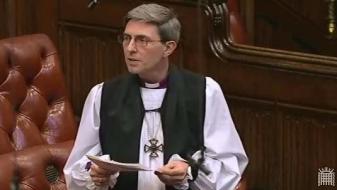
Bishop of Winchester responds to statement on the Casey Review

OBishop of Winchestern 6th December 2016, Lord Bourne repeated a Government statement made in the House of Commons about the review published by Dame Louise Casey. The Bishop of Winchester, the Rt Revd Tim Dakin, welcomed the review and commended programmes such as Near Neighbours for their potential to help social integration.


The Lord Bishop of Winchester My Lords, this review is very welcome for its frank and open-eyed survey of the social realities of our country. The Church of England is present and engaged in communities everywhere in the country. The importance of the work of schools, including faith schools, features largely in the review. I welcome the thrust of its approach and recommendations in relation to schools. We believe in British values, along the lines of the rich understanding of values explored in this Chamber last Friday. We will seek to respond to the review’s legitimate challenges to faith leaders.

Continue reading “Bishop of Winchester responds to statement on the Casey Review”

Bishop of St Albans raises serious need to address self harm amongst children and young people

On 6th December 2016, the Bishop of St Albans, the Rt Revd Alan Smith, spoke to a question he had tabled to ask the Government “what assessment they have made of the rise in the number of children and young people being treated for self-harm.” Lord Prior of Brampton responded for the Government. The Bishops’ follow-up question and those of Peers are reproduced below. 
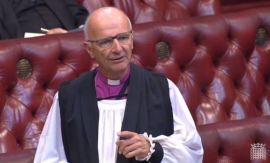
StAlbans171115The Lord Bishop of St Albans To ask Her Majesty’s Government what assessment they have made of the rise in the number of children and young people being treated for self-harm.

Lord Prior of Brampton My Lords, the Government are aware of the appalling rise in self-harm in children and young people and the misery this reflects. The Government are also acutely aware that self-harm is a leading indicator of risk of suicide and recognise that much more needs to be done to address this issue.

The Lord Bishop of St Albans I thank the Minister for his reply. The research from the World Health Organization shows that around 20% of British 15 year-olds report some sort of self-harm. In the past five years, research shows that hospital admissions associated with self-harm have gone up by nearly 93% among girls and 45% among boys. Having recently visited the outstanding charity selfharmUK, in Luton in my diocese, I have seen what a concerted and systematic approach to this problem can have on a very difficult issue, and we need something similar at a national level. Will Her Majesty’s Government commit to publishing guidelines for schools and colleges about preventing and responding to self-harm?

Bishop of Bristol asks if Government is rethinking minimum unit pricing for alcohol

Bristol160226 cOn 6th December 2016, Lord Brooke of Alverthorpe asked the Government, “in the light of the findings of the review by Public Health England on the consequences of alcohol abuse, whether they will implement minimum unit pricing of alcohol.” The Bishop of Bristol, the Rt Revd Mike Hill, asked a follow up question.
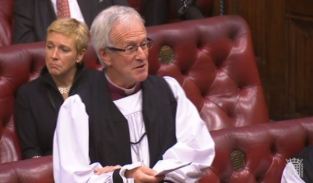
The Lord Bishop of Bristol My Lords, my understanding was that the Government’s view not long ago was that they had a problem with minimum unit pricing on the basis that it would unfairly impact moderate drinking. From what the noble Baroness said this afternoon, do I detect that the Government have changed their mind and that they are seriously looking at minimum unit pricing?

Bishop of Birmingham supports move to reduce the size of the House of Lords

birmingham-211016c On the 5th December 2016, the House of Lords debated and approved a motion from Lord Cormack “to resolve that this House believes that its size should be reduced, and methods should be explored by which this could be achieved.” The Rt Revd David Urqhart, the Bishop of Birmingham and Convenor of the Lords Spiritual, spoke in the debate, supporting the motion. 
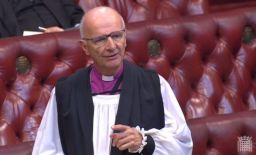

Bishop of Birmingham: My Lords, I am pleased to be able to contribute to this important debate and am grateful to the Campaign for an Effective Second Chamber, in which we are allowed to participate from time to time, for bringing it to us today. I am also grateful for the remarks of the noble Lords and noble Baronesses who have already spoken. I have written down that I share their widely shared view that the House is too large, and I shall start on that point. Continue reading “Bishop of Birmingham supports move to reduce the size of the House of Lords”

Bishop of Bristol asks government about regulation of hands-free mobiles in cars

Bristol160226 cOn 5th December 2016, Lord Jordan asked the Government “what steps they are taking to reduce the incidence of mobile phone use whilst driving.” The Bishop of Bristol, the Rt Revd Mike Hill, asked a supplementary question.


The Lord Bishop of Bristol: My Lords, your Lordships’ House will appreciate that this is quite a difficult subject to regulate. I am grateful to the Minister for outlining the Government’s plans. Given that motoring organisations seem to be extremely dubious about the safety of using hands-free equipment in a motor car, do the Government have any plans to regulate car manufacturers’ ability to produce this equipment, which is distracting, I believe, and can cause accidents? Continue reading “Bishop of Bristol asks government about regulation of hands-free mobiles in cars”

Church of England week in Westminster, 28th Nov – 2nd Dec 2016

Westminster-abbeyWelcome to the Church of England’s weekly round-up of activity in Parliament.

This week the Archbishop of Canterbury led a debate in the House of Lords about shared national values and bishops spoke in debates on the Chancellor’s Autumn Statement, the UK’s future relationships with the EU and about online safety. Bishops also asked questions about benefit sanctions, supported housing, social rented housing, corporate governance and the relocation of Parliament. In the House of Commons the Second Church Estates Commissioner answered written questions about veterans, war memorials, the Bishop of London and the Dean of Peterborough. Continue reading “Church of England week in Westminster, 28th Nov – 2nd Dec 2016”

Bishop of Gloucester on building strong local communities of shared values

On the 2nd December 2016 the Bishop of Gloucester, the Rt Revd Rachel Treweek, spoke in the debate led by the Archbishop of Canterbury on shared  values and their role in shaping public policies. She highlighted the compassionate hospitality which this country has shown generations of refugees alongside the work she is undertaking in Gloucestershire to build community, standing ‘with’ rather than ‘othering’ people to promote human flourishing. 

gloucesterThe Lord Bishop of Gloucester: My Lords, I thank my noble friend the most reverend Primate the Archbishop of Canterbury on his foresight in tabling this debate on shared values. I also add my own congratulations to the noble Lord, Lord McInnes of Kilwinning, and the noble Baroness, Lady Bertin, on their poignant and insightful maiden speeches.

In the diocese of Gloucester, I have recently been talking to young people about body image and reflecting with them on how their true worth begins deep within, the place from which true values emerge and are lived. Last Saturday, I hosted a huge community party in Cheltenham to publicly launch our new vision for the diocese of Gloucester. The vision has emerged from conversations in local communities, urban and rural, involving about 6,000 people, churchgoers and otherwise, discussing what sort of church they want to see in their communities.The vision is one of human flourishing and transformation, emanating from those words of Jesus from the gospel of John:

“I have come that they may have life, and have it to the full”.

That is a good starting place when it comes to talking about values. Continue reading “Bishop of Gloucester on building strong local communities of shared values”

Bishop of Ely highlights role of church schools in fostering shared values

On the 2nd December 2016 the Bishop of Ely, the Rt Revd Stephen Conway spoke in a debate led by the Archbishop of Canterbury on shared values and their implications for public policy making. The Bishop of Ely spoke about the importance of character education in developing values and the role played by church schools in fostering good links between children of all faiths and none.

ElyThe Lord Bishop of Ely: My Lords, I thank my friend the most reverend Primate for securing this timely and essential debate. I applaud the noble Lord, Lord McInnes, on his excellent speech, not least on drawing together our concern for values with opportunity for our children and young people. When we talk about British values, we should be aiming not at the lowest common denominator but, as the noble Baroness, Lady Warsi, said, at the highest ideals that we want to promote for and with our children.
Character education is all set to be the foundation for the kind of person we want each child to become: a member of society who not only understands the world, but cares about it, is equipped to continue in the good and recognise and challenge the bad and is courageous enough to bridge divides and extend the hand of friendship. The Church of England vision for education actively seeks to provide an education that fosters this. Character education is about educating children not only to become efficient economic units, but to flourish in all areas of their lives, and enjoy life in all its fullness, as Jesus says in the Gospel of John. Fundamental to this is the nurturing of virtues as the intrinsic building blocks of a rounded human life with concrete outcomes in behaviour and service. St Paul takes the life of virtue beyond what had previously been categorised when he wrote in the Letter to the Galatians about the “fruits of the spirit”: love, joy, peace, forbearance, kindness, goodness, faithfulness, gentleness and self-control.

Archbishop of Canterbury leads Lords debate on shared values

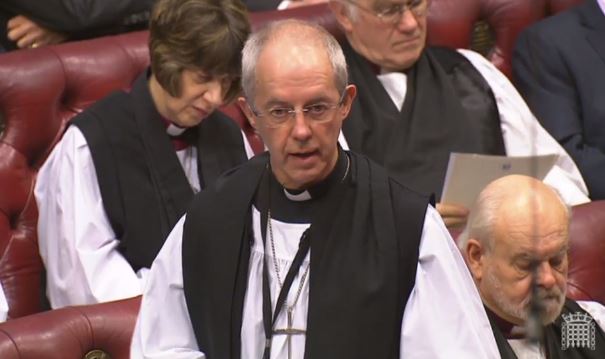
On 2 December 2016 the Archbishop of Canterbury, the Most Revd and Rt Hon Justin Welby, led a debate in the House of Lords “That this House takes note of the shared values underpinning our national life and their role in shaping public policy priorities.” His opening and closing speeches are below. The Bishops of Ely and Gloucester also spoke in the debate.

abcvalues5

The Archbishop of Canterbury: My Lords, I am most grateful to the usual channels for making this debate possible. I should also like to thank noble Lords who have made the time and taken the trouble to attend today in considerable numbers, the Minister, the noble Lord, Lord Bourne, and those who look after us so well in this House.

In case noble Lords are wondering what the Motion is [laughter]…I decided to change it at the last minute…It reads:

“The Lord Archbishop of Canterbury to move that this House takes note of the shared values underpinning our national life and their role in shaping public policy priorities”.

It will be an especial pleasure to hear maiden speeches from the noble Baroness, Lady Bertin, and the noble Lord, Lord McInnes of Kilwinning. The noble Baroness brings her knowledge of communications, issues of disability among children and education. The noble Lord will enable us to have a wider view of issues in Scotland.

The UK, especially perhaps England, is a pragmatic country with a bias towards the empirical over the theoretical. Not for us the cries of “liberty, equality and fraternity”, to be followed by years of bloodshed to ensure true fraternity was established. Rather, ours is an untidiness of cumulative reforms and changes, worked out in practice through the highways and byways of our constitution. We relish the irony of a constitution that works in practice but never could in theory.

Great times of change in mood and culture demand from us a reimagining of what we are about as a nation. As we move into a post-Brexit world, alongside the other events that buffet and deflect us, unless we ground ourselves in a clear course and widely accepted practices, loyalties and values—what I will call values in this speech—we will just go with the wind. Continue reading “Archbishop of Canterbury leads Lords debate on shared values”

Church Commissioners written answer – Peterborough land

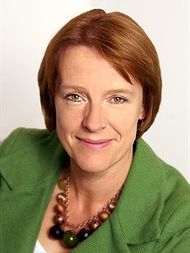
On 2nd December 2016 the Second Church Estates Commissioner, Rt Hon Dame Caroline Spelman MP, answered a written question from Stewart Jackson MP about church land in Peterborough:


Caroline SpelmanMr Stewart Jackson(Peterborough): To ask the right hon. Member for Meriden, representing the Church Commissioners, pursuant to the Answer of 24 November 2016 to Question 53954, what issues remain which preclude the swift expediting of contracts being exchanged in respect of the disposal of land at Phase 2 Paston Reserve, Peterborough; and if she will make a statement.

Dame Caroline Spelman: There are a few remaining commercially sensitive negotiations which are currently taking place between the Church Commissioners for England, Taylor Wimpey plc and the Homes and Communities Agency who jointly own the site at Paston Reserve. The Church Commissioners hope to be in a position to update the Hon member for Peterborough with progress on the development at the meeting they have with his office on the 18th January 2017.

(via Parliament.uk)