On 9th and 17th December 2013, a number of bishops took part in votes to amend the Government’s Children and Families Bill, during the bill’s Report Stage.


On 9th and 17th December 2013, a number of bishops took part in votes to amend the Government’s Children and Families Bill, during the bill’s Report Stage.
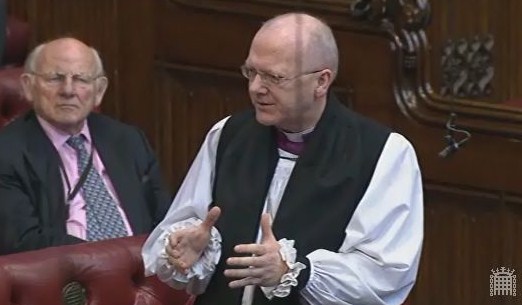 On 17th December 2013, Lord Clark of Windermere asked Her Majesty’s Government what progress they have made in implementing the recommendations of the report of the Independent Panel on Forestry.
The Bishop of St Albans asked a supplementary question:
The Lord Bishop of St Albans: My Lords, as Her Majesty’s Government will be aware, there are several very serious diseases affecting trees in this country. What steps are being taken to ensure that, with the reorganisation of the responsibilities of the Forestry Commission, this important disease prevention, control and elimination work will not only continue but be strengthened?
On the 16th December 2013 Sir Tony Baldry MP the Second Church Estates Commissioner answered a written question from Gloria De Piero on the issue of food banks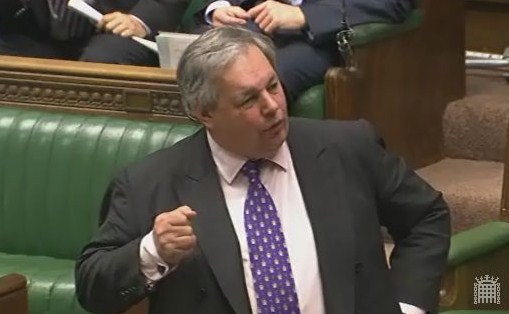
Continue reading “Second Church Estates Commissioner Answers Written Question on Food Banks”
On 12th December 2013, the Bishop of Leicester took part in a debate in the House of Lords, led by Lord Norton of Louth, on the size of the House of Lords.
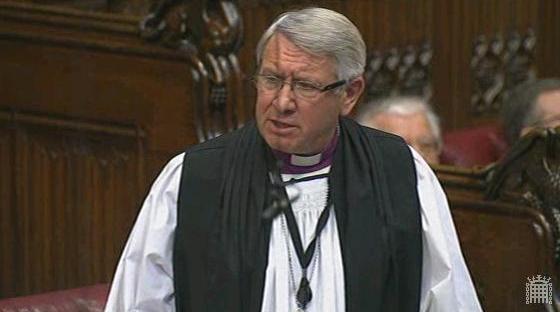 The Lord Bishop of Leicester: My Lords, this House owes a debt to the noble Lord, Lord Norton, for his assiduous work towards creating a more effective second Chamber. As usual, he has today rehearsed very clearly and effectively the case for reducing its size.
It seems to me that the challenge is clear. In spite of the speech of the noble Lord, Lord True, there is surely overwhelming agreement with the fundamental proposition that this House is too large. The question, therefore, is to find ways not just of agreeing with the principle of creating a smaller House, but to give effect to it. In that sense, this debate is part of a wider discussion upon which hangs the reputation and credibility of the political class.
Continue reading “Bishop of Leicester takes part in debate on role and reform of the House of Lords”
“The risks inherent in legalising assisted suicide still outweigh the benefits that might accrue” – Bishop of Chester
On 12th December 2013, the Bishop of Chester spoke in Lord Dubs’ debate on patient choice at the end of life, calling on the Government to resist changing the law to legalise assisted suicide. The Bishop of Sheffield also made his maiden speech in the debate, which can be read here.
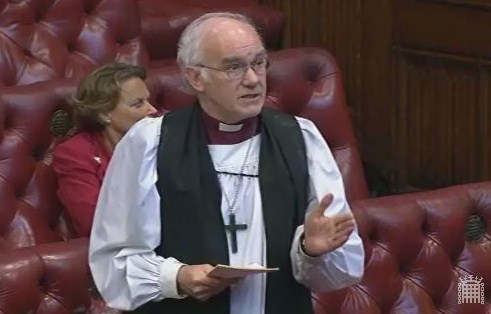 The Lord Bishop of Chester: My Lords, I join other Members of the House in welcoming the reinforcements to the Bishops’ Benches. I will make three brief points in my contribution, the first of which does not have a direct connection with assisted suicide. We typically have long waiting lists today for transplantation surgery in this country, due to an absence of an adequate supply of donated organs. I hope that we will do as much as we can, and more, to encourage people to carry organ donation consent cards and to engender a culture in society in which transplantation and donation of organs are encouraged, especially for those whose death comes in an untimely and unchosen way. This is a matter of choice at the point of death, as are the things that we are discussing in the main part of this debate.
Continue reading “Bishop of Chester cautions against changes to law on assisted suicide”
“The ministry of chaplains in our hospitals and hospices remains a vital part of end-of-life care. Chaplains are present to minister to those of all faiths and of none. They are drawn, of course, from every faith. They are present to offer spiritual support to the dying and to the bereaved, to patients and staff. They are a vital part of the team in end-of-life care as a specialist resource, as experts able to offer training to colleagues and as a point of referral in moments of crisis” – The Bishop of Sheffield
On 12th December 2013, the Bishop of Sheffield made his maiden speech in a debate on patient choice at the end of life. The Bishop of Chester also spoke in the debate, and his speech can be read here.
 Lord Bishop of Sheffield: My Lords, I must begin by thanking your Lordships for the warmth of welcome extended to me here. Thank you also to the staff for their guidance and help. I look forward very much to serving with you in this House and count it an immense privilege to be here. Continue reading “Bishop of Sheffield makes maiden speech in debate on end of life choices”
On 11th December, two bishops took part in a division on the Government’s Energy Bill, during ‘ping pong’ between the House of Lords and House of Commons.
On 11th December 2013, the Bishop of Coventry received an answer to a written question on Syria.
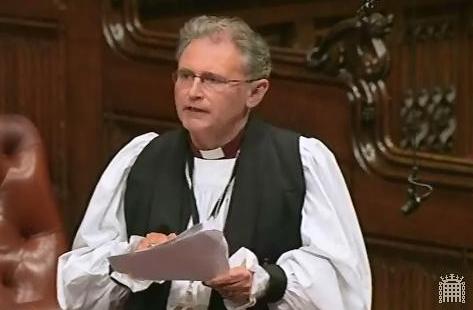 The Lord Bishop of Coventry: To ask Her Majesty’s Government whether they plan to participate in the resettlement programme for Syrian refugees administered by the United Nations High Commissioner for Refugees.
The Parliamentary Under-Secretary of State, Home Office (Lord Taylor of Holbeach): The Government shares the deep concerns regarding the continuing humanitarian crisis in Syria. However, the Government has no current plans to resettle Syrian refugees either as part of, or in addition to, its annual resettlement quota. We continue to believe that the priority should be to provide humanitarian assistance to displaced people in partnership with neighbouring countries and the United Nations High Commission for Refugees. The UK has now increased its pledge for the Syrian relief effort to £500 million. This represents the UK’s largest ever response to a humanitarian crisis.
(via Parliament.uk)
On 11th December 2013, Lord Selsdon asked Her Majesty’s Government what steps they are taking to regulate the issue of payday loans to those without a regular income.
The Bishop of Truro asked a supplementary question:
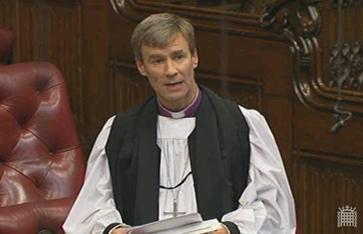 The Lord Bishop of Truro: My Lords, what consideration, if any, has been given to introducing a real-time database of payday loans in order to ensure that the proposed FCA rules can be properly monitored and enforced and, in particular, to avoid the problem—a special one at this time of year—of people being able to take out multiple loans from different companies at the same time?
Lord Newby: My Lords, a real-time database is one of the things that the FCA will be looking at. In some of the countries and US states where they have effective caps on the cost of payday loans, such systems have been seen to work efficiently and be very effective.
(via Parliament.uk)
On 9th December, the Bishop of Birmingham took part in a division on the Government’s Financial Services (Banking Reform) Bill, during its Third Reading.
Continue reading “Vote – Financial Services (Banking Reform) Bill”
 The Church of England in Parliament
You must be logged in to post a comment.