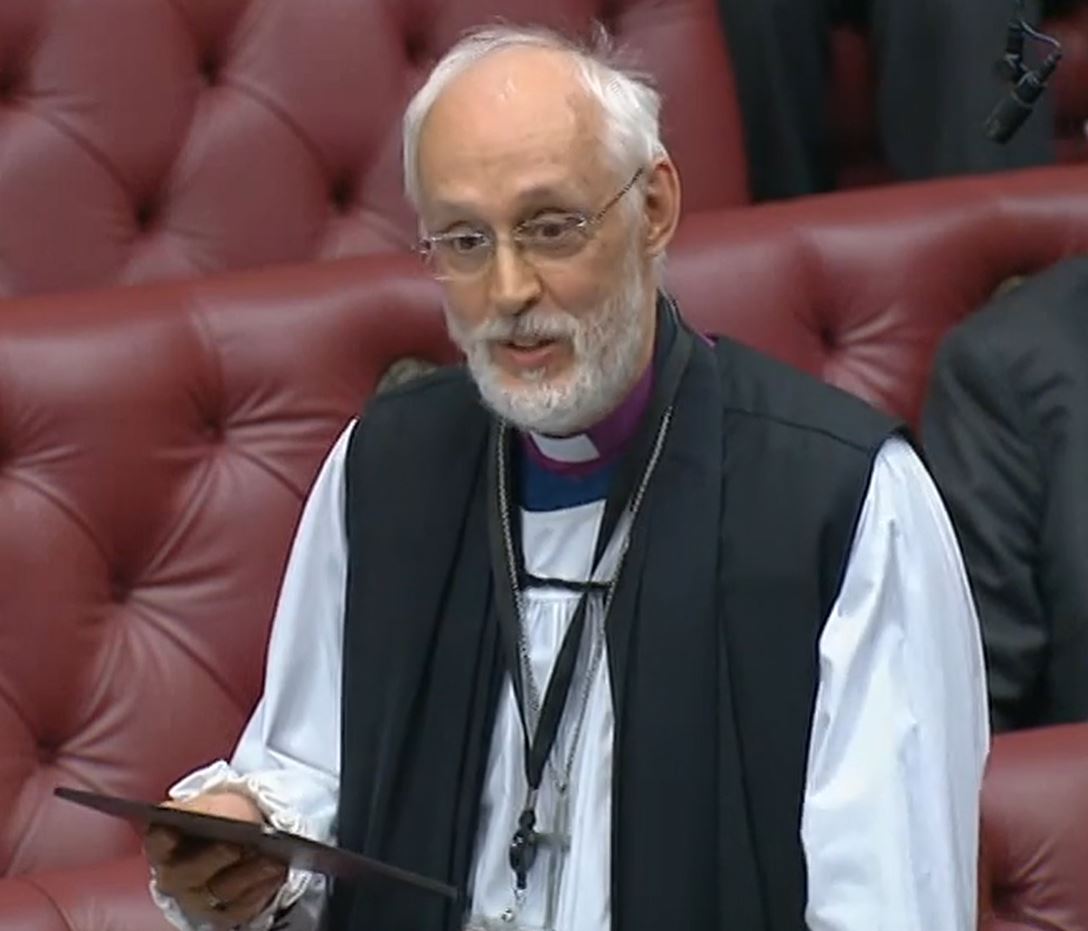
Carer’s Leave Bill: Bishop of Leicester draws attention to Archbishops’ Commission on Reimagining Care

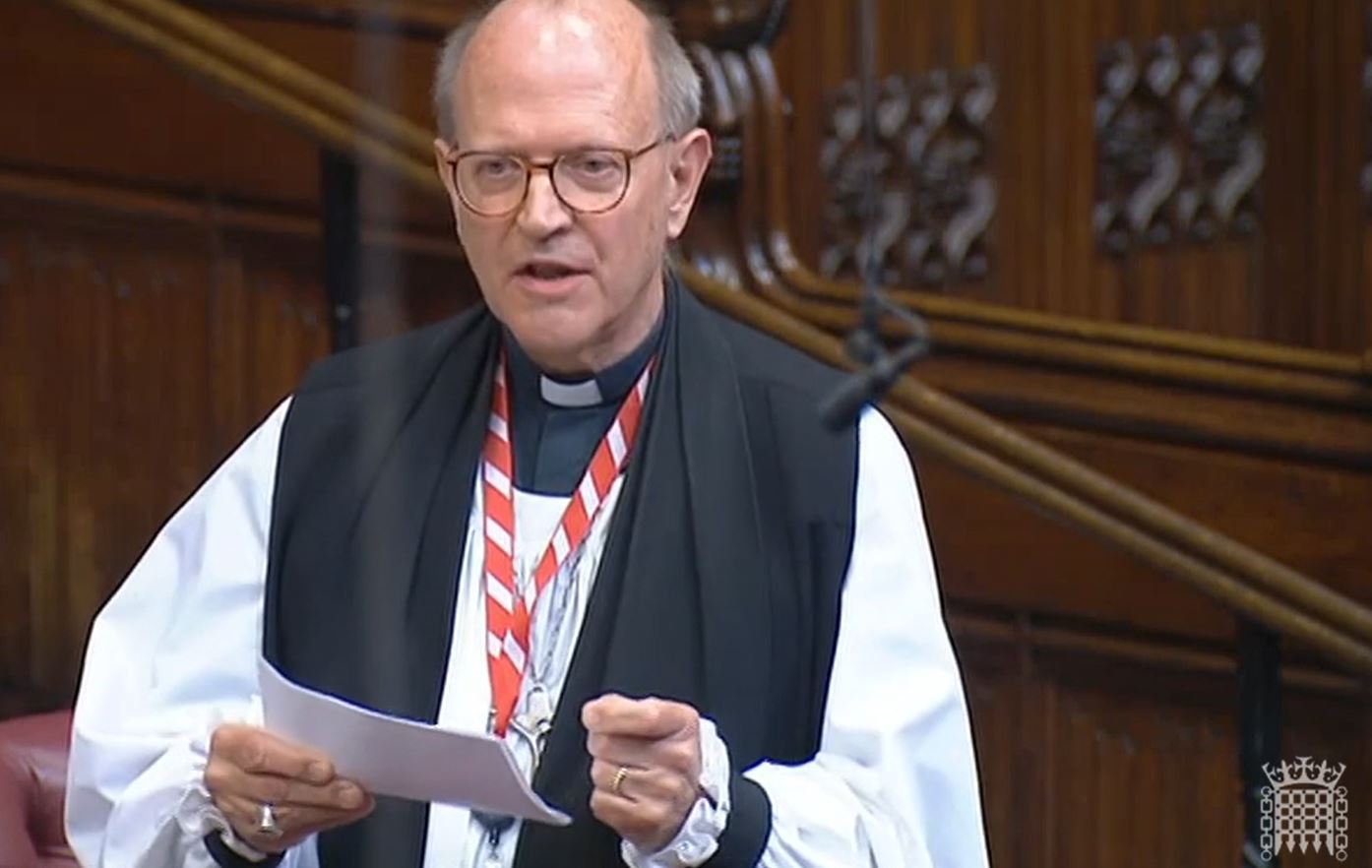
The Bishop of Leicester spoke in support of the Carer’s Leave Bill in its second reading on 3rd March 2023, drawing attention to the recommendations raised by the Archbishops’ Commission on Reimagining Care:

The Lord Bishop of Leicester: My Lords, I am pleased to speak in wholehearted support of this Bill. It has been a pleasure to hear other speeches and to receive briefings on this significant area of our common life. I look forward to hearing other speeches and thank those who have introduced the Bill.

The Bill is an important step forward in showing carers that although their efforts may not be waged, they are very much valued. It might not go as far as could be hoped, as the noble Lord, Lord Shipley, has said, in that it provides for unpaid rather than paid leave, but it is undoubtedly a step in the right direction.

I see three key features of this Bill: first, the provision of leave for anyone with caring responsibilities, not just those who care for people in their household; secondly, guaranteeing this leave as a day one right; and thirdly, allowing for it to be taken flexibly. These three features show that the Bill recognises the variety of unpaid carers on whom society depends and the distinct challenges they face.

Continue reading “Carer’s Leave Bill: Bishop of Leicester draws attention to Archbishops’ Commission on Reimagining Care”

Retained EU Law Bill: Bishop of Leeds speaks on parliamentary sovereignity

The Bishop of Leeds spoke briefly during a debate on the Retained EU Law Bill on 23rd February 2023, highlighting the need for clear definitions of governmental and parliamentary sovereignty:

The Lord Bishop of Leeds: My Lords, the reason these amendments and this debate are important is that one always explores the general by probing the specific to see if it holds water. I wonder if, in that respect, it might be helpful for the Minister and the Committee if he defined in his response parliamentary sovereignty as against executive sovereignty. If we understood that more clearly, we would understand the status and the rationale behind what is proposed in this Bill, which I personally see as unnecessary.

Continue reading “Retained EU Law Bill: Bishop of Leeds speaks on parliamentary sovereignity”

Levelling up and Regeneration Bill: Bishop of Leeds speaks in support of amendment on health disparities

On Wednesday 22nd February 2023, the House of Lords debated the Levelling Up and Regeneration Bill in the second day of committee. The Bishop of Leeds spoke in the debate, supporting amendments by the Bishop of London and other peers relating to health disparities:

The Lord Bishop of Leeds: My Lords, at Second Reading, I remember applauding, broadly speaking, the ambitions of the White Paper. However, I share the concerns of the right reverend Prelate the Bishop of London, who of course brings to this much more experience than I do.

I am pleased that, already, the noble Baroness, Lady Hayman, has alluded to the interconnectivity of all these different missions; they cannot be seen in silos or in isolation. For example, if you have children who are turning up at school unfed or living in poor housing, you can try teaching them what you will but it may not be very successful, and that has an impact not only on individuals but on communities and their flourishing.

Continue reading “Levelling up and Regeneration Bill: Bishop of Leeds speaks in support of amendment on health disparities”

Strikes (Minimum Service) Bill: Bishop of St Edmundsbury and Ipswich urges government to reconsider legislation

On 21st February 2023, the Bishop of St Edmundsbury and Ipswich spoke in a debate on the Strikes (Minimum Service Levels) Bill, expressing concerns on workers rights and the broadness of the legislation proposed, and urging that the government reconsider the bill:

The Lord Bishop of St Edmundsbury and Ipswich: My Lords, I too look forward to the maiden speech of the noble Baroness, Lady O’Neill. There is only me standing in the way, so I will try to be brief.

At Second Reading in the other place, the Government said that the Bill’s purpose was

“to maintain a reasonable balance between the ability of workers to strike and the rights of the public, who work hard and expect the essential services that they pay for to be there when they need them.”—[Official Report, Commons, 16/1/23; col. 54.]

At first glance this might seem a straightforward aim. However, as noble Lords and those in the other place have already said, there is much more at stake here than initially meets the eye. I believe that the Bill in its current form creates more problems than those it perceives or seeks to solve.

There has been a terrible increase in industrial action in the past months. We all reflect on why this may be the case. There are serious and legitimate concerns held by those who decide to go on strike about their well-being, as well as the well-being of the services for which they work and that of wider society.

Continue reading “Strikes (Minimum Service) Bill: Bishop of St Edmundsbury and Ipswich urges government to reconsider legislation”

Levelling Up and Regeneration Bill: Bishop of Gloucester supports amendments targeting child poverty

On 20th February 2023, the House of Lords debated the Levelling Up and Regeneration Bill on the first day of its committee stage. The Bishop of Gloucester spoke in support of an amendment tabled by Baroness Lister, emphasising that reducing child poverty should be considered a priority:

The Lord Bishop of Gloucester: My Lords, I too will speak in support of Amendment 4. I thank the noble Baroness, Lady Lister, for tabling this amendment. I am very aware that my right reverend friend the Bishop of Durham is a co-signatory and is unable to be here today to speak.

Levelling up, as the Government’s White Paper initially outlined, is about equally spreading opportunity across our country. It is about challenging unfairness and allowing people to live more fulfilling lives—I thank the noble Lord, Lord Bird, for his inspiring speech. These are aims that surely all of us welcome, but I cannot see how this will ever be achieved unless the Bill includes reducing child poverty.

This is about the present and the long-term future. As has already been said, the latest statistics are that there are 3.9 million children living in poverty in this country; that is more than one in four. With more and more families turning to food banks and the experience of persistent poverty tripling a child’s likelihood of having mental health problems, this cannot continue.

Continue reading “Levelling Up and Regeneration Bill: Bishop of Gloucester supports amendments targeting child poverty”

Votes: Public Order Bill

On 7th February 2023, the House of Lords debated amendments to the Public Order Bill (2022) in the second day of the report stage. Votes were held on amendments to the bill, in which Bishops took part:

Continue reading “Votes: Public Order Bill”

Public Order Bill: Bishop of Manchester speaks in support of amendments on stop and search regulations

On 7th February 2023, the House of Lords debated the Public Order Bill in the second day of the report stage. The Bishop of Manchester spoke in favour of amendments to remove clauses 10 and 11 of the Bill, which would have extended the police’s stop and search powers:

The Lord Bishop of Manchester: I too speak in support of the amendments to remove Clauses 10 and 11, to which I have added my name. I declare my registered interests as the co-chair of the national police ethics committee and the chair of the Greater Manchester Police ethics advisory committee.

Stop and search can be an extremely useful tool in the police kit box, but, like many tools, it works far less well if it is overused or used for the wrong task. Eventually, it loses its efficacy entirely. I have several broken screwdrivers at home that bear witness to my own excesses in that regard, as well as to my very limited DIY skills. That is the danger we run when we extend stop and search powers in what, at times, feels like a knee-jerk reaction. They are simply the most obvious tool at the top of the box, whether they are appropriate or not. As the noble Baroness, Lady Chakrabarti, indicated, stop and search becomes, as it has in the past, so discredited that it reaches a point where, like my screwdrivers, it is counterproductive to use it, even in circumstances where it would be right and appropriate to do so.

Continue reading “Public Order Bill: Bishop of Manchester speaks in support of amendments on stop and search regulations”

Education (Non-Religious Philosophical Convictions) Bill: Bishop of Southwark speaks on importance of religious education in schools

On Friday 3rd February, the House of Lords debated the Education (Non Religious Philosophical Convictions) Bill in its second reading. The bill would introduce provision for “religious worldviews” to replace religious education in some schools. The Bishop of Southwark spoke in the debate, arguing that religious education fills a key place in the curriculum:

The Lord Bishop of Southwark: My Lords, I speak in this debate feeling somewhat like an officer of the Salvation Army commending temperance to a conference of brewers. None the less, while I believe that the noble Baroness, Lady Burt of Solihull, has made some important points introducing this Bill and I am grateful for them, I want to make some general points to gently demonstrate why this proposed measure for RE in schools without a religious character is unnecessary. I am glad to follow the noble Lord, Lord Griffiths of Burry Port, although my view is somewhat different on this occasion from his wisdom and I have no immediate plans to join the British Humanist Association.

First, I stress the value of what remains of religious education within our schools. While the outcomes of education remain a contested area of debate in society, the purpose of education and what it does to us receives much less attention. Too much is assumed in that regard, and that partly informs this Bill. My belief is that human flourishing happens in body, mind and spirit and that education engages us in each of these aspects, which need to be held together holistically.

Continue reading “Education (Non-Religious Philosophical Convictions) Bill: Bishop of Southwark speaks on importance of religious education in schools”

Online Safety Bill: Bishop of Oxford speaks on risks to vulnerable adults

On 1st February 2023, the House of Lords debated the Online Safety Bill in its second reading. The Bishop of Oxford spoke in the debate , raising the importance of risk assessments of harm to adults, the independence of Ofcom, and the dangers of technology facilitated crime & domestic abuse:

The Lord Bishop of Oxford: My Lords, it is an honour and privilege to follow the noble Baroness, Lady Campbell, and all those who have spoken in this debate. As a member of your Lordships’ Committee on Artificial Intelligence and a founding member of the Centre for Data Ethics and Innovation, I have followed the slow progress of this Bill since the original White Paper. We have seen increasing evidence that many social media platforms are unwilling to acknowledge, let alone prevent, harms of the kind this vital Bill addresses. We know that there is an all too porous frontier between the virtual world and the physical world. The resulting harms damage real lives, real families, and real children, as we have heard.

There is a growing list of priority harms and now there is concern, as well as excitement, over new AIs such as ChatGPT; they demonstrate yet again that technology has no inherent precautionary principles. Without systemic checks and balances, AI in every field develops faster than society can respond. We are and for ever will be catching up with the technology.

The Bill is very welcome, marking as it does a belated but important step towards rebalancing a complex but vital aspect of public life. I pay tribute to the Government and to civil servants for their patient efforts to address a complex set of ethical and practical issues in a proportionate way. But the job is not yet fully done.

Continue reading “Online Safety Bill: Bishop of Oxford speaks on risks to vulnerable adults”

Online Safety Bill: Bishop of Manchester highlights need for regulatory cooperation and importance of child protection

On 1st February 2023, the Bishop of Manchester spoke in a debate on the Online Safety Bill in its second reading, encouraging the government to introduce a duty to cooperate for regulators, and highlighting issues of child protection:

The Lord Bishop of Manchester: My Lords, that is not an easy speech to follow, but I begin by declaring my interest as a Church Commissioner, as set out in the register. We have substantial holdings in many of the big tech companies. I am also vice-chair of the Church of England Ethical Investment Advisory Group. I commend the attention of noble Lords to our recent report on big tech that was published last September. There, we set out five core principles that we believe should guide our investment in and engagement with big tech companies: flourishing as persons, flourishing in relationships, standing with the marginalised, caring for creation and serving the common good. If we apply those principles to our scrutiny of this Bill, we will not only improve lives but save lives.

I will focus my remaining remarks on three areas. First, as the noble Baroness, Lady Merron, and the noble Lord, Lord McNally, have noted, the powers granted to the Secretary of State to direct Ofcom on its codes of practice and provide tactical and strategic guidance put Ofcom’s independence at risk. While I recognise that the Government have sought to address these concerns, more is required—Clauses 39 and 157 are not fit for purpose in their present form. We also need clear safeguards and parliamentary scrutiny for Secretary of State powers in the Bill that will allow them to direct Ofcom to direct companies in whatever we mean by “special circumstances”. Maintaining Ofcom’s autonomy in decision-making is critical to preserving freedom of expression more broadly. While the pace of technological innovation sometimes requires very timely response, the Bill places far too much power in the hands of the Secretary of State.

Continue reading “Online Safety Bill: Bishop of Manchester highlights need for regulatory cooperation and importance of child protection”