On 25th April 2022, the House of Lords debated amendments to the Elections Bill. Votes were held on amendments to the bill, in which Bishops took part.

Legislation before Parliament
On 25th April 2022, the House of Lords debated amendments to the Elections Bill. Votes were held on amendments to the bill, in which Bishops took part.
On 4th April 2022, the House of Lords debated amendments to the Nationality and Borders Bill. The Bishop of Durham tabled Amendments 53B to 53D, and spoke in support of several other amendments:
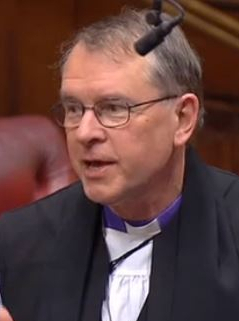
The Lord Bishop of Durham: My Lords, in rising to speak in support of Motions G1 and J1, I declare my interests in relation to both RAMP and Reset, as set out in the register. I continue to be of the view that Clause 11 is the most inhumane part of the Bill. I therefore continue to support both Motions C1 and D1; I also support Motions E1 and F1.
The noble Lord, Lord Kirkhope, would have liked to move Motion G1 but is unable to be in the Chamber today, so we have worked together on this. When people arrive on our shores seeking protection, we have a responsibility to treat them as we would wish to be treated if indeed we had to flee for our lives. It is right that we have a process to determine who meets the criteria for refugee status but, while we determine this, we are responsible for people’s safety, welfare and care. If we move them to other countries for the processing of their asylum claims, I very much fear that a blind eye will be turned to their treatment; the Nauru experience in Australia sadly points that way.
The inhumanity of this part of the Bill is my primary concern. There are, however, significant practical and financial concerns related to the passing of Clause 28 given that we do not have details of how or where this offshoring would operate. Although this was acknowledged by many MPs supporting the legislation in the other place, they were of the opinion that the Home Secretary should have these powers available to her if needed. On that basis, Motion G1 would allow the Home Secretary these powers while introducing much-needed transparency and a check on the introduction of an offshore processing and detention system. This would allow proper consideration by both Houses of the appropriateness and safety of the host country proposed, and whether it meets the Home Secretary’s assurance of being a safe third country for the asylum seekers transferred there, including whether it can provide safe, humane and appropriate accommodation and processing of asylum claims.
Continue reading “Nationality and Borders Bill: Bishop of Durham speaks in favour of amendments”On 4th April 2022, the House of Lords debated amendments to the Nationality and Borders Bill. There were votes on amendments to the bill, in which Bishops took part.
On 4th April 2022, the House of Lords debated the Building Safety Bill in its third reading. The Bishop of St Albans spoke in support of changes to the Bill:

The Lord Bishop of St Albans: My Lords, I do not want to delay the House for too long, but I also add my word of thanks to the Minister. I share the concerns of other noble Lords: I hope that this is going to be given enough time for proper scrutiny and debate in the other place and that the really key amendments will not be overturned.
Many positive changes have been made, particularly reducing the cost for non-cladding remedial work to zero and the extension of this support to all buildings, not just those over 11 metres. But I remain concerned by the definition of a qualifying lease and its failure to protect those receiving a state pension who rely on rental income from a lease to sustain themselves. I am not entirely certain how these pensioners who do not qualify will pay for non-cladding remedial costs, but that is a hurdle that the Government may face in the near future.
Continue reading “Building Safety Bill: Bishop of St Albans speaks in debate”On 1st April 2022, the House of Lords debated the Marriage and Civil Partnerships (Minimum Age) Bill in its second reading. The Bishop of Worcester spoke in support of the bill, raising points regarding marriage and the age of consent:
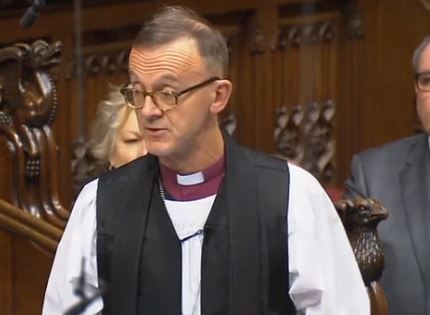
The Lord Bishop of Worcester: I welcome the Bill warmly and in doing so, thank the noble Baroness, Lady Sugg, and all those who have worked very hard on it. It takes very important steps to protect exploited young people, especially girls. Having welcomed the Bill, I want to raise one consideration that seems, so far, to have gone relatively unremarked upon during its passage. I hope that it will be noted by the Government and returned to at a later date.
Continue reading “Marriage and Civil Partnership (Minimum Age) Bill: Bishop of Worcester speaks in debate”On 31st March 2022, the House of Lords debated the Judicial Review and Courts Bill. The Bishop of St Albans spoke on his amendment to the bill:
The Lord Bishop of St Albans: My Lords, I rise to speak briefly to Amendment 28 standing in my name. I would be grateful if the House would indulge me just for a few minutes. As I explained last week when I was presenting my Private Member’s Bill, Public Health England pointed out that, in just one year, there were 409 suicides related to problem gambling. Your Lordships will be aware that the largest lobby group here in the House is Peers for Gambling Reform. Whenever we have tried to deal with this, one thing we keep hearing back is that we simply do not have the statistics or the data on the various causes of suicide. For some while, I have been trying in every way I can to get at least some data to help us with this so that we can devise strategies to reduce the terrible burden on families who have lost a young person.
Continue reading “Judicial Review and Courts Bill: Bishop of St Albans tables amendment”On 31st March 2022, the House of Lords debated Commons Amendments to the Judicial Review and Courts Bill. There were votes on several amendments, in which Bishops took part.
On 31st March 2022, the House of Lords debated Commons Amendments to the Police, Crime, Sentencing and Courts Bill. There were votes on several amendments, in which Bishops took part.
On 29th March 2022, the House of Lords debated amendments to the Building Safety Bill. There were votes held on several amendments, in which Bishops took part.

On 29th March 2022, the House of Lords debated a report on the Building Safety Bill, and amendments to the bill. The Bishop of St Albans tabled amendments and spoke in support of other members’ amendments. Lord Blencathra spoke on behalf of the Bishop in the first part of the debate:
Lord Blencathra (Con): I rise to comment on the disabled amendments that the Government have laid, including the one that was just moved. I will also comment briefly on Amendments 46 and 47, which have not yet been spoken to by the noble Baroness, Lady Fox of Buckley, and speak to Amendments 39 and 40 on behalf of the right reverend Prelate the Bishop of St Albans, since he is unable to be with us at this time of the morning.
I commend the Government for listening to my noble friend Lady Grey-Thompson in Committee and on all the amendments that they have brought forward today. Having been bored on the train when I was heading up north last week, I counted on the Order Paper more than 220 government amendments and 50 proposed new clauses. That is an extraordinary achievement and shows the extent to which my noble friend the Minister has been listening, as well as what he has been able to drive forward—principally because the Secretary of State, my right honourable friend Michael Gove, gets it and understands what needs to be done. So, although my noble friends and I may move a few amendments today, and perhaps force them to a vote, I do not want the Minister to think that we are being churlish. We appreciate the huge distance that the Government have travelled; we just think that there may be one or two more gaps that we need to fill.
Continue reading “Building Safety Bill: Bishop of St Albans speaks in debate”

You must be logged in to post a comment.