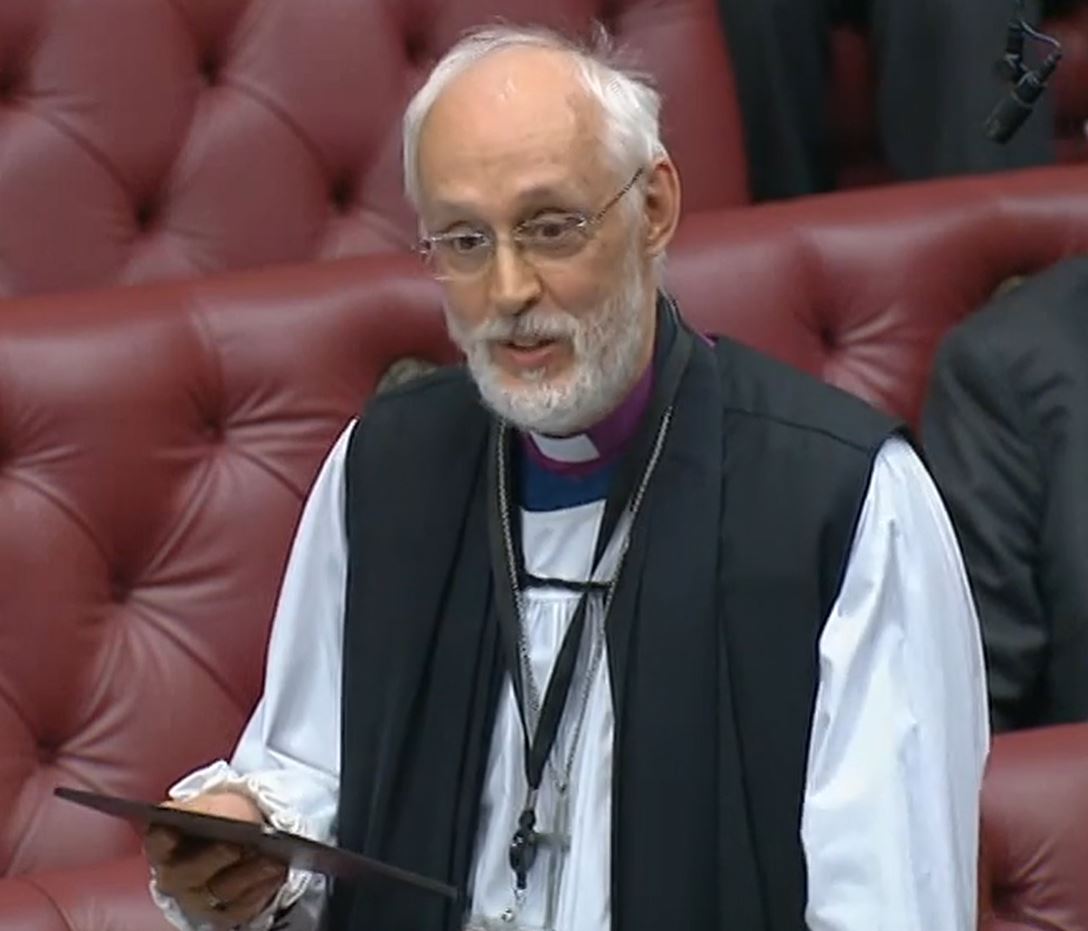
Police, Crime, Sentencing and Courts Bill: Bishop of Gloucester tables amendment on sentencing requirements for primary carers

The Bishop of Gloucester tabled an amendment to the Police, Crime, Sentencing and Courts Bill on 15th of December 2021, requiring courts to reference the impact of sentencing on primary carers of dependent children:
85: After Clause 132, insert the following new Clause—

“Pre-sentence report requirements

(1) Section 30 of the Sentencing Act 2020 is amended as follows.(2) After subsection (3) insert—“(3A) A court must make inquiries to establish whether the offender is a primary carer for a child.(3B) If the court establishes that the offender is a primary carer for a child, unless there are exceptional circumstances before sentencing the offender the court must obtain a pre-sentence report containing information to enable the court to make an assessment of the impact of a custodial sentence on the child.”(3) After subsection (4) insert—“(5) In this section—(a) “child” means a person under the age of 18; and(b) “primary carer” means a person who has primary or substantial care responsibilities for a child.””Member’s explanatory statement

This Clause amends section 30 of the Sentencing Act 2020 to make clear the requirement for a sentencing judge to have a copy of a pre-sentence report, considering the impact of a custodial sentence on the dependent child, when sentencing a primary carer of a child.

The Lord Bishop of Gloucester: My Lords, in moving Amendment 85 I will speak also to the other amendments in my name in the group. I am very grateful for the support of the noble Lords, Lord Ponsonby and Lord German. I am very grateful for the briefing and expertise provided to me by the organisation Women in Prison and I declare my interest as Anglican Bishop for Her Majesty’s Prisons.

In Committee I highlighted the injustice of punishing a child for their parent’s mistakes and I will not go over that ground again. But I want to frame this discussion by reminding us that when a parent goes to prison it can affect every area of a child’s life, from losing their familiar home and school through to reduced educational achievement and mental and physical well-being. The consequences can last a lifetime.

Continue reading “Police, Crime, Sentencing and Courts Bill: Bishop of Gloucester tables amendment on sentencing requirements for primary carers”
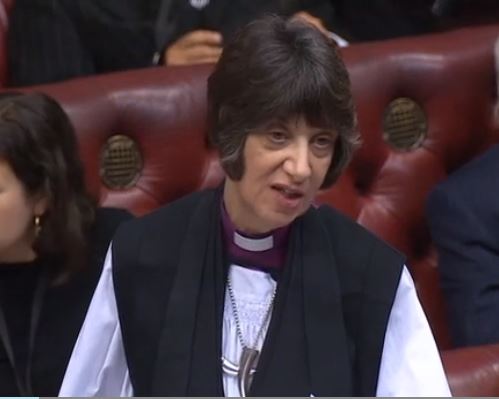
Votes: Police, Crime, Sentencing and Courts Bill

On 15th December 2021, the House of Lords debated the Police, Crime, Sentencing and Courts Bill in its third day of the report stage. Votes were held on amendments to the bill, in which a Bishop took part:

Continue reading “Votes: Police, Crime, Sentencing and Courts Bill”

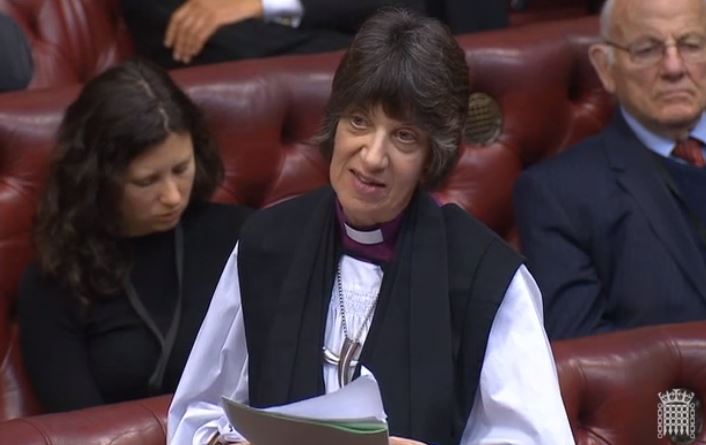
Police Crime Sentencing and Courts Bill: Bishop of Gloucester supports amendment on short prison sentences

On 15th December 2021, the House of Lords debated the Police, Crime, Sentencing and Courts Bill in the report stage. The Bishop of Gloucester spoke in support of amendment 82A, which would seek to limit the issuing of short prison sentences of six months or less, with reference to the impact of short sentences on families:

The Lord Bishop of Gloucester: My Lords, I agree with much of what has been said. On Amendment 82A I reiterate what has been said, and I hope will be said later, about primary carers. We know the damage short sentences do to families. We also know that close to half of those leaving custody go on to reoffend within a year of their release, but two-thirds of those sentenced to less than 12 months go on to reoffend.

Continue reading “Police Crime Sentencing and Courts Bill: Bishop of Gloucester supports amendment on short prison sentences”

Police, Crime, Sentencing and Courts Bill: Bishop of Manchester supports amendments on protection for Gypsy, Roma, and Traveller communities

On 13th December 2021, during a debate on the Police, Crime, Sentencing and Courts Bill, the Bishop of Manchester spoke in support of amendments that would provide protection from eviction and homelessness for those from Gyspy, Roma, and Traveller communities:

The Lord Bishop of Manchester: My Lords, I declare my interests, first in my work with the National Police Chiefs’ Council, which has already been referred to today, secondly as chair of the Wythenshawe Community Housing Group, and lastly as deputy chair of the Church Commissioners for England, one of the largest owners of farmland in the country. I think I have almost as wide a range of interests as has this extraordinarily diverse and far-reaching Bill.

I am grateful to those noble Lords from across the House who have proposed and supported the amendments in this group and spoken to them so powerfully in this debate. Like others, I am also grateful to the Minister for generously taking time to engage with us last week.

In my short time so far as a Member of your Lordships’ House, I have become accustomed to Ministers telling us that they have sympathy for our position but that the present Bill is not the way to address the matters that concern us—for example, when we tried to look at safety in high buildings on the then Fire Safety Bill. I do not see why we cannot play the same card. We need a separate Bill, one that deals comprehensively with the needs as well as the obligations of Gypsy, Roma and Traveller people—not simply legislation that offers fresh and very serious penalties for what may be rather minor infractions. The matters addressed in these clauses would surely be better dealt with in that more balanced context. That would allow Her Majesty’s Government to deliver on their manifesto commitment.

Continue reading “Police, Crime, Sentencing and Courts Bill: Bishop of Manchester supports amendments on protection for Gypsy, Roma, and Traveller communities”

Police, Crime, Sentencing and Courts Bill: Bishop of Leeds stresses need to consult young people on issues around technology

On 13th December 2021, the House of Lords debated the Police, Crime, Sentencing and Courts Bill in the second day of the report stage. The Bishop of Leeds spoke in the debate, following an amendment from Baroness Chakrabarti on digital extraction of information from devices by police, highlighting issues regarding lack of understanding of technology and the need to communicate with young people:

The Lord Bishop of Leeds: My Lords, especially following the speech by the noble Lord, Lord Carlile, I am conscious that I have no conception of what the world looks like through the eyes of my grandchildren. When I was their age there were three channels on television, which began at 4.40 in the afternoon with “Jackanory”. The world has changed considerably and, although I have tried to keep up with technology, professionally and personally, I am aware that I cannot see the world into which we are moving. We are not ahead of the game.

Continue reading “Police, Crime, Sentencing and Courts Bill: Bishop of Leeds stresses need to consult young people on issues around technology”

Votes: Police Crime Sentencing and Courts Bill

On 13th December 2021, the House of Lords debated the Police, Crime Sentencing and Courts Bill in the report stage. Votes were held on amendments to the bill, in which Bishops took part.

Continue reading “Votes: Police Crime Sentencing and Courts Bill”

Police, Crime, Sentencing and Courts Bill: Bishop of Manchester supports amendments on data protection

On 8th December 2021, the House of Lords debated the Police, Crime, Sentencing and Courts Bill in its first day of the report stage. The Bishop of Manchester spoke in support of amendments to ensure data protection regulations are maintained when data is shared under the bill:

The Lord Bishop of Manchester: My Lords, I rise to support the amendments in my name and those of the noble Baroness, Lady Meacher, and the noble Lord, Lord Paddick. I draw your Lordships’ attention to my interests in policing ethics and my work with the National Police Chiefs’ Council, as set out in the register. I trust that those interests assure your Lordships that I am a strong supporter of effective policing, not its adversary.

As an occasional statistician, I am also well aware of the power and utility of data. Good data, including on the risks of serious violence, can provide the evidence that allows the limited resources of our police forces to be directed to the particular challenges faced in different contexts and localities. Perhaps it is because I trained not as a lawyer but as a mathematician that I hold firmly to the maxim that, before one can begin to find the right solution, one has to have clearly defined the problem. I am not sure that these clauses, as presently drafted, fully pass that test.

Continue reading “Police, Crime, Sentencing and Courts Bill: Bishop of Manchester supports amendments on data protection”

Votes: Police, Crime, Sentencing and Courts Bill

On 8th December 2021, the House of Lords debated Commons Amendments to the Police, Crime, Sentencing and Courts Bill. Votes were held on further amendments to the bill, in which a Bishop took part:

Continue reading “Votes: Police, Crime, Sentencing and Courts Bill”

Votes: Armed Forces Bill

On 8th December 2021, the House of Lords debated Commons Reasons regarding amendments to the Armed Forces Bill. Votes were held on further amendments to the bill, in which a Bishop took part:

Continue reading “Votes: Armed Forces Bill”

Health and Care Bill: Bishop of Carlisle welcomes legislation and highlights multifaceted aspects of care

On 7th December 2021, the House of Lords debated the Health and Care Bill in its second reading. The Bishop of Carlisle made a speech welcoming the bill and outlining the multiple aspects of care in need of attention going forwards:

The Lord Bishop of Carlisle: My Lords, this is a health and care Bill. I will address certain specific aspects of that care that deserve further attention.

First, on integrated care, like the noble Lord, Lord Kakkar, I welcome the clear desire for integration, collaboration and local flexibility, and the placing of integrated care systems on a statutory footing. But can the Minister assure us that, in ICBs and ICPs working together to ensure co-ordination in the design and delivery of integrated care, there will be an adequate focus on prevention rather than just cure, especially in mental health needs, not least among young people with learning disabilities?

Continue reading “Health and Care Bill: Bishop of Carlisle welcomes legislation and highlights multifaceted aspects of care”