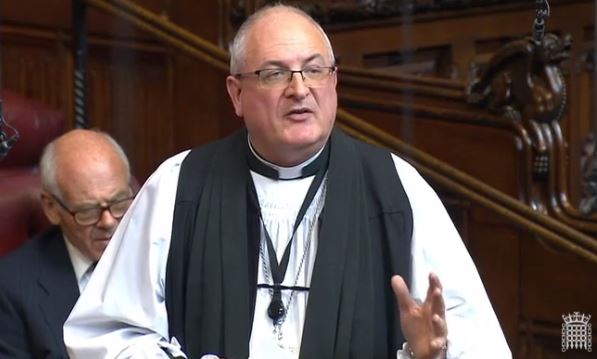
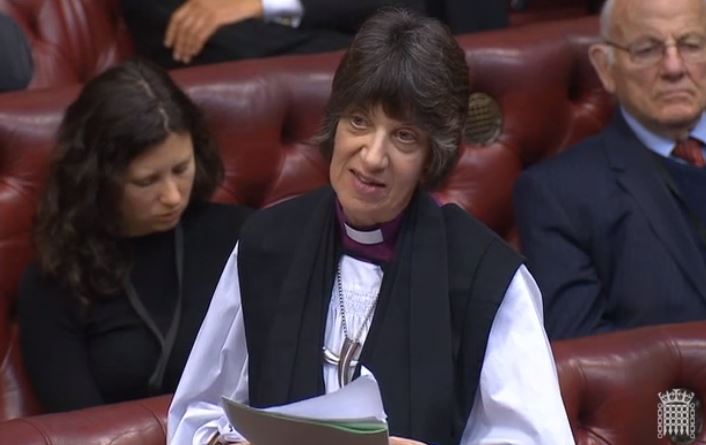
On 27th October 2021, the House of Lords debated the Police, Crime, Sentencing & Courts Bill in the third day of committee. The Bishop of Gloucester spoke during the debate, supporting an amendment tabled by Baroness Bertin to include domestic abuse in the definition of “serious violence” under the bill:
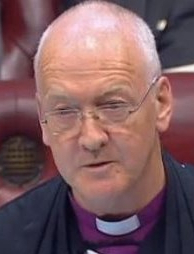
The Lord Bishop of Gloucester: My Lords, I too add my support to the amendment moved by the noble Baroness, Lady Bertin. Many points have been covered, and I simply want to say that if the definition of serious violence is not expanded in this way, the concern is that many local areas will not consider it within their strategies.
On October 22nd 2021 Peers debated the Assisted Dying Bill of Baroness Meacher, at its Second Reading.
The Lord Bishop of Chichester: My Lords, I feel constrained to begin with a theological view, as the noble Lord, Lord Lipsey, challenged us to do. It is simply this: in the Christian view, God does not inflict evil on people. Indeed, the man God, Jesus Christ himself, sharing our life, experienced the evil and suffering of the cross in order that we, in the darkest moments of death, might find hope and the recovery of life in heaven. I believe that, in this debate, we have been treading on sacred ground as we have listened to personal stories, and we have done so with reverence.
Most of all, I want to speak about the wider context of vulnerability and to do so from the experience of the parishes where I have served; for example, the sex workers in the back streets of Plymouth, the largely black and Asian communities in Leicester, and the bedsits and overcrowded flats of Hastings, home to people with severe mental health issues and/or drug dependency. At the point of facing terminal illness, such people would reveal overwhelmingly that they have no family, and few friends or responsible partners to assist them through reaching the point of final death. Indeed, in many cases, they have had no experience of being given autonomy or power over their lives; at the end of their lives, they are woefully ill prepared for taking responsibility for their death.
The sanctity of life is central to Christian faith. It is also a view held with honour and conviction by people of other faiths, as we have heard. The Church’s sense of responsibility for all people stems from this conviction—responsibility especially for the vulnerable when they face death too often alone, but, at the moment, with the fundamental bulwark of protection in the law. This was a point made powerfully by the noble and right reverend Lord, Lord Harries, the noble Lord, Lord McColl, and, more recently, the noble Lord, Lord Herbert.
Many contributors have raised significant doubts about the level of trust in the capacity of the judiciary and the medical profession to meet the extraordinary demands of disadvantaged communities when terminal illness and incapacity face them. The call from the noble Lord, Lord Hastings, and others for urgent and sustained investment in palliative care would be a positive and worthy outcome to this important debate on a Bill whose humane intentions I respect profoundly but which, I believe, would lead to unintended consequences and which we should not let pass.
On October 22nd 2021 Peers debated the Assisted Dying Bill of Baroness Meacher, at its Second Reading.
The Lord Bishop of Carlisle: My Lords, it is a privilege to follow the noble Lord, Lord Alton. I too congratulate the noble Baroness, Lady Davidson, on such an excellent speech
My colleagues on these Benches have already expressed our profound opposition to any change in the law on assisted dying so I will not repeat the cogent points that they have already made. I hope it will be apparent that our position is not only theological but rooted in our pastoral experience and that of many chaplains in hospitals and hospices and clergy across the land, with arguments that, as this debate has effectively revealed, are important to a wide variety of people, whatever their beliefs.
I remember, when we last debated this issue in your Lordships’ House, being asked in a radio interview, “What’s new in this debate?” In terms of arguments rather than opinions, I am not at all sure that much was new then, and even less is new now. So in the brief time allocated to me today, I will simply reiterate two issues that have been raised several times but which seem of particular significance in this powerful, respectful and very moving discussion, in which we know that compassion motivates every one of us.
On October 22nd 2021 Peers debated the Assisted Dying Bill of Baroness Meacher, at its Second Reading.
The Lord Bishop of Durham: My Lords, I begin by noting the simple courtesy that has been expressed so far during the debate today. We know that humanity at its best always wants the best for the people we love, and we act to protect them where we can. It is natural to want to ease hardships and burdens for our loved ones, especially in a time of pain, but also in a time of rising care costs and stretched health services. But human beings do not always act in the best way. We are flawed creatures.
There is a very real danger that individuals will feel that they have become a burden and thus think that the dutiful option to their families is to end their life. In Oregon and Canada, where assisted dying has been legalised, fear of being a burden to family actually frequently accompanies the requests. The scope for abuse and pressure for people to end their lives is significant. It is not a giant leap but a small step. The practice of weighing the value of lives against emotional and financial cost simply is dehumanising.
The consequences of the Bill to the most vulnerable have to be deeply considered. If the value of people’s lives is called into question, it is likely that those who have been historically undervalued and overlooked will be again. Those with disabilities and mental health issues, and other minorities, are already vulnerable, and the difference of experience between those groups and others has again been evident during the pandemic. The Bill acts on the principle that people should have the ability to act upon their will to end their lives, but we have seen instances over the pandemic, as reported by the Care Quality Commission, of “do not attempt CPR” decisions that have been made either without or against the will of the vulnerable. Perhaps even more troubling was the aspect of the report by the CQC, which said that those decisions
“were being applied to groups of people”.
In a stretched and overwhelmed health service that has supported us over a long pandemic, safeguards against oversight cannot be guaranteed. What would have been the outcome of the pandemic if the medical stakes had been higher?
We must not overlook the cultural implications of passing a Bill that leads anyone to measure the worth of someone else’s life. Who are we to put a value on human life or determine that, in some instances, the person is not worth the cost? Let us not abandon the imperative principle that is innate to us of valuing every human life and protecting and caring for the vulnerable.
If I may, I have a reminder for the noble Lord, Lord Vinson:
“But when they came to Jesus and found that he was already dead, they did not break his legs”—
On October 22nd 2021 Peers debated the Assisted Dying Bill of Baroness Meacher, at its Second Reading.
The Archbishop of Canterbury: My Lords, I am grateful to the noble Baroness, Lady Meacher, and listened with great attention to her extremely powerful speech. This is an issue on which many of us have personal experiences, often painful and difficult. There is unanimity on these Benches that our current law does not need to be changed, but I know that people of faith hold differing views. No doubt we will hear those today and I look forward to them.
Everyone here shares the best of intentions. We should recognise that in how we listen and respond to each other. I hope no one will seek to divide the House today, but I welcome the amendment from the noble Lord, Lord Winston, because it draws our focus towards our use of language. We need clarity and precision in our terms.
Christ calls his followers to compassion, but compassion must not be drawn too narrowly—a point made indirectly and powerfully by the noble Baroness, Lady Meacher. It must extend beyond those who want the law to provide help to end their lives to the whole of society, especially those who might be put at risk. Our choices affect other people. The common good demands that our choices, rights and freedoms must be balanced with those of others, especially those who may not be so easily heard.
On 21st October 2021, the House of Lords debated the Skills and Post 16 Education Bill in the second day of the report stage. The Bishop of Durham spoke in the debate, supporting amendments on special educational needs, and moving his amendment on providing flexibility for universal credit recipients seeking further education:
The Lord Bishop of Durham: My Lords, this is my first opportunity to welcome the Minister to her new role, and, indeed, the noble Baroness, Lady Chisholm, to hers. In my own role as chair of the National Society—which I declare as an interest—I look forward to working with them both on many matters relating to education and the Church of England’s place as a major provider.
Turning to Amendments 44 and 46, which I was pleased to add my name to, I thank both noble Baronesses for the time they gave us recently to discuss them. The need for specific provision to be made to better meet the needs of students with specific learning needs and disabilities at all levels has been made—not for the first time—with great expertise by the noble Lord, Lord Addington, and I wholeheartedly support these amendments. Given the range and varied nature of the learning needs among FE students, their lecturers, tutors, assessors and other staff must have the skills to recognise those needs to be able to adapt their own approach to teaching, learning and assessment, and to be able to promptly and appropriately refer students for more specialised or intensive support.
On 21st October 2021, the House of Lords debated the Skills and Post-16 Education Bill in the report stage. Votes were held on amendments to the bill, in which Bishops took part:
On 20th October 2021, during a debate on the Police, Crime, Sentencing and Courts Bill, the Bishop of Durham spoke in support of amendments intended to increase safeguarding efforts relating to children involved in serious violence, on behalf of the Bishop of Manchester:
The Lord Bishop of Durham: My Lords, the right reverend Prelate the Bishop of Manchester was in his place earlier but has had to go elsewhere for the evening. He has asked me to speak on his behalf on the amendments in this group tabled in his name alongside those of the noble Lord, Lord Rosser, and the noble Baroness, Lady Jones. I thank the Children’s Society and Barnardo’s for their support and helpful briefings.
The Church has a particular concern for vulnerable children. As far as the Church of England is concerned, there are 4,644 schools in which we educate around 1 million students. This educational commitment is combined with parish and youth worker activities that bring the Church into contact with thousands of families each year. Through the Clewer Initiative, many parishes and dioceses have worked closely on the issues of county lines and confronting the blight of modern slavery. Accordingly, we have seen at first hand and, sadly, all too frequently the terrible damage caused by serious youth violence and by the criminal exploitation of children. The latter is an especially insidious form of abuse, which one victim has described as “when someone you trusted makes you commit crime for their benefit”.
On 2oth October 2021, the House of Lords debated amendments to the Police, Crime, Sentencing & Courts Bill. The Bishop of Durham, on behalf of the Bishop of Gloucester, spoke in favour of an amendment which would aim to expand the definition of emergency worker to include prison workers:
The Lord Bishop of Durham: My Lords, I will speak to Amendment 11, in the name of my right reverend friend the Bishop of Gloucester, with her permission, as she is sadly unable to be here today. I declare her interest as Anglican bishop of prisons in England and Wales.
This amendment seeks to improve Section 3 of the Assaults on Emergency Workers (Offences) Act 2018 by expanding the definition of “emergency worker” to include all staff working in prisons. All those who work in prisons play a valuable role. However, currently, only officers and some healthcare staff are covered by this legislation and, as such, the risk for others working in prisons is increased, because prisoners are well aware of the more severe consequences of assaulting an officer compared with others working in prisons. Someone described this as effectively painting a target on their backs. This is an unintended consequence of the current legislation, which is unfair to many prison workers, undermines their safety and can be easily dealt with through this amendment.
On 2oth October 2021, the Bishop of Manchester spoke in a debate on the Police, Crime, Sentencing and Courts Bill, adding his support to a group of amendments intending to create a police covenant to better support the mental health and wellbeing of police and their families:
The Lord Bishop of Manchester: My Lords, I draw your Lordships’ attention to my interests in the world of policing as set out in the register, particularly in policing ethics, both with the Greater Manchester Police and the National Police Chiefs’ Council.
At Second Reading I referred briefly to the culture of policing. I did not specifically mention a policing covenant given that time was so short, but I have been intrigued by the debate we have had this afternoon. I note the way in which Members have referred to the Armed Forces covenant. That is helpful in some ways, although I am just a little concerned. As I said at Second Reading, the heart of the policing model is that our police are civilians in uniform; they are not the Armed Forces. We need to be careful not to put police too easily into the same category as the Armed Forces. The Armed Forces are agents of the state while police are agents of society in a slightly different way. That is an important civilian distinction I would want always to hold before us.
You must be logged in to post a comment.