Week in Westminster, 23rd -27th November 2020

Parliament met in Westminster and online this week. The Bishop of St Albans was on duty in the House of Lords and read prayers at the start of each sitting day.
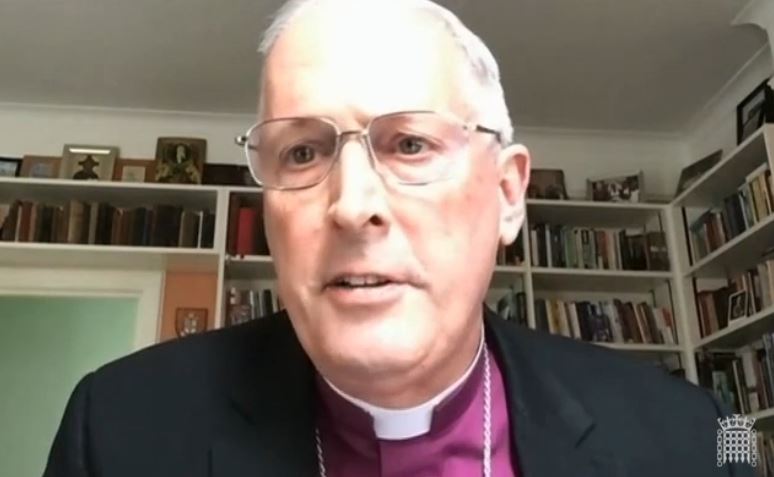
The Bishop of Worcester responded to news of the cut in the overseas aid budget, describing it as a broken promise to the poorest.

The Bishop of St Albans asked Government about the rural economy, nuclear weapons, valuing the civil service, diversity on the Equality and Human Rights Commission board, and received written answers to questions on gambling (advertising, rehabilitation, education and football), technology used for detention of Uyghurs in China, and protection of monasteries and churches in Nagorno-Karabakh.

He, the Archbishop of Canterbury and the Bishop of Leeds voted on amendments to the Government’s UK Internal Market Bill.

The Bishop of Durham asked about the resumption of the refugee resettlement scheme.

The Bishop of Portsmouth welcomed the Government’s integrated review of foreign, defence, security and development policy.

In the House of Commons the Second Church Estates Commissioner answered questions from MPs on public worship, tree planting, Christmas services, gender-based violence, Living in Love and Faith, cathedral services, Christian persecution, community support and consistory court appeals.

Week in Westminster, 16th-20th November 2020

Parliament met in Westminster and online this week. The Bishop of Salisbury was on duty in the House of Lords and read prayers at the start of each sitting day.
Continue reading “Week in Westminster, 16th-20th November 2020”

Week in Westminster, 9th-13th November 2020

Parliament met in Westminster and online this week. The Bishop of Durham was on duty in the House of Lords and read prayers at the start of each sitting day.
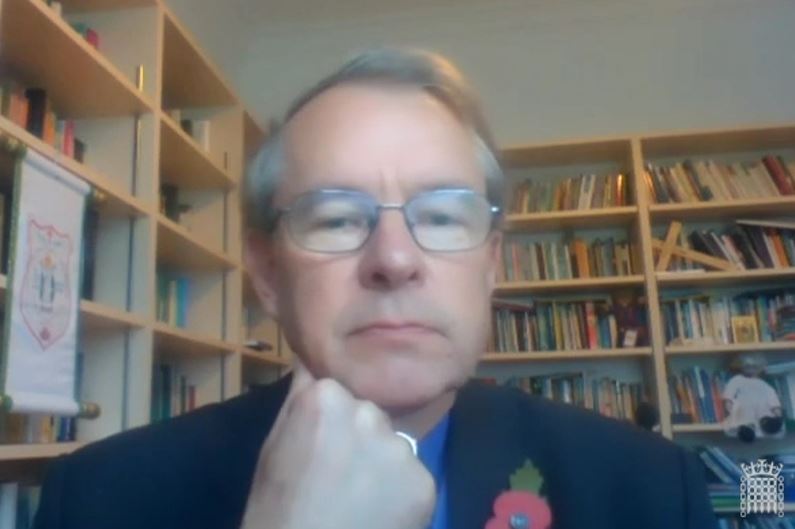
The Bishop raised concerns about child safety in the Government’s Covert Human Intelligence Sources Bill. He also asked questions about the need for a child poverty commission, safety guidance for places of worship, homelessness, a Royal Commission on criminal justice, and benefit rates.  He received answers to written questions on safe asylum routes and the outsourcing of asylum interviews.

The Archbishop of Canterbury and Bishop of Leeds spoke in the debate on the Government’s UK Internal Market Bill, and sponsored amendments on Northern Ireland and international law. They and seven other bishops voted with the large majority to remove controversial clauses of the Bill on those issues.

The Bishop of Winchester asked Government to continue to prioritise freedom of religion and belief overseas.

The Bishop of Oxford received written answers to questions on employment conditions in the gig economy.

The Bishop of St Albans asked Government about Hong Kong, and received written answers to questions on rural infrastructure investment, gambling harm, housebuilding, and Uighurs in China.

The Bishop of Portsmouth asked a question about job losses as a result of coronavirus.

The Bishop of Southwark supported an amendment by Lord Dubs on child refugees and family reunion, to the Government’s Immigration Bill.

The Bishop of Gloucester asked a question about the elimination of gender-based violence.

Week in Westminster, 2nd-6th November 2020

Parliament met in Westminster and online this week. The Bishop of Winchester was on duty in the House of Lords and read prayers at the start of each sitting day.
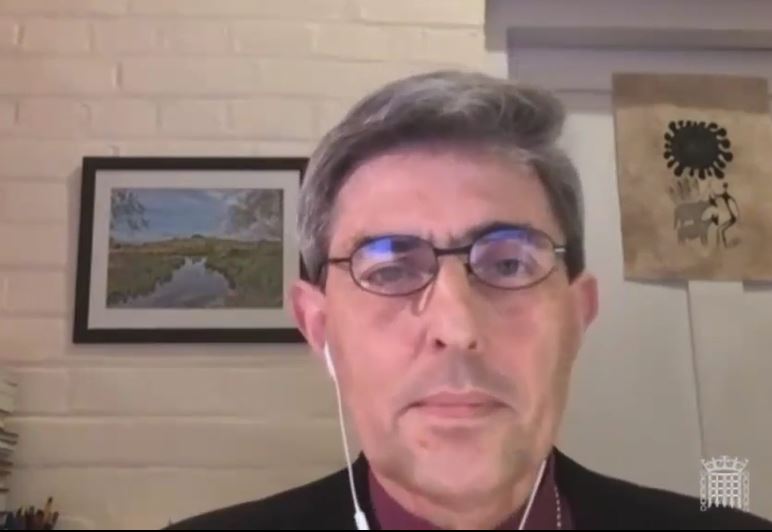
He questioned Government plans to suspend public worship as part of the new coronavirus lockdown rules, both in response to the Prime Minister’s statement, and in the Lords debate on the Regulations. Both the Commons and the Lords passed the Regulations in a vote.

The Bishop also asked Government about apprenticeships, and tax avoidance by corporations in less-developed countries.

The Bishop of Durham received answers to written questions on the right to work for asylum seekers, human rights and refugees in Burundi and relations between Burundi and Rwanda.

The Bishop of St Albans asked Government about the suspension of evictions, targets for disabled access homes, and possible ethnic cleansing of Armenians in Nagorno Karabakh. He received written answers to questions on gambling and the armed forces, the behaviour of the Azerbaijan military, human rights in China, and broadband funding.

The Bishop of Leeds received answers to written questions on the military conflict in Nagorno Karabakh.

Week in Westminster 26th – 30th October 2020

Parliament met this week in Westminster and online. Prayers were read at the start of each sitting day in the House of Lords by the Bishops of Bristol and Carlisle.

The Bishop of Bristol responded to the tragic deaths of those seeking refuge in the UK by crossing the English Channel, and asked questions of Government about school holiday hunger and long-term child poverty. She also asked about plans to help migrant women suffering domestic abuse.


The Bishop of Carlisle asked about social care, and about counselling and mediation services for divorcing couples.

The Bishop of London asked Government how it will tackle social and economic inequalities in its response to covid-19.

The Bishop of Durham called for the postponement of Ofsted school inspections during the ongoing covid-19 pandemic. He also asked Government about children’s access to computers for home learning use, and Government commitment to the refugee resettlement scheme.

The Bishop of Coventry received answers to written questions on UK response capabilities to overseas atrocities, on refugees from Myanmar, and support for Rohingya communities in Southeast Asia.

The Bishop of St Albans asked questions about the impact of problem gambling, land banking, spending in rural areas, alleged war crimes, and supported an amendment on pensioner poverty to the Government’s Social Security (Up-rating of Benefits) Bill.

The Bishop of Salisbury called for more focus on energy microgeneration, and asked questions on tree planting, and species and habitat destruction.

Week in Westminster 19th – 23rd October 2020

Parliament met this week in Westminster and online. Prayers were read at the start of each sitting day in the House of Lords by the Bishop of London.

The Bishop responded to Government statements and regulations on covid-19 and asked questions about the high cost of British citizenship for children, access to care homes, support for almshouses, and the high number of prisoners on remand. She also introduced the General Synod (Remote Meetings) (Temporary Standing Orders) Measure to the Lords, which approved it and passed it for Royal Assent. In the House of Commons the Measure was introduced by Andrew Selous MP, Second Church Estates Commissioner, and was approved by MPs.

The Lords debated the UK Internal Market Bill, and the Archbishop of Canterbury and Bishop of Leeds both spoke in the debate, voicing concerns about the rule of law and the consequences for peace in Northern Ireland and the UK’s overseas reputation if international law were to be broken. Bishops supported a ‘Motion to Regret’ the Bill, which was passed with a large cross-party majority.

In response to a Ministerial statement on covid-19, the Bishop of Manchester raised the need for restoration of respect and trust between Ministers and community leaders in Manchester.

Bishops voted to support amendments to the Government’s Immigration and Social Security Co-ordination (EU Withdrawal) Bill, including from Lord Dubs on refugee children and their families.

The Bishop of Oxford asked Government about the impact of covid-19 on the gig economy, and the Bishop of Salisbury asked a question about investment in local micro-energy generation.

The Bishop of St Albans asked questions about personal debt, the speed of housebuilding, gambling advertising and addiction, and wood pasture restoration. He also voted on amendments to the Government’s Agriculture Bill.

The Archbishop of York was reintroduced to the House, with his sponsors the Archbishop of Canterbury and Bishop of London.

Archbishop of York introduced to House of Lords

On Thursday 22nd October 2020 the Archbishop of York was reintroduced to the House of Lords. Rt Revd Stephen Cottrell had previously served as the Bishop of Chelmsford. Hansard records the event as follows:

Thursday 22 October 2020

The House met in a hybrid proceeding.

12.00 pm, Prayers—read by the Lord Bishop of London.

Introduction: The Lord Archbishop of York

Continue reading “Archbishop of York introduced to House of Lords”

Week in Westminster 12th – 16th October 2020

Parliament met this week in Westminster and online. Prayers were read at the start of each sitting day in the House of Lords by the Bishop of Oxford.

The Bishop asked Government about emp0loyment initiatives and mental health funding to respond to the problems of resurgent covid-19. He also asked when Government would bring forward reforms to deal with the working practices of Amazon. Continue reading “Week in Westminster 12th – 16th October 2020”

Week in Westminster 5th – 9th October 2020

Parliament met this week in Westminster and online. Prayers were read at the start of each sitting day in the House of Lords by the Bishops of Rochester and Blackburn.

Across two days eleven bishops supported successful amendments to the Government’s Immigration and Social Security Co-ordination (EU Withdrawal) Bill, on:

  • Child refugees & family reunion
  • Detention time limits
  • Children in care
  • Modern slavery victims
  • Social care impact
  • Right to return for UK nationals
  • Documentary proof of status

The Bishop of Southwark spoke in favour of several of these during the Lords debates. He also called on Government to resume the refugee resettlement programme, suspended in March. Continue reading “Week in Westminster 5th – 9th October 2020”

Week in Westminster 28th September – 2nd October 2020

Parliament met this week in Westminster and online. Prayers were read at the start of each sitting day in the House of Lords by the Bishops of Gloucester and Rochester.

The Bishop of Gloucester asked Government about funding for its Female Offenders Strategy, and about support for children’s sport.

The Bishop of Durham supported amendments to the Government’s Immigration and Social Security Co-ordination (EU Withdrawal) Bill, on the social care workforce and on children in care.

Bishops voted on amendments to the Bill, and also on a motion to regret the use of the temporary provisions in the Government’s Coronavirus Act.

The Bishop of Rochester called for effective parliamentary scrutiny of coronavirus restrictions. He also asked Government whether it would restart the vulnerable person’s resettlement scheme.

The Bishop of St Albans asked questions of Government about Armenia and Azerbaijan, and the case of Asif Pervaiz, a Christian sentenced to death under blasphemy laws in Pakistan. He also supported amendments to the Government’s Trade Bill during its Committee Stage, about ensuring that future trade agreements are fully compliant with international environmental obligations, and meet standards on animal welfare and food safety.