On 28th October the Bishop of Durham received a written answer to four questions on refugee resettlement:
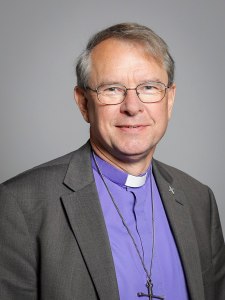 The Lord Bishop of Durham:
(i) To ask Her Majesty’s Government, further to the answer by Baroness Williams of Trafford on 5 October (HL Deb, col 407), whether they have revised their aim of resettling 5,000 refugees in 2020/21 under the UK’s new resettlement scheme as a result of the Covid-19 pandemic; and, if so, what is the revised aim for resettlement this year. [HL9220]
(ii) To ask Her Majesty’s Government, further to the Written Answer by Baroness Williams of Trafford on 14 September (HL7752), what discussions they have held with local authorities about their capacity to restart refugee resettlement as a result of the Covid-19 pandemic; and whether any local authorities have confirmed that they are ready to restart resettlement. [HL9221]
(iii) To ask Her Majesty’s Government whether the final 232 refugees within the Vulnerable Persons Resettlement Scheme will be resettled in the UK when it is safe to do so. [HL9222]
(iv) To ask Her Majesty’s Government when they will announce their long term refugee resettlement commitment beyond 2021. [HL9223] Continue reading “Bishop of Durham asks Government about its commitment to refugee resettlement scheme”

 The Lord Bishop of St Albans: To ask Her Majesty’s Government, further to the announcement that the long-term spending review will be replaced by a one-year spending review, whether plans to service the UK with fibre broadband by 2025 will be included as a multi-year capital allocation priority infrastructure project. [HL9493] Continue reading “Bishop of St Albans asks about funding for fibre broadband”
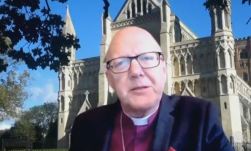 The Lord Bishop of St Albans [V]: Will the Minister comment on whether Her Majesty’s Government believe that the criteria used to recognise Kosovo and the principle of internal self-determination which protects minority rights equally applies to the Armenians and Nagorno-Karabakh and on whether recognition might, as in Kosovo, prevent the possible ethnic cleansing of Armenians, which has historically characterised territorial border conflicts in that part of the Caucasus?
 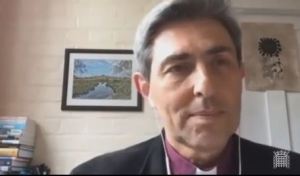 The Lord Bishop of Winchester [V]: My Lords, I underline what the noble and right reverend Lord, Lord Harries, has brought into focus. The loss of corporate tax—about 3% from high-income economies compared with 9% for low-income ones—further exacerbates the impact of coronavirus on trade and tourism. For example, sub-Saharan Africa currently faces its first recession in 25 years, with up to 14 million people driven into extreme poverty. Can the Minister assure the House that Her Majesty’s Government will urgently offer the OECD technical support in the form of revenue analysis along with support for legislative and policy measures so that countries that wish to implement unilateral tax reforms will have the wherewithal and advice to do so in the best way?
 On 29th October the Bishop of Salisbury received written answers to two questions of Government, on (i) tree planting targets and (ii) working with business to address species and habitat destruction caused by UK supply chains:
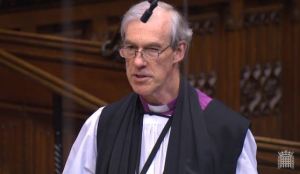 The Lord Bishop of Carlisle: My Lords, given the long delay in the publication of proposals for the reform of social care, the impact of Covid-19 on carers and care homes, and the implications of reform for the future of the NHS—not to mention the political sensitivity and complexity of the subject, which has been referred to—does the Minister agree that the best way to achieve the cross-party consensus to which he just referred would be through an ad hoc Lords Select Committee, as already proposed from these Benches?
  The Lord Bishop of St Albans: To ask Her Majesty’s Government, further to the Written Answers by Lord Greenhalgh on 1 October (
 The Church of England in Parliament
You must be logged in to post a comment.