
On 11th June 2019 Lord Robathan asked the Government “whether the Foreign Secretary’s speech at the Lord Mayor’s Banquet on 13 May represented a change in their policy on defence expenditure.” The Most Revd and Rt Hon Justin Welby, Archbishop of Canterbury, asked a follow-up question:
 The Lord Archbishop of Canterbury: My Lords, as I am sure the noble Earl remembers, the Foreign Secretary, in his Guildhall speech, not only called for new capabilities and higher spending, but went on to set the point of these new capabilities when he said that,
“strength is the surest guarantee of peace”.
Furthermore, last week, in the D-day proclamation, 16 countries, including the United Kingdom, committed to,
“work together to resolve international tensions peacefully”.
Given those two aims, of strong defence as a sure base for peace and the proclamation, does the noble Earl agree that the formation of the joint reconciliation unit within the Stabilisation Unit in the Foreign Office is a major step forward, in that averting war through orchestrated means—including both hard and soft power—is much cheaper than fighting it?
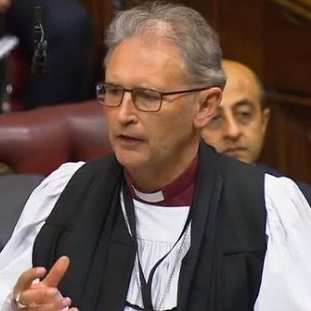 The Lord Bishop of Coventry: My Lords, I echo the praise that has already been given to the emergency services following both Barking and the Grenfell disaster. I welcome the Statement’s recognition of the power of community and its commitment to a new and stronger partnership between residents and those who serve them, for trust to rebuilt and, in particular, for the council to listen and the community to be heard.
 The Lord Bishop of Leeds: My Lords, I was in Khartoum in January. I too pay tribute to the ambassador, whose communication on social media has been superb, despite internet problems. The other country involved is Egypt, which seems to have a vested interest in not putting too much pressure on Sudan. Can the Minister say anything about our conversations with Egypt and its influence over events in Sudan?
 The Lord Bishop of Newcastle: To ask Her Majesty’s Government what steps they are taking to ensure that the voluntary sector can contribute to an effective national probation service.
 The Lord Bishop of Leeds: My Lords, can the Minister expand on what she said about rural access? There is no point trying to encourage people to use buses where there are none. In parts of my diocese in the north of Yorkshire, to suggest that there may be increased funding or increased conversations does not change the fact that many people are isolated. Buses and transport need to be part of a holistic, integrated rural strategy that sees the various matters interconnected.
 The Lord Bishop of St Albans:
  The Lord Bishop of Ely: My Lords, there has been much conversation already about research into gaming addiction among young people. My right reverend friend the Bishop of St Albans raised the issue of a mandatory pause function following calls from healthcare providers. As that was raised again in conversation and discussion around the Online Harms White Paper, will the Minister confirm that the Government are assessing the value of this function?
  The Church of England in Parliament
You must be logged in to post a comment.