
On 14th November 2017 Lord Naseby asked Her Majesty’s Government “what work they have undertaken to plan for another generation of New Towns”. The Bishop of Ely, Rt Revd Stephen Conway, asked a follow up question:
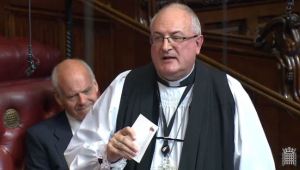 The Lord Bishop of Ely: My Lords, plans for new towns must include a wide range of different kinds of housing to enable all people to access decent, affordable homes. Developers often wish to build large, four or five-bedroom houses—unsurprisingly, as they make the most profit—but families, couples and single-person households need very different kinds of properties. How are Her Majesty’s Government planning to ensure that a wide range of housing sizes and tenures will be provided in these new developments? Continue reading “Bishop of Ely calls for diversity and not profit to be guiding principle in new housing provision”
 On 8th November 2017 the Bishop of Durham, Rt Revd Paul Butler, received a written answer to a question about technical education in the north east:
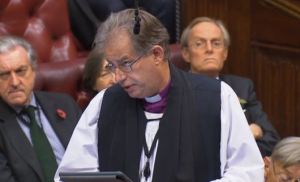 The Lord Bishop of Oxford: My Lords, the Minister will be aware of the impact on churches of such theft, particularly from roofs. It has a devastating effect on church communities and knock-on effects for important local amenities. Can she clarify what the Home Office can do to encourage enforcement of the need to register scrap metal dealers with local authorities, as well as not selling on scrap for cash?
 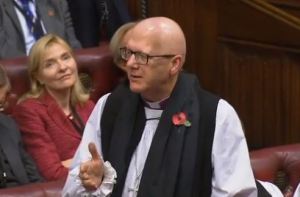 The Lord Bishop of St Albans: My Lords, there are many valuable statistics in the report, but also some quite worrying ones. Apparently 35% of the people interviewed thought that if they had had depression they would be far less likely to get any sort of promotion, while half of those interviewed said that they would not be willing to discuss mental health issues with their line manager. First, in the light of that, is there not a pressing need for a new public mental health awareness campaign? Secondly, will the Minister look into the contribution that workplace chaplaincy can make to addressing this problem?
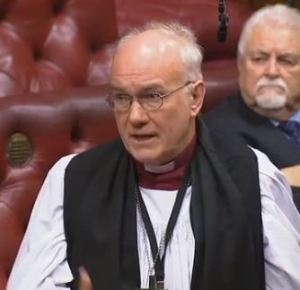 The Lord Bishop of Chester: My Lords, I very much welcome the report; I have simply read the executive summary. It is obviously important to respond well after death occurs, but equally, arguably, it is even more important to put in place measures to reduce the possibility of death. This is where the healthcare provision in the police service is especially important. Given that the NHS has a direct responsibility to provide healthcare in prisons but does not have an equivalent responsibility for those in police care, and given that for half the people the cause of death is alcohol and drug-related, is there not a need to join up A&E, the police, the whole NHS and police support? It is no doubt complex, but at the heart of this lies quite a simple issue. This ought to be brought within the ambit of the NHS, which is the case with prisons.
  The Archbishop of Canterbury: I declare an interest as having members of the family who have used child and adolescent mental health services. Does the Minister not agree that the fundamental principle of the NHS is free treatment at the point of need? Does he also agree that one of the major failures in CAMHS—it has been well evidenced by academic studies over the last two years—has been that, because of the shortage of resources, only those with the most critical needs are treated at all, and the early intervention which would help prevent needs becoming critical has been deeply neglected owing to an absence or lack of specialised therapies, particularly talking therapies? Will he confirm that the work on the most critical side is going to be extended so that children and adolescents can get care earlier and more effectively, saving the state money and fulfilling the purposes of the NHS?
  The Church of England in Parliament
You must be logged in to post a comment.