
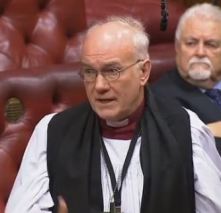
 On 24th January 2018 Lord Ramsbotham asked Her Majesty’s Government “how many prisons have been given action plans, or are in special measures, following inspection reports.” The Bishop of Chester, Rt Revd Peter Forster, asked a follow-up question:
The Lord Bishop of Chester: My Lords, bishops go into prison more often than most Members of your Lordships’ House. There are two prisons in my diocese. The Liverpool prison report is an absolute scandal, so far as I can judge. However, does the Minister agree that many prisons are functioning rather well in the circumstances they face and that there is a good deal that can be celebrated alongside the horror stories, which are indeed dreadful?
Continue reading “Bishop of Chester call for balance in way prison system is discussed and reported”
 On the 23rd January 2018 Lord Bruce of Bennachie asked the Government “how much Official Development Assistance they will spend on supporting sustainable public services and good governance in sub-Saharan Africa over the next two years.” The Bishop of Durham, Rt Revd Paul Butler, asked a follow up question about the recent instability in Burundi.
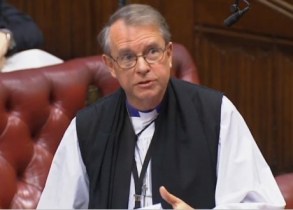 On the 23rd January 2018 the Bishop of Durham, the Rt Revd Paul Butler received a written answer to a question about the impact of the benefit cap on larger families:
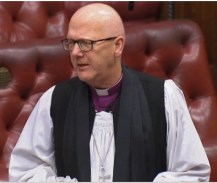 On the 23 January 2018 the Bishop of St Albans, Rt Revd Alan Smith, received a written answer to a question about food security:
 On the 22nd January 2017 Lord Lexden asked the Government “whether they intend to review the law governing the naming of deceased individuals against whom criminal allegations have been made.” In his follow up question Lord Lexden raised the case of the deceased Bishop George Bell and the recent Carlile Review. The Bishop of Peterborough, Rt Revd Donald Allister, also asked a follow up question:
 The Lord Bishop of Durham: My Lords, noting recommendation 5, will Her Majesty’s Government provide detail about how DfID assesses its partners’ commitment to freedom of religion and belief when determining where the funding goes around the world?
  The Lord Bishop of Durham: My Lords, what steps are being taken to pressure the EU to accelerate family reunification processes? Our colleagues in the Anglican communion in Europe have noted that applications made for family members in Greece to come to this country are currently taking well over a year and that the processes have, sadly, slowed in the past 18 months.
  On the 17th January 2018 the Second Church Estates Commissioner, Rt Hon Dame Caroline Spelman MP, asked a question in the House of Commons of the Minister for the Middle East. Dame Caroline highlighted the work the Church is doing to tackle modern-day slavery through the
 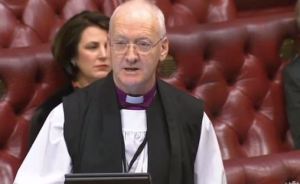 On 16th January 2018 Baroness Hodgson of Abinger asked Her Majesty’s Government “what help they are giving refugees and internally displaced persons in the countries bordering Syria who have been displaced by fighting and the actions of Daesh”. The Bishop of Leeds, Rt Revd Nick Baines, asked a follow up question:

You must be logged in to post a comment.