Archbishop of Canterbury praises UK contribution to tackling Ebola in West Africa

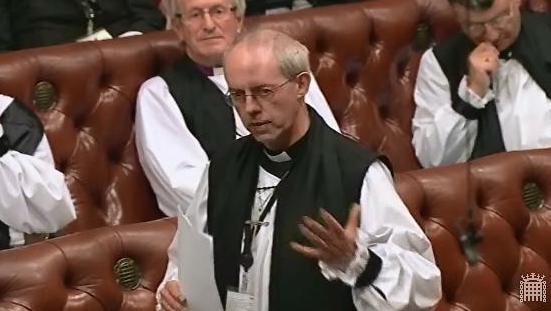
On 4th February 2015, Lord Collins of Highbury asked Her Majesty’s Government what recent progress they have made on tackling Ebola in West Africa. The Archbishop of Canterbuy, the Most Revd and Rt Hon Justin Welby, asked a supplementary question:

Archbishop of CanterburyThe Archbishop of Canterbury: My Lords, during a pastoral visit to Sierra Leone in mid-December, I heard affirmation of the extraordinary commitment of British forces and British work in that country. There was much expression of admiration and gratitude. There was also much concern about future outbreaks of Ebola. What thinking have the Government given to how future outbreaks might be prevented?

Baroness Northover: I am very pleased to see the most reverend Primate in his place—a number of us were extremely concerned when he came back from Sierra Leone and was not himself well, so it is great to see him here. He is absolutely right: the international community is focusing on trying to ensure that we do not find ourselves in this situation again. The WHO has looked at its own reform and other international bodies will too, but it is vital that we learn the lessons of this particular epidemic.

(via Parliament.uk)

St Albans – Social Security Benefits (Written Answers)

On 4th February 2015, the Bishop of St Albans, the Rt Revd Alan Smith, received an answer to four written questions on the subject of social security benefits.

Bishop of St AlbansThe Lord Bishop of St Albans: To ask Her Majesty’s Government what progress has been made to implement the changes announced in December 2014 to provide more information about Short Term Benefit Advances online and in Jobcentres and to update the guidance on Short Term Benefit Advances for Jobcentre advisers.

The Lord Bishop of St Albans: To ask Her Majesty’s Government what procedures they have put in place to monitor the effectiveness of changes to the information and guidance provided on Short Term Benefit Advances in helping to raise awareness of Short Term Benefit Advances among potential claimants. Continue reading “St Albans – Social Security Benefits (Written Answers)”

Bishop of St Albans supports stronger relationship between credit unions and schools

On 3rd February 2015, Lord Kennedy of Southwark asked Her Majesty’s Government when they plan further reform of the law regarding Credit Unions. The Bishop of St Albans, the Rt Revd Alan Smith, asked a supplementary question:

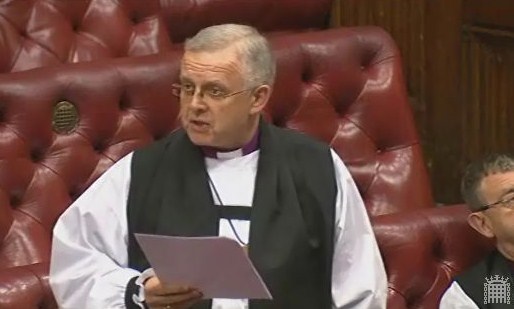
Bishop of St AlbansThe Lord Bishop of St Albans: My Lords, I imagine many of us are concerned about the culture of debt that seems to be normative in many parts of our society. In the light of this, can the Minister tell us whether the Government have any plans, first, to encourage all schools to consider working closely with credit unions, as in the case of the credit union in St. Albans, where I come from and, secondly, to further roll out and encourage payroll savings schemes as part of a wider initiative to encourage saving and financial responsibility across society?

Lord Newby: My Lords, the Government support both those concepts. The right reverend Prelate will be aware that the Government have been working with the Archbishop of Canterbury’s task force on affordable credit and savings to institute the LifeSavers project, under which primary schools are working with credit unions to encourage young children into good savings habits and raise awareness of credit unions.

(via Parliament.uk)

Church Commissioners – Bishops (Written Answer)

On 2nd February 2015, the Second Church Estates Commissioner, the Rt Hon Sir Tony Baldry MP, answered a written question on the consecration of Bishops in the Church of England.

Tony Baldry MPChi Onwurah (Newcastle upon Tyne Central, Labour): To ask the right hon. Member for Banbury, representing the Church Commissioners, what discussions the Commissioners have had with Church of England bishops on the laying on of hands during the consecration of (a) female and (b) male bishops; and if he will make a statement.

The Second Church Estates Commissioner (Rt Hon Sir Tony Baldry): The Archbishop of Canterbury and the Archbishop of York have always had the power to delegate to another bishop their role as chief consecrator. The five guiding principles of the House of Bishops’ declaration which underpinned General Synod’s agreement to women bishops clearly provided a framework to make it possible for arrangements to develop for the Church of England to maintain the highest possible degree of communion and contribute to mutual flourishing across all the diverse traditions that exist. Paragraph 30 of the House of Bishops’ declaration gave a very clear commitment to continuing the supply of traditionalist Catholic Bishops and Headship Evangelical Bishops.

(via Parliament.uk)

Bishop of St Albans – Home Office Written Answer (Vulnerable Women)

On 2nd February 2015, the Bishop of St Albans received an answer to a written question on legislation relating to the criminalisation of the purchase of sex.

Bishop of St AlbansThe Lord Bishop of St Albans: To ask Her Majesty’s Government, further to the Written Answer by Lord Bates on 17 December 2014 (HL3283), whether they will now state what consideration they have given to introducing or amending legislation to criminalise the purchase of sex in order to protect vulnerable women.

Lord Bates: With regard to prostitution, the Government focus is on harm minimisation and I refer to my answer of 17 December 2014 to question HL3283 on this matter.

(via Parliament.uk)

Church Commissioners – Chancel Repair Liability (Written Answers)

On 30th January 2015, the Second Church Estates Commissioner, the Rt Hon Sir Tony Baldry MP, answered three written questions on the subject of chancel repair liability and the powers of parochial church councils.

Tony Baldry MPAndrew George (St Ives, Liberal Democrat): To ask the right hon. Member for Banbury, representing the Church Commissioners, what powers parochial church councils possess to convey (a) capital, (b) property and (c) other assets to a local community organisation or charity they are (i) seeking to assist and (ii) whose objections or plan they support.

The Second Church Estates Commissioner (Rt Hon Sir Tony Baldry): A Parochial Church Council is a statutory corporation established for the purpose, among other more specific functions, of “co-operating with the minster in promoting in the parish the whole mission of the Church, pastoral, evangelistic, social and ecumenical”. The Parochial Church Council may properly convey money or property to another charity or community organisation if it considers that doing so would further this charitable purpose. A transfer of land would require the consent of the diocesan authority. No consent is required for a transfer of money or other property.

(via Parliament.uk)

Continue reading “Church Commissioners – Chancel Repair Liability (Written Answers)”

Bishop of Leicester calls for greater access to renewable heating technologies for those most in need

On 29th January 2015, The Earl of Courtown asked Her Majesty’s Government what they are doing to ensure that the benefits of lower oil prices are passed on to consumers, particularly in rural areas. The Bishop of Leicester, the Rt Revd Tim Stevens, asked a supplementary question:

14.04.01 Bishop of Leicester
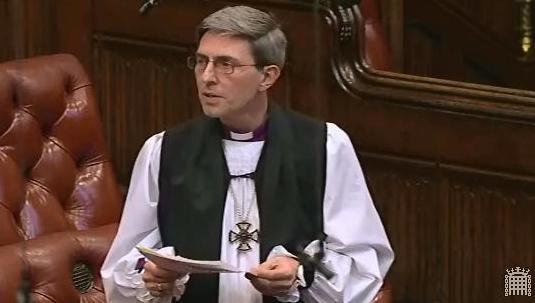
The Lord Bishop of Leicester: My Lords, will the Minister tell us what Her Majesty’s Government are doing to ensure that those on low incomes and living in the coldest homes are able to benefit from renewable heating technologies?
The Parliamentary Under-Secretary of State, Department of Energy and Climate Change (Baroness Verma): I am grateful to the right reverend Prelate for his question, because this Government have, through many measures, not only tried to respond to people living in very inefficient homes in urban areas, but also looked at how to reach out to people who are often off grid and help support them through the renewable heat incentive and other measures. I am very happy to write to the right reverend Prelate about a number of measures undertaken by this Government.

Questions to the Church Commissioners on the Archbishop of York’s Book ‘On Rock Or Sand’, Medical Ethics, the Anglican Communion, Financial Eduation, Women Bishops and Bats

Church Commissioners

In Church Commissioners Question TIme on Thursday 29th January 2015, the Rt Hon. Sir Tony Baldry MP answered questions on the Archbishop of York’s Book ‘On Rock Or Sand’, Medical Ethics of Mitochondrial Transfer, the Anglican Communion, Financial Education, Women Bishops and Bats in Churches

Continue reading “Questions to the Church Commissioners on the Archbishop of York’s Book ‘On Rock Or Sand’, Medical Ethics, the Anglican Communion, Financial Eduation, Women Bishops and Bats”

Bishop of St Albans – Flood Control (Written Answer)

On 29th January 2015, the Bishop of St Albans, the Rt Revd Alan Smith, received an answer to a written question on flood control.

Bishop of St AlbansThe Lord Bishop of St Albans: To ask Her Majesty’s Government what plans they have to ensure long-term support and funding for flood prevention schemes. [HL3997]

The Parliamentary Under-Secretary Department for Environment, Food and Rural Affairs (Lord De Mauley): This Government has developed a six-year programme of work, involving over 1,400 projects, to improve defences throughout the country between 2015 and 2021. This has been made possible by our record level of commitment by investing £2.3 billion in improving defences over the coming six years. Efficiency gains will ensure this funding goes even further. This work is projected to reduce the risk of flooding or erosion to at least 300,000 households by 2021, and avoid around £30 billion in economic damages.

(via Parliament.uk)

Education Minister praises Church school record on inclusion and community cohesion

On 28th January, Baroness Massey of Darwen asked Her Majesty’s Government what are the conditions which must be met before a new state-funded faith school or free school is allowed to be established; who sets and agrees the conditions; and how the conditions must guarantee a broad and balanced curriculum for pupils. The Bishop of Leicester, the Rt Revd Tim Stevens, asked a supplementary question:

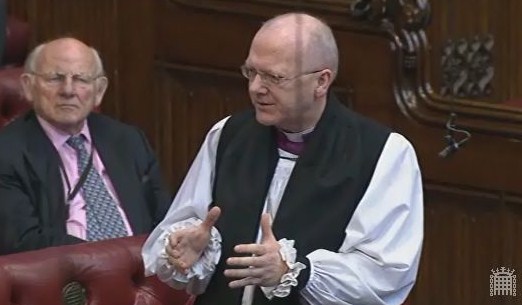
14.04.01 Bishop of LeicesterThe Lord Bishop of Leicester: My Lords, does the Minister agree that “faith school” covers a variety of different kinds of institution? Church of England schools are not faith schools in the narrow sense of providing an education for people of just one faith. In places such as Leicester they provide a rounded education for the whole community, including many of other faiths who value highly what they have to offer.

Lord Nash: I agree entirely with the right reverend Prelate. Many church schools are highly inclusive. A study by the University of York undertaken in 2009 praised the record of church schools on community cohesion.

(via Parliament.uk)