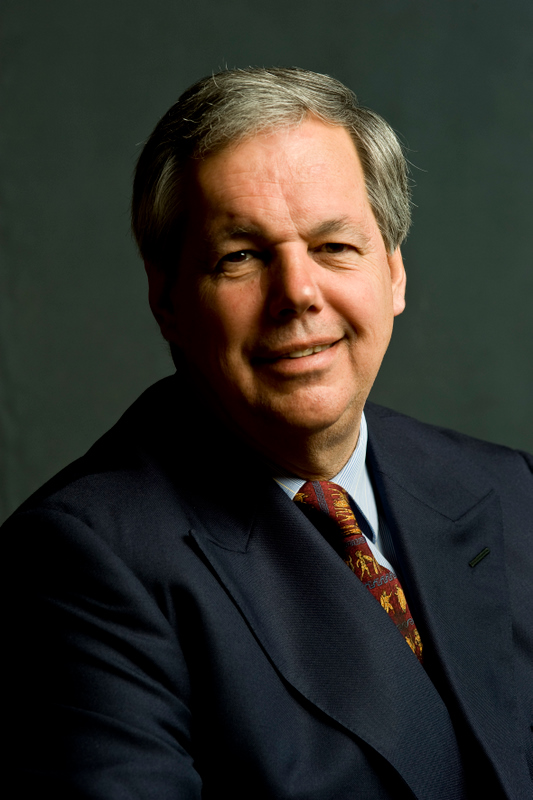
Second Church Estates Commissioner highlights role of Near Neighbours in community integration

During the questions following an urgent statement in the House of Commons on extremism, the Second Church Estates Commissioner, Rt Hon Sir Tony Baldry MP, raised the important role played by the Near Neighbours programme in promoting community integration.


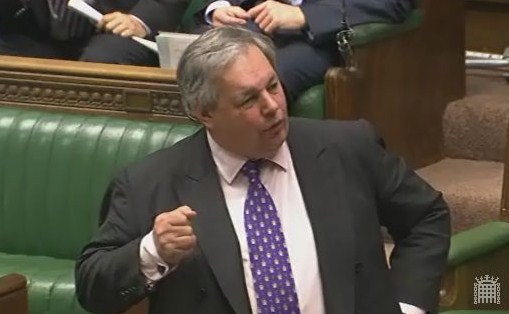
14.01 CCQ BaldrySir Tony Baldry (Banbury): May I remind my right hon. Friend that, after the general election, practically the first meeting the Secretary of State for Communities and Local Government attended was at Lambeth Palace, where all the nation’s faith leaders were present? He committed the Government to fund and support the Near Neighbours programme, which enables faith communities throughout the country to work together to promote integration and tackle extremism. If this “duff up the Home Secretary” urgent question has achieved nothing else this afternoon, it will at least, hopefully, better explain to the Opposition and others where the division of responsibilities lie in government for counter-terrorism on the one hand and community integration on the other.

Mrs May: My right hon. Friend is absolutely right. He is right to draw attention to the excellent work the Department for Communities and Local Government has been doing under the leadership of my right hon. Friend, the Secretary of State. Indeed, my right hon. Friend, the noble Baroness Warsi has been doing very important work to bring communities together, particularly faith communities, to share their experiences and increase understanding between them. That is a vital part of the integration work that I would have hoped we all, across the Chamber, accept is necessary. We should support it wherever we see it.

(via Parliament.uk)

Free Schools – independent or interdependent? Question from Bishop of Oxford

In the House of Lords on 14th May 2014, Baroness Jones of Whitchurch asked Her Majesty’s Government “what early intervention measures they are putting in place to reduce the educational and financial implications of failing free schools.” The Bishop of Oxford, who chairs the Church of England’s Board of Education, asked a supplementary question:

Bishop of Oxford

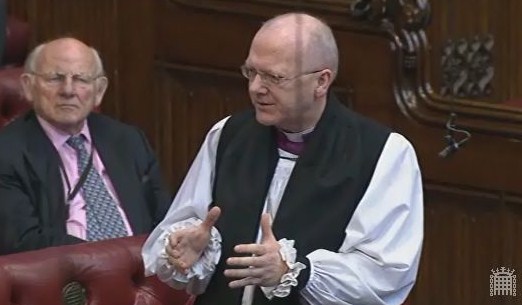
The Lord Bishop of Oxford: My Lords, given that prevention is better than costly cure, can the Minister let us know what is being done to make sure that free schools are established as groups of interdependent schools, rather than independent and autonomous units? Can he let us know how what we have learnt from the academies programme—that we need to get schools grouped together in multi-academy trusts—is being transferred to free schools?

Lord Nash: The right reverend Prelate makes an extremely good point. Although it is true that a number of outstanding schools have been established entirely independently, the way forward is the school-to-school support model, with schools operating in local clusters and secondaries working with their primaries. We are taking this learning, which has been very successful in the academy movement, into the free schools movement.

(via Parliament.uk)

Nigerian kidnapping – Bishop of Oxford asks Government about dialogue with Boko Haram

In the House of Lords on 14th May 2014 Lord Bach asked Her Majesty’s Government “what action they have taken to assist the Government of Nigeria to rescue the schoolgirls abducted by Boko Haram.” The Bishop of Oxford, Rt Rev John Pritchard, asked a supplementary question:

11.12.15 Bishop of Oxford

The Lord Bishop of Oxford: My Lords, would the Minister agree with the comments made by the most reverend Primate the Archbishop of Canterbury last weekend to the effect that, however abhorrent we may feel the organisation to be, it is necessary to engage in some way with Boko Haram and to do that at different levels? If that is the case, would the Minister give some indication of what kind of support or encouragement the Government are giving to that dialogue between Boko Haram and the Government of Nigeria?

Baroness Warsi: The most reverend Primate’s comments about negotiations or discussions with Boko Haram are quite right and, as the right reverend Prelate says, they are certainly something which the Nigerian Government have to take forward. I know that he has a considerable history of dealing with this kind of situation in Nigeria and, indeed, of being involved in mediation processes. However, the message that HMG have been strongly sending out, along with our international partners, is that this is an abhorrent crime, that the girls must be returned unconditionally and that this is not something we need to feel that Boko Haram has negotiating power over. There is a longer-term challenge in relation to tackling Boko Haram but I am not sure that that needs to be done over the lives of these young girls.

(via parliament.uk)

Displacement in Syria – Written Answer

Written answer, received on 14th May 2014

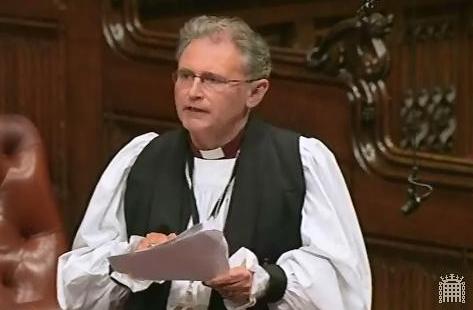
13.10 Bishop of CoventryThe Lord Bishop of Coventry: To ask Her Majesty’s Government what assessment they have made of the displacement of people from the Syrian town of Kessab.[HL6832]

Baroness Northover (LD): According to UN sources, approximately 1,500 to 1,600 families have been displaced from the city of Kessab.

(via Parliament.uk)

Iran – Written Question

On 13th May 2014, the Rt Revd Christopher Cocksworth, Bishop of Coventry, received an answer to a written question on Iran.

13.10 Bishop of CoventryThe Lord Bishop of Coventry: To ask Her Majesty’s Government whether the question of human rights and freedom of religion and belief was amongst the range of international issues discussed by the Foreign Office’s Political Director, Sir Simon Gass, when he met senior Iranian officials whilst visiting Iran in April.

Baroness Warsi: Human rights were not amongst the issues discussed by Sir Simon Gass on his visit to Iran in April: his interlocutors did not have responsibilities in this area. However, the UK’s non-resident Chargé d’Affaires discussed human rights with a range of Iranian government officials during his visit to Iran on 12 March 2014. He raised the use of the death penalty, freedom of religion and the workings of the criminal justice system. Prior to that, the Secretary of State for Foreign and Commonwealth Affairs, my Rt. Hon. Friend the Member for Richmond (Yorks) (Mr Hague), raised Iran’s human rights records with Iranian foreign minister Zarif at the UN General Assembly on 23 September 2013.

(via Parliament.uk)

Energy, Consumer Credit Advertising and Iran – Written Questions

On 13th May 2014, the Rt Revd Alan Smith, Bishop of St Albans, received answers to written questions on petroleum gas and oil, consumer credit advertising, and Iran.


14.03 Bishop of St AlbansEnergy: Petroleum Gas and Oil

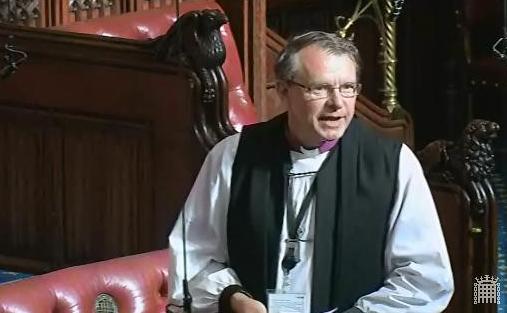
The Lord Bishop of St Albans: To ask Her Majesty’s Government how they intend to ensure the continuing affordability of liquid petroleum gas and oil for those households which are not on mains gas supply.

The Parliamentary Under-Secretary of State, Department of Energy and Climate Change (Baroness Verma): Her Majesty’s Government is acutely aware of the difficulties people have experienced with the price of liquid petroleum gas and heating oil. The price of LPG and oil is influenced by a range of factors, including crude oil prices (the major factor), refinery capacity, stock levels, distribution costs and retail margins.

Continue reading “Energy, Consumer Credit Advertising and Iran – Written Questions”

Bishop of St Albans receives answers to written questions on benefits, electricity and housing

On 12th May 2014, the Rt Revd Alan Smith, Bishop of St Albans, received answers to three written questions on benefits, electricity and housing.

Benefits

14.03 Bishop of St AlbansThe Lord Bishop of St Albans: To ask Her Majesty’s Government what assessment they have made of the financial impact on people on low incomes of uprating most cash benefits and tax credits by one per cent from April 2013 rather than in line with inflation.

The Parliamentary Under-Secretary of State, Department for Work and Pensions (Lord Freud): For 2013/14, the main rates of working-age benefits, statutory payments and tax credits were up-rated by one per cent in the Social Security Benefits Up-rating Order 2013. The Welfare Benefits Up-rating Act 2013 provided for the one per cent increase to apply for 2014/15 and 2015/16. Both of these were accompanied by Impact Assessments.

As part of his ongoing public sector equality duty under the Equality Act 2010 to monitor impacts on “protected groups”, the Secretary of State continues to monitor the impacts of the Welfare Benefits Up-rating Act 2013 in light of any changes to the underlying rate of inflation. The underlying rate of inflation for increases in 2014/15 is similar to that forecast by the Office for Budget Responsibility and used in the Impact Assessment. It is therefore likely that the impacts on affected households will be broadly similar to those detailed in the Impact Assessment.

(via Parliament.uk)

Continue reading “Bishop of St Albans receives answers to written questions on benefits, electricity and housing”

Bishop of Oxford asks for Government assurances on nurse / patient ratios in NHS

On 12th May 2014 Baroness Kennedy of Cradley asked Her Majesty’s Government “what steps are being taken to ensure adequate levels of nursing staff in the National Health Service.”

The Bishop of Oxford asked a supplementary question, drawing parallels between staffing obligations and the situation of Thanet Clinical Commissioning Group, which had been warned about disregarding NICE guidelines on another case:

11.12.15 Bishop of OxfordThe Lord Bishop of Oxford: My Lords, given the court ruling last week against  Thanet Clinical Commissioning Group, saying that it was obliged to follow NICE guidelines unless a special factor could be determined that would justify departure, will Her Majesty’s Government give an assurance that the same test will apply to NHS trusts in regard to the ratio of nurses and patients?

Earl Howe: The guidance issued today by NICE on staffing ratios, to which I think the right reverend Prelate is specifically referring, is in draft, but the deputy chief executive of NICE has stressed that there are no floor or ceiling numbers on the required number of nursing staff that can be applied either across the whole of the NHS or in a particular ward setting. What the profession is seeking, and what NICE is looking to give it, is a reference tool or guideline that will enable it to judge correct staffing levels in accordance with the particular circumstances of a ward and the skill mix of the staff on that ward. It is a guideline rather than a mandatory prescription.

(via Parliament.uk)

Apprenticeships – Written Questions

On 6th May 2014, the Rt Revd Alan Smith, Bishop of St Albans, recieved answers to two written questions on the subject of apprenticeships.

14.03 Bishop of St AlbansThe Lord Bishop of St Albans: To ask Her Majesty’s Government what percentage of apprentices enter into employment with the company to which they were apprenticed after their apprenticeship scheme has finished.

Lord Ahmad of Wimbledon (Con): We publish information on learning outcomes on the Further Education Choices website to help better inform learner choices. This website presents information on learner outcomes with any employer as well as other destinations:

http://fechoices.skillsfundingagency.bis.gov.uk

Continue reading “Apprenticeships – Written Questions”

Bishop of Worcester raises concerns about use of sexual violence in Central African Republic (Written Questions)

On 6th May 2014, the Rt Revd John Inge, Bishop of Worcester, recieved answers to two written questions on the Central African Republic.

WorcesterThe Lord Bishop of Worcester: To ask Her Majesty’s Government what assessment they have made of the extent to which sexual violence has been used by all parties to the conflict in the Central African Republic.

Lord Wallace of Saltaire: Reports suggest that sexual violence in conflict is widespread in the Central African Republic (CAR). UN Security Council Resolution 2149 on CAR authorises a UN Peacekeeping Operation which will, as part of its mandate, be required to help to prevent sexual violence, and contribute to efforts to identify and prosecute perpetrators. The UK is also looking to provide funding to the African Union (AU)’s response to the urgent needs of CAR’s victims of sexual violence, and to track and report on specific occurrences of sexual violence. We encourage CAR to endorse the Declaration of Commitment to End Sexual Violence in Conflict and to attend the Global Summit to End Sexual Violence in Conflict, in London in June 2014.


Continue reading “Bishop of Worcester raises concerns about use of sexual violence in Central African Republic (Written Questions)”