
Bishop of Salisbury welcomes Government waste strategy, calls for more action on plastics recycling

On 19th December 2018 the Lords debated a motion from Baroness Neville-Rolfe, “To move that this House takes note of the threat to the environment posed by plastic and the case for improved recycling.” The Bishop of Salisbury, Rt Revd Nicholas Holtam, spoke in the debate:

The Lord Bishop of Salisbury: My Lords, I add my thanks to the noble Baroness, Lady Neville-Rolfe, for her persistence on plastic and for securing this debate. In the light of the comments of the noble Baroness, Lady Parminter, I observe that I enter the debate after three inspiring women.

I want to say “Well done” to the Government on the resources and waste strategy announced yesterday. It must be a bit of a relief to find an issue around which there is a good level of agreement for us to work on, but it means that there is a danger of complacency in the face of such an urgent task. Continue reading “Bishop of Salisbury welcomes Government waste strategy, calls for more action on plastics recycling”

Bishop of Chichester on how the arts contribute to the wellbeing of society


On December 19th 2018 the House of Lords debated a motion from Lord Moynihan, “That this House takes note of how sport, recreation, and the arts contribute to wellbeing of society.” The Bishop of Chichester, Rt Revd Martin Warner, spoke in the debate:

The Lord Bishop of Chichester: My Lords, I too am grateful to the noble Lord, Lord Moynihan, for introducing the debate and for his magnificent speech, which covered so many areas which indicate how transformative sport can be—in ways that I think the arts can mirror.
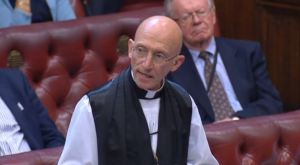
This Christmas very large numbers will attend carol services in churches across the country. Church of England statistics for 2017 indicate that nearly 8 million people attended a Christmas service of some kind, drawn by a combination of music, architectural environment and the drama of liturgy—a topical example of the arts and social well-being in the bringing together of practising Christians and others who find that this celebration of Christmas breaches barriers and creates community and a deep sense of belonging and well-being. Of course, this experience is not only for those who are privileged but happens in our churches that serve the outer estates and areas of deprivation in our nation. Continue reading “Bishop of Chichester on how the arts contribute to the wellbeing of society”

Bishop of Chichester calls for strengthening of Religious Education to improve religious literacy of teachers and students

On 17th December 2018 Lord Alderdice led a short debate on the question, “To ask Her Majesty’s Government what assessment they have made of the report by the Commission on Religious Education Religion and Worldviews: the way forward, published in September; and whether they intend to publish any response”. The Bishop of Chichester, Rt Revd Martin Warner, spoke in the debate:

The Lord Bishop of Chichester: My Lords, I am grateful to the noble Lord, Lord Alderdice, for securing this debate and for placing our understanding of how to be in the world as the foundation for this report, Religion and Worldviews: the way forward. A national plan for RE. The report has been widely welcomed by many who are committed to the best possible teaching of RE, including the Church of England’s education office. We are grateful to the very reverend John Hall for leading the commission that has produced the report. Continue reading “Bishop of Chichester calls for strengthening of Religious Education to improve religious literacy of teachers and students”

Bishop of Chichester on care and support for those in the workplace with a terminal illness

On 17th December 2018 Lord Balfe led a debate in the House of Lords on the question, “To ask Her Majesty’s Government what steps, if any, they will take to prevent workers being dismissed from their jobs following diagnosis of a terminal illness.” The Bishop of Chichester, Rt Revd Martin Warner, spoke in the debate that followed:

The Lord Bishop of Chichester: My Lords, I greatly welcome this debate, and thank the noble Lord, Lord Balfe, for bring this important matter to our attention. I also welcome the TUC’s support of the courageous work of Jacci Woodcock in highlighting the issue, on the basis of her own experience.

As a trustee of the diocese of Chichester, I share responsibility for employing nearly 100 staff but also for the care of some 400 clergy. These clergy are office-holders, not employees, and many live in accommodation they occupy by virtue of their office. A terminal illness for one of those clergy, as for anybody else, carries the prospect of multiple concerns, but especially for those dependent on them. The loss of income and a home are primary concerns, alongside the personal challenges of failing health and dependence on others—often difficult for those more familiar with caring for others. The potential loss of their home goes right to the heart of the fear of death and the implications for a family—particularly if there are issues such as schooling and the future of children—that a terminal illness brings. When a family is most challenged, networks of social relationships are immensely sensitive. Continue reading “Bishop of Chichester on care and support for those in the workplace with a terminal illness”

Archbishop of Canterbury leads debate on reconciliation in British foreign, defence and international development policy

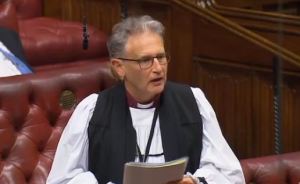
On 14th December 2018 the Archbishop of Canterbury, Most Revd Justin Welby, led a debate in the House of Lords on the Motion: “that this House takes note of the role of reconciliation in British foreign, defence and international development policy”.  The Archbishop’s opening and closing speeches in the debate are below. The Bishop of Coventry also spoke in the debate and his speech can be seen here.

The Archbishop of Canterbury: My Lords, I am grateful to the usual channels for permitting this debate; to the noble Lord, Lord Collins of Highbury, for responding on behalf of the Opposition; to the noble Lord, Lord Alderdice; and to the Minister, the noble Earl, Lord Howe, for their time and contributions today. My noble kinsman Lord Williams of Elvel said when I came into the House some years ago, “The wonderful thing about the House of Lords is that whatever you say, there will be a world expert listening to you”. Looking down the list of those who will contribute today, I am conscious of the expertise in the House, including a Nobel laureate, and I am greatly looking forward to hearing from noble Lords whose combined expertise and experience is sure to provide us with much to reflect on.
Continue reading “Archbishop of Canterbury leads debate on reconciliation in British foreign, defence and international development policy”

Bishop of Coventry speaks on peacebuilding and reconciliation

On 14th December 2018 the Archbishop of Canterbury, Most Revd Justin Welby, led a debate in the House of Lords on the Motion: “that this House takes note of the role of reconciliation in British foreign, defence and international development policy”. The Bishop of Coventry, Rt Revd Chruistopher Cocksworth also spoke in the debate:
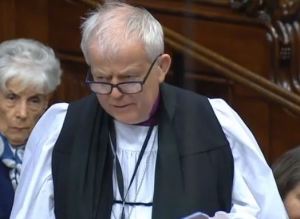
The Lord Bishop of Coventry: My Lords, I am grateful to follow the moving tribute from the noble Lord, Lord Elton, to the Coptic Orthodox Church. I join him in that. I join others in thanking the most reverend Primate the Archbishop of Canterbury for his ground-breaking speech. I pay tribute to his deep commitment to reconciliation on multiple levels.

Like the most reverend Primate, I have been shaped by the Coventry story, with its profound narrative of both the human propensity towards disruption of relationships, with the danger, destruction and death that ensues, and the power of hope to prevail over even the darkest forces—a hope built on the restorative capacity of reconciliation, a virtue that needs to be operative even during war, preparing the way for peace.

Continue reading “Bishop of Coventry speaks on peacebuilding and reconciliation”

Bishop of Salisbury supports call for review into Operation Conifer

On 11th December 2018 the House of Lords debated a Motion from Lord Lexden, “That this House regrets the failure by Her Majesty’s Government to institute an independent inquiry into Operation Conifer conducted by the Wiltshire police into allegations of child sex abuse against Sir Edward Heath; and calls on Her Majesty’s Government to make proposals for an independent review of the seven unsubstantiated allegations left unresolved at the end of Operation Conifer.” The Bishop of Salisbury, Rt Revd Nicholas Holtam, spoke in the debate:
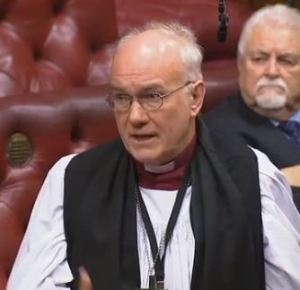
The Lord Bishop of Salisbury: My Lords, I thank the noble Lord, Lord Lexden, for his doggedness in persisting with this, and the other Members of the House who have also done so.

I come at this from something of a different angle. We are dealing with an extremely difficult issue as a society. The Church of England knows something about it—but so do we all. This is really difficult stuff. It would not be enough to have an inquiry into the seven unresolved and said to be unsubstantiated allegations. It is about what we have learned from our experience, about good practice, about what has gone wrong and about how we develop things for the future. Continue reading “Bishop of Salisbury supports call for review into Operation Conifer”

Bishop of Chester questions strength of protections of new online pornography regulations

On 11th December 2018 the House of Lords considered a motion to approve the Online Pornography (Commercial Basis) Regulations 2018. During the debate the Bishop of Chester, Rt Revd Peter Forster, spoke:
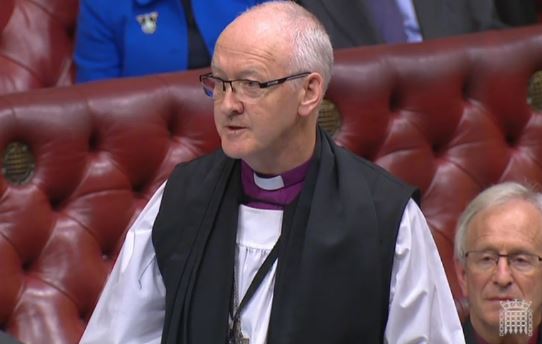
The Lord Bishop of Chester: My Lords, I am pleased to speak in general support of the regulations and guidance. They relate to matters which I and others raised during the passage of the Digital Economy Bill in 2017 and, more broadly, to issues debated by the House a couple of years ago in a balloted debate that I introduced. The subject of that debate was the impact of pornography on our society. While there was some disagreement over the impact of pornography on adults, there was virtual unanimity that children needed to be protected from pornography—as far as this could reasonably be achieved. I seem somehow, by default, to have become the episcopal expert on pornography. I am trying to live that down. It is just the way it has fallen—although I often find myself talking from these Benches about things I have not had much experience of. Continue reading “Bishop of Chester questions strength of protections of new online pornography regulations”

Bishop of Leeds speaks in debate on EU Withdrawal Agreement

On 5th December 2018 the House of Lords debated a motion to take note of the Government’s EU Withdrawal Agreement, alongside an Opposition motion to regret it. The Bishop of Leeds, Rt Revd Nick Baines, spoke in the debate:

The Lord Bishop of Leeds: My Lords, I wish that I could pack as much into a single speech as the noble Lord, Lord Bilimoria, but I defy the challenge.
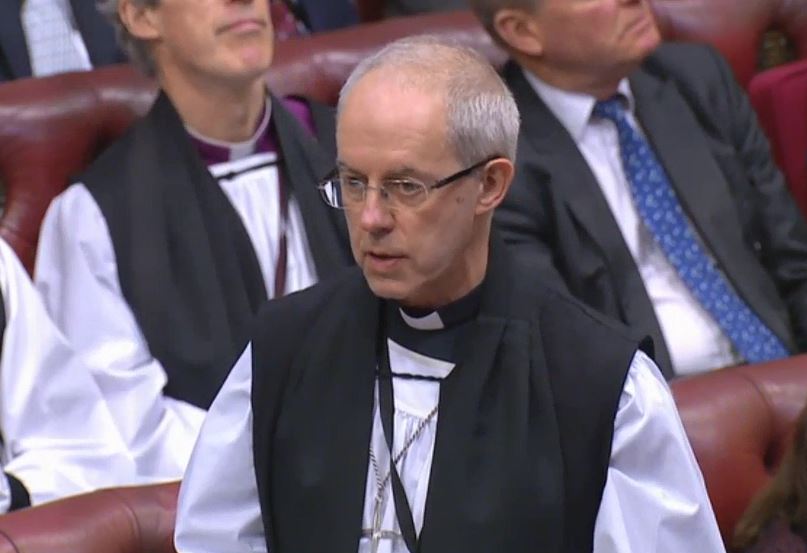
It is perhaps not a bad idea at this stage in the debate just to take a step back and to remember what the point of all this is. I was doing “Thought for the Day” on Radio 4 this morning and picked up on three words from the title of a Theos think-tank report on resilience in the north-east of England—people, place and purpose. They are three words that offer us a lens through which to see what all this is about. I endorse what the most reverend Primate said this morning in his speech.

Whatever the ultimate outcome, one of the legacies of the Brexit process thus far is, as I have said before, a corruption of public discourse, polarisation between people and communities, and a too frequent reduction of the polity to the merely economic. People are now too often categorised as either Punch or Judy; argument and nuance are dismissed in favour of emotive ad hominem judgment.

Continue reading “Bishop of Leeds speaks in debate on EU Withdrawal Agreement”

Archbishop of Canterbury speaks on EU Withdrawal Agreement

On 5th December 2018 the House of Lords debated a motion to take note of the Government’s EU Withdrawal Agreement, alongside an Opposition ‘motion to regret’. The Archbishop of Canterbury, Most Revd and Rt Hon Justin Welby, spoke in the debate, emphasising the importance of reconciliation and for the poorest in society to be protected should there be an economic downturn. 

The Archbishop of Canterbury: My Lords, of the choice of psalms that form part of our daily prayers in the Lords, we have Psalm 46, which we heard today,

“The nations rage, the kingdoms totter”,

and Psalm 121, which we will doubtless hear tomorrow,

“I lift up my eyes to the hills …

My help comes from the Lord,

who made heaven and earth”.

Eyes need to be lifted now more than ever, and that is a gift of this House, perhaps more than others. It is a skill and a calling here.

The withdrawal agreement and the political declaration are essentially political more than economic; the debate has moved on from the referendum campaign, which was the other way round. Another change, as we know particularly since yesterday evening, is that the great decisions are now left firmly in the hands of Parliament—as is right.

The decision on this agreement and consequent legislation is thus about not just the immediate politics but national policy and identity, and our future place in the world and how we develop it. It is long term: it is for the child born yesterday and not just for parliamentarians today. The decision must be made in the interests of those who will be here for the long term. In the midst of political struggle, that is a very hard thing to do, but it is the calling of Parliament and one to which it has risen in equal crises in the past. Continue reading “Archbishop of Canterbury speaks on EU Withdrawal Agreement”