
 On 18th July 2019 the House of Lords debated a motion from Lord Cope of Berkeley (Con) asking Government “what assessment they have made of the government of the United States’ Peace to Prosperity economic plan for Palestine, published on 26 June”. The Bishop of Southwark, Rt Revd Christopher Chessun, spoke:
The Lord Bishop of Southwark: My Lords, I add my congratulations to those already offered to the noble Lord, Lord Cope of Berkeley, on this timely and important debate. As many of your Lordships may know, I generally visit the Holy Land twice a year. Each January, I accompany the Vatican’s Holy Land co-ordination group to the area as the sole Anglican bishop. I have experienced much Israeli and Palestinian hospitality down the years. I am only too well aware of the State of Israel’s just concerns for its security and its safeguarding of the holy places of Jerusalem, but I have witnessed Bethlehem walled in on three sides, Palestinian agricultural land divided and appropriated by military structures, and the acquisition of swathes of the West Bank and east Jerusalem for the settlement of Israel’s citizens and the exclusion of Palestine’s.
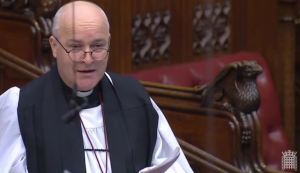
 On 9th July 2019 the Bishop of Durham, Rt Revd Paul Butler, led a debate in the House of Lords on the question to Government, “what assessment they have made of Project 17’s report Not Seen, Not Heard: Children’s experiences of the hostile environment”:
 The Lord Bishop of Carlisle: My Lords, I too am most grateful to the noble Lord, Lord Young, for bringing this very important subject to our attention. Like him and both the noble Lords who have spoken, I do not suppose that anybody would argue against the value of apprenticeships, or the principles that undergird the apprenticeship levy. Indeed, the Church of England is a very strong supporter of both, as well as a significant contributor to the levy. If that is an interest, I am glad to declare it. We are keen to play our part in improving skills and increasing productivity throughout the UK workforce, as well as providing more opportunities for young people to find worthwhile employment.
 The Lord Bishop of St Albans: My Lords, I too thank the noble Lord, Lord Bird, for bringing forward this debate, for his distinctive introduction of a kind that we always enjoy when he speaks in the House, and for his tireless work in trying to support people who, for all sorts of reasons, find themselves disadvantaged. I pay tribute to him.
 The Lord Bishop of Oxford: My Lords, I too welcome this debate and thank the noble Lord, Lord Bird, very warmly for bringing it. I welcome his proposals. As the noble Lord, Lord Layard, said, the foundation is a moral and ethical case. That moral case has shifted in recent years because of the realisation of the effects of the Anthropocene era. Humanity’s effect on the environment means that the interests of not just the next generation but every generation beyond that need to be protected in our policy-making and debate.
 The Lord Bishop of Leeds: My Lords, I, too, am grateful to the noble Lord, Lord Bird, for bringing this debate to us. Despite wanting to say one or two things,
 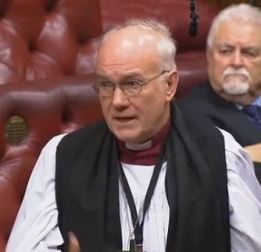 The Lord Bishop of Chester: My Lords, I echo the excellent opening speech by the noble Baroness, Lady Berridge, by saying that I view anti-Semitism as perhaps the greatest tragedy and disgrace in the history of the Christian Church.
 The Church of England in Parliament
You must be logged in to post a comment.