
On 14th February 2019 the House of Lords held a short debate on a question from Lord Roberts of Llandudno, “to ask Her Majesty’s Government what steps they will take to improve immigration procedures in the United Kingdom.” The Bishop of Durham, Rt Revd Paul Butler, took part:

The Lord Bishop of Durham: My Lords, I too thank the noble Lord for securing this debate, and need to declare my own interest, as laid out in the register, as a trustee of Reset.
Given the velocity with which the incredibly narrow immigration Bill will likely be sped through this House, any and all opportunities for Parliament to provide scrutiny of immigration is to be welcomed. Without more scrutiny we seem to risk squandering the potential for a reset moment in the way that the UK thinks, debates and legislates about migration.
 The Lord Bishop of Carlisle: My Lords, this NHS long-term plan is very welcome, and from these Benches I commend all those who contributed to it. It is a comprehensive plan—not easy when health is such a wide-ranging topic. It is also realistic about the many challenges we still face. When it comes to issues such as smoking, alcohol dependence and air pollution, I applaud the strong emphasis on public health and prevention, along with the necessary reminder that responsibility for our own health does not belong solely to other people.
 The Lord Bishop of Chelmsford: As Bishop of Chelmsford, I am also proud to be the Bishop of Becontree, Harlow and Basildon, three of the nation’s boldest attempts by policymakers in the last century to address the housing needs of London and the south-east. When Becontree was built in the 1920s, it was Europe’s largest public housing development.
  On 30th January 2019 the House of Lords debated a question from Baroness Tyler of Enfield, “To ask Her Majesty’s Government what assessment they have made of the recent concerns expressed by general practitioners that children and young people with mental health problems are unable to access National Health Service treatments; and what steps they will take to address them.” The Bishop of Carlisle, Rt Revd James Newcome, spoke in the debate:
 On 24th January 2019 the Bishop of Worcester, Rt Revd John Inge, spoke in a debate tabled by Lord Scriven, “That this House takes note of the ability of local authorities across the United Kingdom to deliver essential services to their communities.”
 On 21st January 2019 the House of Lords debated a motion from Baroness Stroud “To ask Her Majesty’s Government what assessment they have made of metrics to measure United Kingdom poverty, in the light of the report from the Social Metrics Commission.” The Bishop of Portsmouth, Rt Revd Christopher Foster, spoke in the debate:
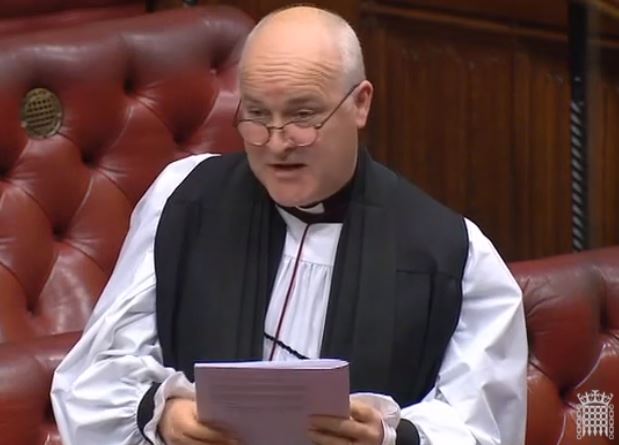 The Lord Bishop of Chelmsford: My Lords, an unregulated digital environment is causing moral decay. There is no time to reiterate the various harms that are being caused, but they are deep-seated, corrosive and pervasive. Just last week I was at a school in Essex talking to 7 to 11 year-olds about their use of a game called TikTok. All of them were using it. The lower age limit for using it is 13. As the noble Baroness, Lady Kidron, pointed out, the digital world assumes that all users are equal and all users are adults, whereas in fact one-third of users worldwide are children. Therefore, their health, well-being and development require us to ensure that the internet, and the many ways that children access it, are as safe as they can be. This has usually meant creating special safe places for children or safety options that can be activated.
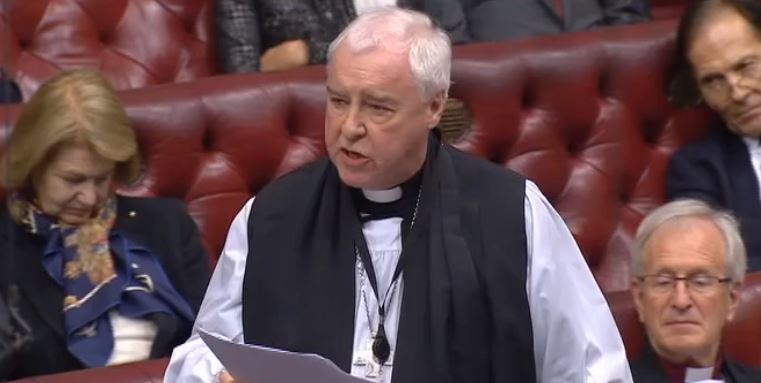 The Lord Bishop of Lincoln: My Lords, I am honoured to speak after the noble Baroness—honoured and a little daunted. This is the first time I have spoken on this issue. I therefore want to say something about my context of Lincoln and then consider what a Bishop might usefully add to this debate.
 The Church of England in Parliament
You must be logged in to post a comment.