On 4th March 2019 the House of Lords debated the Feed-in Tariffs (Closure, etc.) Order 2018, and a ‘Motion to Regret’ criticising the Order from Baroness Jones of Moulsecoomb. The Bishop of Salisbury, Rt Revd Nicholas Holtam, spoke in support of Baroness Jones’s Motion, and a transcript is below:
Motion to Regret: That this House regrets, in the light of the worsening climate emergency, that the Feed-in Tariffs (Closure, etc.) Order 2018 will end the export tariff for small-scale renewable energy without any replacement scheme in place; will result in new installations having to export their electricity to the National Grid for free; and will harm jobs and investment in the renewable energy industry (SI 2018/1380).
 The Lord Bishop of Salisbury: My Lords, I support the noble Baroness’s Motion of regret. It is almost inevitable that a debate such as this will range more widely than the specific issues that the noble Baroness is focused on. I hope your Lordships will forgive me for beginning in Salisbury, my cathedral city, on a day when there has been a considerable amount of reflection about events there a year ago and their significance for the city and internationally.
We were grateful for the Prime Minister’s visit earlier today. I particularly thank the council, Wiltshire Police and the fire and ambulance services, as well as the district hospital, Porton Down and the military, for their commitment through the year. Wiltshire County Council has led a programme of recovery. Although business is still badly affected, we are making progress. We are grateful for the involvement of the noble Lord, Lord Henley.
From those ghastly events that began to unfold a year ago, we have learned not just about the need to recover but about using a crisis as an opportunity to rethink what sort of city Salisbury can be. The same is true of the environmental crisis we face.

 The Lord Bishop of Oxford: My Lords, I thank the Minister for the repetition of the Statement and for the guidelines. The Church of England’s chief education officer has in particular welcomed the stronger impetus on teaching faith perspectives relevant to people of all faiths and none, irrespective of the kind of school that they attend, which is key to combating religious prejudice. I underline the concerns raised by noble Lords about resourcing.

 The Lord Bishop of Carlisle: My Lords, this NHS long-term plan is very welcome, and from these Benches I commend all those who contributed to it. It is a comprehensive plan—not easy when health is such a wide-ranging topic. It is also realistic about the many challenges we still face. When it comes to issues such as smoking, alcohol dependence and air pollution, I applaud the strong emphasis on public health and prevention, along with the necessary reminder that responsibility for our own health does not belong solely to other people.
 The Lord Bishop of Chelmsford: As Bishop of Chelmsford, I am also proud to be the Bishop of Becontree, Harlow and Basildon, three of the nation’s boldest attempts by policymakers in the last century to address the housing needs of London and the south-east. When Becontree was built in the 1920s, it was Europe’s largest public housing development.
 On 30th January 2019 the House of Lords debated a question from Baroness Tyler of Enfield, “To ask Her Majesty’s Government what assessment they have made of the recent concerns expressed by general practitioners that children and young people with mental health problems are unable to access National Health Service treatments; and what steps they will take to address them.” The Bishop of Carlisle, Rt Revd James Newcome, spoke in the debate:
 On 24th January 2019 the Bishop of Worcester, Rt Revd John Inge, spoke in a debate tabled by Lord Scriven, “That this House takes note of the ability of local authorities across the United Kingdom to deliver essential services to their communities.”
 On 21st January 2019 the House of Lords debated a motion from Baroness Stroud “To ask Her Majesty’s Government what assessment they have made of metrics to measure United Kingdom poverty, in the light of the report from the Social Metrics Commission.” The Bishop of Portsmouth, Rt Revd Christopher Foster, spoke in the debate:
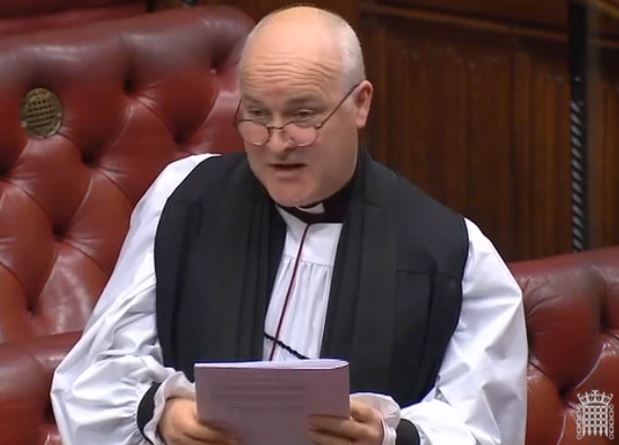 The Lord Bishop of Chelmsford: My Lords, an unregulated digital environment is causing moral decay. There is no time to reiterate the various harms that are being caused, but they are deep-seated, corrosive and pervasive. Just last week I was at a school in Essex talking to 7 to 11 year-olds about their use of a game called TikTok. All of them were using it. The lower age limit for using it is 13. As the noble Baroness, Lady Kidron, pointed out, the digital world assumes that all users are equal and all users are adults, whereas in fact one-third of users worldwide are children. Therefore, their health, well-being and development require us to ensure that the internet, and the many ways that children access it, are as safe as they can be. This has usually meant creating special safe places for children or safety options that can be activated.


You must be logged in to post a comment.