Bishop of St Albans says UK must be a world leader in disability rights, post-Brexit

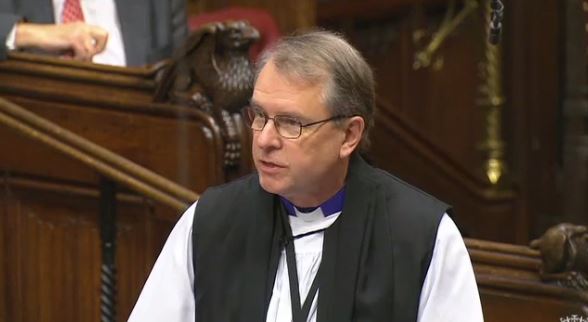
On 2nd February 2017 Baroness Scott of Needham Market led a debate in the House of Lords “to ask Her Majesty’s Government what assessment they have made of the impact on disabled people of the United Kingdom’s withdrawal from the European Union.” The Bishop of St Albans, Rt Revd Alan Smith, spoke in the debate:

stalbans190117The Lord Bishop of St Albans: I too am grateful to the noble Baroness, Lady Scott, for giving us the opportunity to reflect on this important subject. For many years, the European Union has been an important driver of disability rights in the UK, helping to improve disability access and strengthen non-discrimination laws right across Europe. It was the European Union that ensured non-discrimination laws were extended to smaller businesses, and the European Court of Justice which extended rights to carers and those in relationships with a disabled person, to name just two examples. With the proposed European Accessibility Act still some time away from implementation, I hope the Minister can understand the fear expressed by many in this House and outside it that a post-Brexit UK may start to fall behind its European counterparts when it comes to disability rights. Continue reading “Bishop of St Albans says UK must be a world leader in disability rights, post-Brexit”
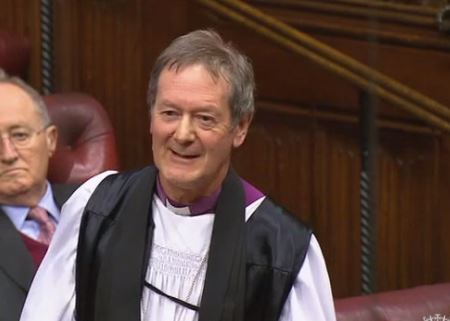
Bishop of Derby speaks on importance of employment opportunities for women and girls in developing countries

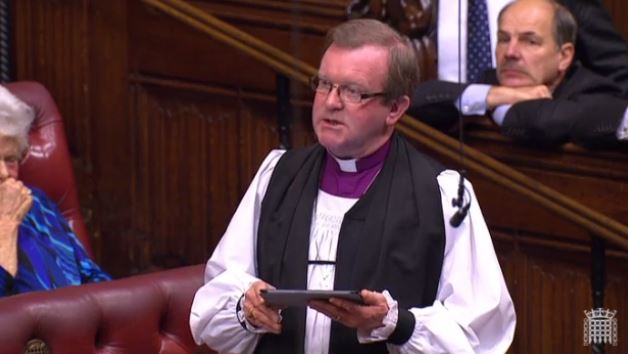
On 26th January 2017 Lord Loomba led a short debate in the Lords, “to ask Her Majesty’s Government, in the light of the report published by Oxfam on wealth disparity, what steps they are taking to ensure that women and girls in the developing world are equipped with the right employment skills.” The Bishop of Derby, Rt Revd Alastair Redfern, spoke in the debate:

derby-19117The Lord Bishop of Derby: My Lords, I thank the noble Lord, Lord Loomba, and congratulate him on the splendid work that his foundation does in targeting widows, who are some of the most vulnerable people. I also congratulate Oxfam on producing such a helpful report. Many noble Lords have spoken about the issues. I want to stress the fact that this is not just about inequality and discrimination; the report shows that they are both growing. That growth is the context in which we look at this debate. Continue reading “Bishop of Derby speaks on importance of employment opportunities for women and girls in developing countries”

Bishop of Durham speaks of Brexit uncertainty for families with EU citizens in UK

On 26th January 2017 Labour Peer Baroness Hayter of Kentish Town led a debate on a Motion “That this House takes note of the impact of the United Kingdom’s withdrawal from the European Union and potential withdrawal from the single market on the rights of European Union citizens living in this country and the United Kingdom’s future economic requirements.” The Bishop of Durham, Rt Revd Paul Butler, spoke in the debate:

durham-230117The Lord Bishop of Durham: My Lords, I thank the noble Baroness, Lady Hayter, for introducing this debate. At the outset, I will take the opportunity to thank the Minister, the noble Lord, Lord Bridges, for his participation in ongoing conversations with the Church of England around these issues and for the time he has taken in hearing our concerns. Continue reading “Bishop of Durham speaks of Brexit uncertainty for families with EU citizens in UK”

Archbishop of York speaks on importance of building communities as well as homes

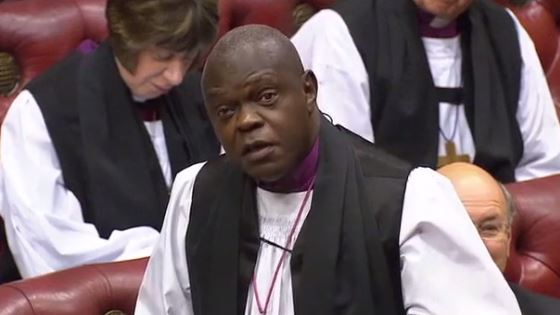
On 24th January 2017 Labour Peer Baroness Andrews moved “That the Grand Committee takes note of the Report from the Select Committee on National Policy for the Built Environment (Session 2015–16, HL Paper 100).” The Archbishop of York, Most Revd John Sentamu, spoke in the debate, highlighting the need not only for new homes but for community resources too:

york-170117The Archbishop of York: My Lords, it is essential that more homes are built to support the population of the United Kingdom. Parliament’s own publication estimates that a minimum of 230,000 new homes need to be built each year, a level of building not sustained since the 1970s, and two to three times above the current levels of supply. Some 81,000 households were estimated to be homeless or in temporary accommodation in 2013-14. It is young people in their late teens and 20s who are most unable to afford rents, particularly in the private sector. The gap between average household income and house price continues to rise, further reducing affordability for many households. Therefore, as affordable new-build housing is essential, the quality and effort put into designing the living environment and communal space becomes even more important. Continue reading “Archbishop of York speaks on importance of building communities as well as homes”

Bishop of Leeds – liberal international order not a natural given or inevitable right

On 19th January 2017 Liberal Democrat Peer Lord Bruce of Bennachie led a debate “that this House takes note of challenges to the liberal international order posed by the development of populism and nationalism around the world.” The Bishop of Leeds, Rt Revd Nick Baines, spoke in the debate:

leeds-20117-bThe Lord Bishop of Leeds: My Lords, I am grateful for the opportunity to have a debate like this, which allows us to identify some of the more philosophical dynamics at play in contemporary political developments. The excellent Library note for this debate makes it clear that language matters, and that definition of terms is not incidental. Populism is clearly more than a movement of people who listen only to the facts that support the prejudices that they have already nurtured, but it can exploit assertive language in such a way as to obscure truth. This is what I wish to focus on here. Whereas others will discuss the importance of a rules-based international order, I want to say something about language in a post-truth or post-factual world, and pose a couple of questions about the assumptions we make regarding history. Continue reading “Bishop of Leeds – liberal international order not a natural given or inevitable right”

Bishop of Derby – populist politics is best understood as a mood, not a movement

On 19th January 2017 Liberal Democrat Peer Lord Bruce of Bennachie led a debate “that this House takes note of challenges to the liberal international order posed by the development of populism and nationalism around the world.” The Bishop of Derby, Rt Revd Alastair Redfern, spoke in the debate:

derby-19117The Lord Bishop of Derby: My Lords, I too thank the noble Lord, Lord Bruce, for introducing this very important debate. I am not a professional politician, but I invite the House to look at the challenge and at the issues behind the case framed, very articulately, by the noble Lord.

First, I want to argue that populism is not a movement but a moment. One of the writers in the briefing for today talked about a thin ideology. It is not a detailed movement, as the noble Lord, Lord Bruce, said; it is a moment. Nietzsche, in the aptly named The Birth of Tragedy, talked about psychological bonding creating a headless movement—it is an expression of feeling, concern or anger, but it is headless. It is like a mood in the background and is really difficult to deal with. Just like President-elect Trump’s tweeting, it is technological chatter, but very difficult to deal with. It is a mood and not a movement. Those of us charged with a political task therefore have quite a challenge to know what we are getting hold of and how to react. Continue reading “Bishop of Derby – populist politics is best understood as a mood, not a movement”

Archbishop of York asks Government about situation of those seeking asylum in the UK after Brexit

Bishop of Portsmouth calls for review of defence priorities in light of changing global situation

On the 12th January Lord Robertson of Port Ellen hosted a debate “that this House takes note of the future capability of the United Kingdom’s armed forces in the current international situation”. The Bishop of Portsmouth, the Rt Revd Christopher Foster,  highlighted the need for a new Strategic Defence and Security Review, alongside recognition of new partnership and leadership roles.

BishPortsspeechtaxcreditsThe Lord Bishop of Portsmouth: My Lords, agree with it or not, Brexit was a decision to determine our own path. This debate requires us to consider critically whether we have the capacity to determine our own strategic path in the realm of defence and security. The extent of our global reach must reflect our economic and strategic interests as well as our security and military concerns in these changing times, which now make these considerations, as one analyst has put it, “supercharged”.

My anxiety is that there is a gap, if not sometimes a gulf, between rhetoric about our concerns and ambitions on the one hand and our constrained capability on the other.

Continue reading “Bishop of Portsmouth calls for review of defence priorities in light of changing global situation”

Bishop of St Albans presses Government on Burma and Rohingya citizenship

St Albans 2On the 12th January 2017 Baroness Kinnock of Holyhead held a debate about the treatment of the Rohingya Muslim people in Burma. The Bishop of St Albans, Rt Revd Alan Smith,  pressed the Government to encourage the Burmese authorities to move towards full citizenship and rights for the Rohingya community, and to allow access for independent monitors to northern Rakhine.

The Lord Bishop of St Albans: My Lords, the plight of the Rohingya Muslims is indeed desperate and the emergence in 2016 of an organised militant insurgency has only deepened the severity of that crisis. But such an escalation is hardly surprising. As the excellent report into the situation in Rakhine state by Crisis Group puts it:
“People pushed to desperation and anger, with no hope for the future, are more likely to embrace extremist responses, however counterproductive”.

The systematic persecution of the Rohingya people by the Burmese Government, most obviously manifested in the denial of citizenship to Rohingya Muslims, has created a fertile recruiting ground for militants. It is a simple human truth that people who have no say in their future and no means to participate in the democratic life of their country are liable to resort to extremism in order to achieve those means. Continue reading “Bishop of St Albans presses Government on Burma and Rohingya citizenship”

Bishop of Leeds calls for greater integration and connectivity in northern communities

 The Lord Bishop of Leeds: My Lords, many of the points I wanted to make have already been made, and I will not repeat them, but I do want to emphasise one or two points. When we talk about the north, I sometimes think it is a bit like the way we talk about Africa, as if it was one monolithic place. The north is not. It is very diverse, differentiated and complex. For example, we have heard about Bradford having a very young population, 23.6% being under the age of 16. Where are the jobs for them?