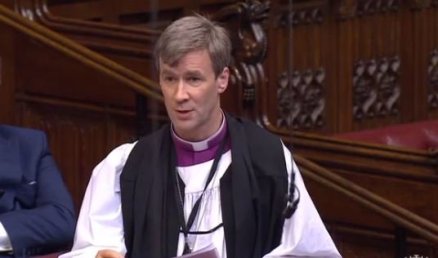
Bishop of Chester says soft power crucial to future UK influence in Middle East

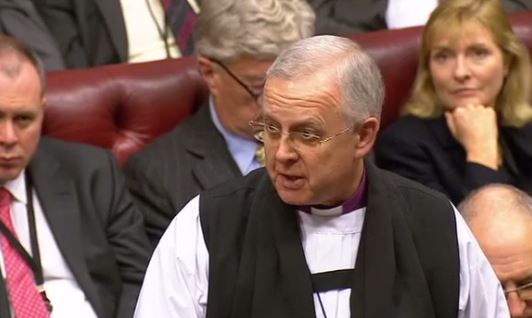
On 4th July 2017 Lord Howell of Guildford moved “that this House takes note of the Report from the International Relations Committee The Middle East: Time for a New Realism (2nd Report, Session 2016–17 HL Paper 159).” The Bishop of Chester, Rt Revd Peter Forster, spoke in the debate:
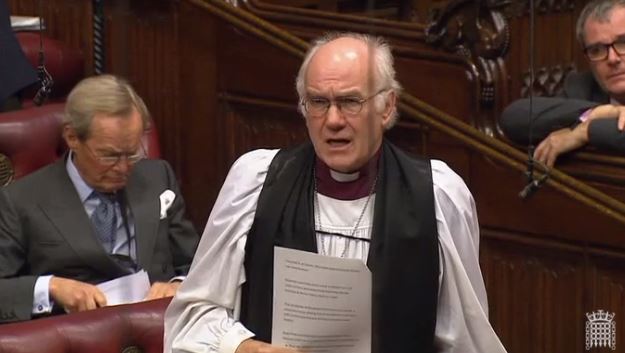
The Lord Bishop of Chester: My Lords, in my contribution to our debate on these complex matters, I will comment on two areas. I do so with great appreciation for the report, so comprehensively introduced by the noble Lord, Lord Howell. It is full of excellent, empirical detail. We ought also to pay attention to certain overarching factors or narratives.

For my first point, I go back 30 years to the excellent BBC series presented by the historian John Roberts, “The Triumph of the West”. A book of that ​title was published to accompany the series. I reread it recently and thought how perceptive and prescient it was. Perhaps politically correct censors would not allow the title these days, but John Roberts’ compelling thesis was that the essential message of contemporary history was the dominance and penetration of western civilisation, driven on by the power unleashed by modern science. The term “globalisation” had yet to be coined, but in part of course it names the phenomenon. Modern science derives from western European civilisation from the 16th century onwards and carries many of the implicit assumptions of our culture. John Roberts’ name is not as well known these days as it should be. I knew him a little because he was a history don and later warden of my old college, Merton, although in those days I was an unreconstructed and perhaps even reprobate chemist. Sadly, he died prematurely but his works are still worth reading again, as I say. Continue reading “Bishop of Chester says soft power crucial to future UK influence in Middle East”
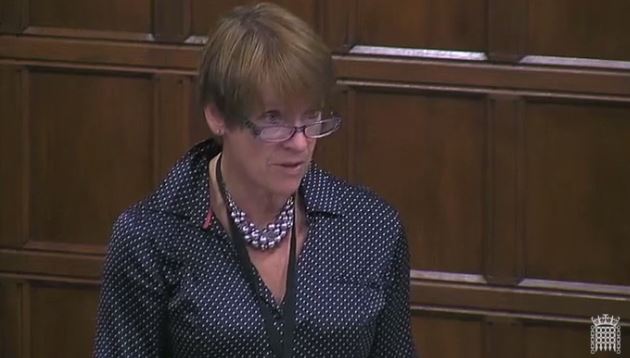
Caroline Spelman raises Christian persecution worldwide and blasphemy case in Pakistan

On 4th July 2017 the House of Commons debated a motion from Jim Shannon MP (DUP), ‘That this House has considered persecution of Christians and the role of UK embassies.’ The Second Church Estates Commissioner, Rt Hon Dame Caroline Spelman MP, spoke in the debate:

Dame Caroline Spelman (Meriden) (Con): Thank you, Mr Hanson, for calling me because I omitted to put in to speak last night, for which I apologise. It was an oversight, but one that I should not have committed.

An interesting cross-section of Members of Parliament is in attendance to support my hon. Friend the Member for Strangford (Jim Shannon) who, as chair of the all-party group on international freedom of religion or belief, had the foresight to call for this debate. We welcome to the Chamber new Members who are showing their concern for the persecuted, and returning Members who we know through their faith will take a stand for the persecuted. As my hon. Friend the Member for Torbay (Kevin Foster) so eloquently put it, we are all here to show our solidarity, and that is the important point. Some Members may not even speak, but we are numerous and we wish the persecuted out there to know that. Continue reading “Caroline Spelman raises Christian persecution worldwide and blasphemy case in Pakistan”

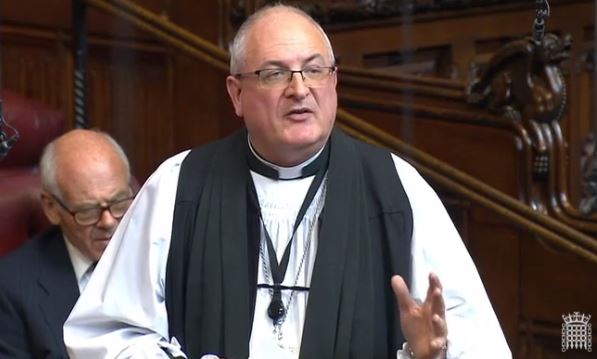
Bishop of Truro warns against seeing aid as only a financial investment

Bishop of TruroOn the 3rd July 2017, the Bishop of Truro, the Rt Revd Tim Thornton contributed to Baroness D’Souza’s debate: That this House takes note of the case for measuring the impact of the United Kingdom’s development aid budget. In a wide-ranging speech, the Bishop spoke of the importance of guarding against thinking about aid spending simply as a financial investment.
The Lord Bishop of Truro: My Lords, I am grateful to the noble Baroness, Lady D’Souza, for initiating this debate on such a very important and topical issue.

As no doubt we will hear from other speakers, the UK is known around the world as a leader in international development. It has achieved great results during the past two decades. I have no doubt of the importance of the case for measuring the impact of our development aid. I want to underline that case and also, perhaps more importantly for me, to ensure that we try to measure the right things if we can and do not understand aid only as a financial investment which can be measured simply in financial terms. I fear that too many people in our debate will go immediately from talking about aid to talking about money and finances rather than going back and thinking about what the word “development” might mean. It seems that development is in itself a fascinating idea in our world today with perhaps an assumption that other countries are less developed than we are. We must be careful about the assumptions and presuppositions we make when we use the word.

Continue reading “Bishop of Truro warns against seeing aid as only a financial investment”

Bishop of Peterborough calls for more effective delivery of mental health services

On 29th June 2017 the Bishop of Peterborough, Rt Revd Donald Allister, spoke during the final day’s debate on the Queen’s Speech, highlighting the need for a more effective approach to delivery of mental health services:

The Lord Bishop of Peterborough: My Lords, it is perplexing, given Mrs May’s commitment to mental health, that there is no mental health Bill in the Queen’s Speech, not least given the very strong commitments that were made about the need for legislation and the fact that this would happen. What there is in the Queen’s Speech about mental health is good, though it is vague. I hope that it is translated into more money for mental health, but it also needs to be translated into better delivery and accountability. That is what is lacking and what I want to think about for a moment. Continue reading “Bishop of Peterborough calls for more effective delivery of mental health services”

Bishop of Gloucester highlights needs of vulnerable young people moving into adulthood

On 29th June 2017 the Bishop of Gloucester, Rt Revd Rachel Treweek, spoke during the final day’s debate on the Queen’s Speech. She highlighted the situation of vulnerable young people moving into adulthood, as care leavers, carers, refugees, those with disabilities and those in prison.

The Lord Bishop of Gloucester: My Lords, I will highlight something that I believe needs careful consideration as we think about education, health and welfare. It is the matter of vulnerable young people making the transition to adulthood. I am grateful for the aspirations I have heard to support families and give children the best start in life. As we strive for the fairness and flourishing of all, I am concerned that we have yet to see any emphasis on our most vulnerable young people as they move into adulthood. I would particularly like to draw the Government’s attention to five specific groups who need help as they transition to adult life: young people leaving care; young people who are carers themselves; young people with severe disability; young people who are refugees and asylum seekers; and young women at risk of offending and being imprisoned. Continue reading “Bishop of Gloucester highlights needs of vulnerable young people moving into adulthood”

Bishop of Ely on importance of life skills and character education

On 29th June 2017 the House of Lords held the final day of debate on the Queen’s Speech. The Bishop of Ely, Rt Revd Stephen Conway, spoke in the debate about countering extremism and the importance of character education.

The Lord Bishop of Ely: My Lords, like many in this House, I am sure, the events of the past few weeks have been very much on my heart and in my prayers, and in the aftermath of the terror attacks in London and Manchester, it is unsurprising that the Government have placed such an emphasis on counterterrorism and counterextremism measures in the gracious Speech. The Government are right to look at reviewing specific measures to tackle extremism and the places where extremist ideology is able to spread, but stopping extremist ideology where it already exists cannot be all that we do. Although we in this House may divide debates into topics and the Government into departments, as we know, in reality society is not just a series of policy areas, it is a rich fabric of connected life experiences of which education is formative for all. Its value in developing and defining the kind of society we want to become should never be underestimated. Continue reading “Bishop of Ely on importance of life skills and character education”

Queen’s Speech 2017: Archbishop of York calls for a Brexit that serves the common good

Archbishop of YorkOn 28th June, the Archbishop of York, the Most Revd and Rt Hon John Sentamu contributed to the ongoing debate on the Queen’s Speech. The Archbishop’s speech addressed Brexit and he called for cross-party work to secure a Brexit that serves the common good.
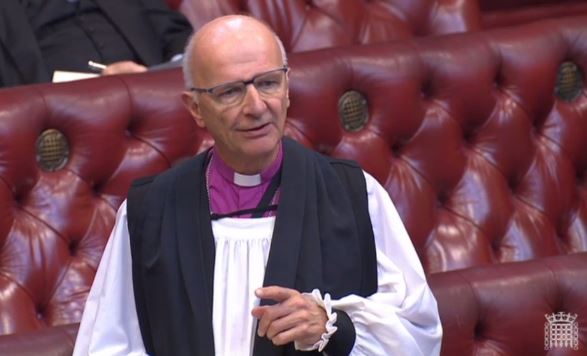
The Archbishop of York My Lords, I have followed with interest the debates on the Queen’s Speech over the past week. I have been encouraged to hear assurances from the Leader of your Lordships’ House and various Ministers of the Government who seek to govern with humility and to forge cross-party agreement where they can. That is as it should be, regardless of the numerical strength or weakness of the Government.

Many issues raised in the Queen’s Speech and the Government’s agenda give us the best opportunity to have that wider consensus. No area is more important than that when it comes to negotiating Britain’s departure from the European Union and to forging a new relationship—a deep and special partnership—with the EU. Indeed, the reality is that there is no way in which a minority Government can hope to get all their legislation relating to Britain leaving the EU through Parliament without the help of others. The Government need to make a virtue out of that necessity.

Continue reading “Queen’s Speech 2017: Archbishop of York calls for a Brexit that serves the common good”

Queen’s Speech 2017: Bishop of Bristol welcomes inclusion of measures on domestic violence

On 27th June 2017 the House of Lords debated the measures in the Queen’s Speech for justice and home affairs. The Bishop of Bristol, Rt Revd Mike Hill, spoke in the debate, on mental health, domestic violence and prisons.

The Lord Bishop of Bristol: My Lords, I welcome the opportunity to contribute to this important debate on the gracious Speech. I thank the noble Lords who have spoken thus far in what has been an interesting debate today.

I would like to draw attention to two or three things. The first is the fairly well hidden-away commitment in the gracious Speech to reform mental health legislation in order that mental health services might be prioritised in the NHS. Like much in the speech, the detail is particularly lacking at this point but I hope that noble Lords will join me in saying that that is an important and welcome development. Continue reading “Queen’s Speech 2017: Bishop of Bristol welcomes inclusion of measures on domestic violence”

Queen’s Speech 2017: Bishop of Southwark praises community response to tragedies, calls for better funding of prison and emergency services

southwark-20feb17On 27th June 2017, the Bishop of Southwark, Rt Rev. Christopher Chessun, contributed to the ongoing debate on the Queen’s Speech. The Bishop’s speech addressed the strong response from volunteers and emergency services to recent events, and called for a re-examination of current resources. Government Minister Lord Bourne of Aberystwyth responded to the Bishop of Southwark’s speech at the end of the debate.
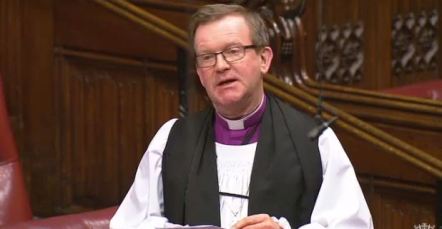
The Lord Bishop of Southwark: My Lords, I too wish to contribute to your Lordships’ debate on the humble Address. Last Thursday, the most reverend Primate the Archbishop of Canterbury observed in this House that the gracious Speech spoke of taking British values around the world, but for that to happen we need to know what we mean by British values. That applies equally to the measures under discussion today. Traditionally, these values have expressed themselves in a respect for the rule of law, local and national institutions, our liberties and freedoms, and parliamentary democracy. They were born of a society in which people participate, not a consumer society. From them spring mutual obligations, not merely contractual ones. Mutuality issues from civic virtue of the sort we have seen on our streets in response to calamity and terror in recent months in London and Manchester.

Continue reading “Queen’s Speech 2017: Bishop of Southwark praises community response to tragedies, calls for better funding of prison and emergency services”

Queen’s Speech 2017: Bishop of Portsmouth says Government plans show modesty of ambition

portsmouth-180117-bOn 26th June 2017, the Bishop of Portsmouth, Rt Rev Christopher Foster, contributed to the Queen’s Speech debate on business, economic affairs, energy, transport, environment and agriculture. He used his speech to implore the government to use this parliamentary session to do more for those in his diocese and around the country.

Bishop of Portsmouth: My Lords, the Prime Minister has spoken of the awful events of recent weeks as signs of a society not at ease with itself. Yet amidst the tragedy and the pain, we see hope and the victory of hope. We have seen a remarkable depth of love and shared resolve, especially between faiths. We have been deeply moved by how people have responded to evil with generosity, openness and humility. I was struck by the force and feeling with which the Prime Minister used that last word in the debate in the other place on the gracious Speech. Humility is not a term frequently associated with politicians by the public. True, circumstances have left the Government with little choice but to take the humbler part, but that is no reason for cynicism. Continue reading “Queen’s Speech 2017: Bishop of Portsmouth says Government plans show modesty of ambition”